

Think of yearly furnace maintenance as a tune-up for your home's hardest-working appliance. It's a lot like the annual oil change for your car—a proactive service designed to keep your heating system running safely and efficiently. A licensed technician comes in, gives it a thorough check-up, and catches the small issues before they snowball into expensive, no-heat emergencies.
Honestly, especially here in Central Minnesota, it's the single most important thing you can do to protect your home and your investment.
Why Yearly Furnace Maintenance Is A Non-Negotiable For MN Winters
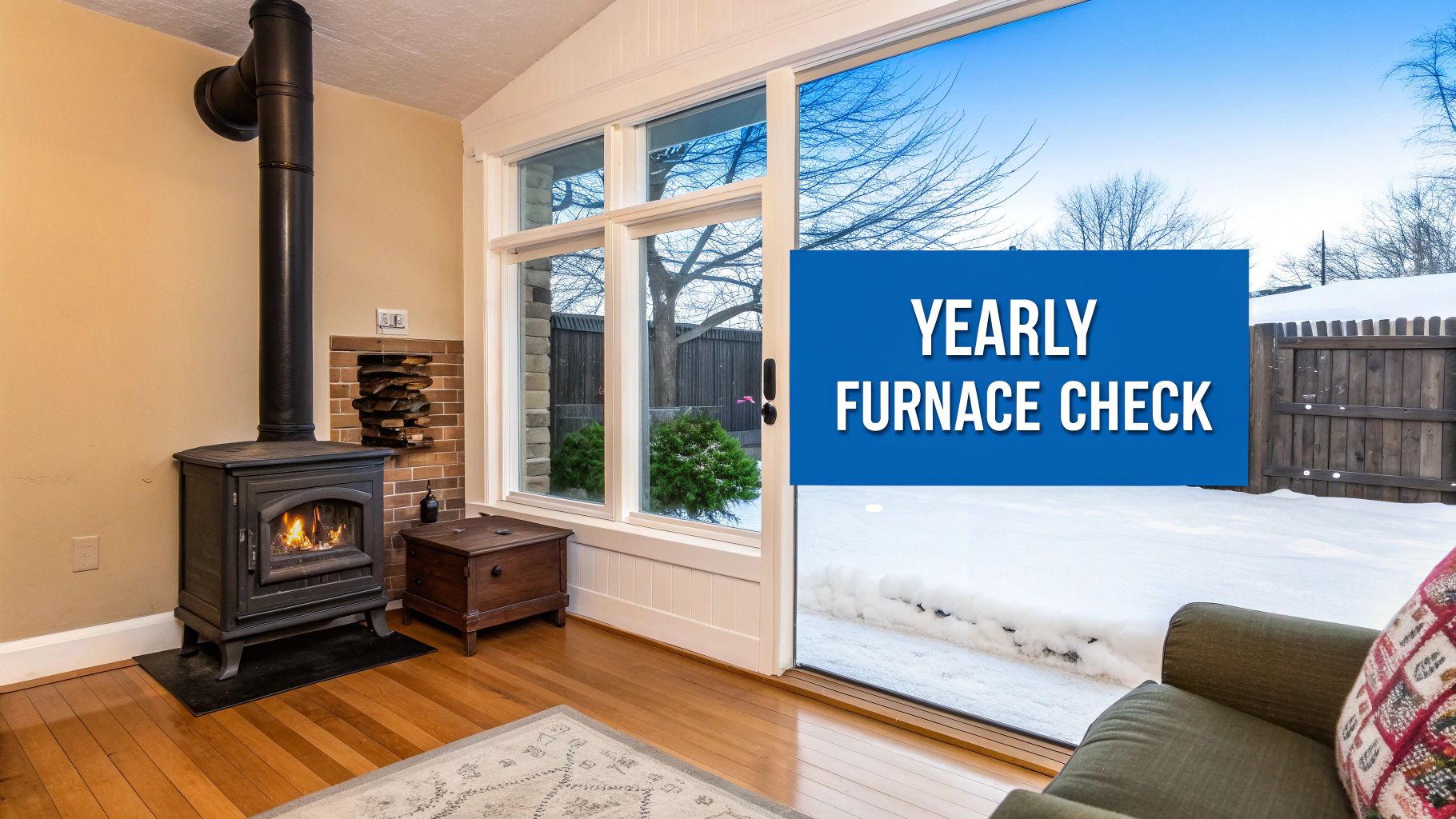
Staring down another Central Minnesota winter without a reliable furnace is a stressful thought. When the temperatures really start to plummet, your furnace isn't just a machine; it becomes the heart of your home, keeping everyone inside safe and comfortable. Skipping its annual check-up is a gamble that few homeowners, from St. Cloud to Blaine, can afford to take.
Here's a good way to think about it: you wouldn't drive your car headfirst into a blizzard without checking the engine, tires, and fluids, right? Your furnace works just as hard, if not harder, during our long, brutal winters. A little proactive care is always smarter, safer, and way more affordable than dealing with a catastrophic failure on the coldest night of the year.
The Real Stakes of Neglecting Your System
A neglected furnace doesn't just risk breaking down. It can slowly become less efficient, quietly driving up your energy bills. Worse, it can develop dangerous safety issues that put your family at risk. An annual tune-up is a simple, preventative measure that directly tackles these problems. The benefits are pretty clear for any Minnesota homeowner:
- Prevents Carbon Monoxide Leaks: A technician inspects the heat exchanger for cracks—a primary source of this silent, deadly gas.
- Lowers Your Energy Bills: A clean, well-tuned system uses less fuel to heat your home, which saves you real money every single month.
- Extends Your System’s Lifespan: Just like regular check-ups help people stay healthy, annual service helps your furnace reach its full 15-20 year potential.
- Avoids No-Heat Emergencies: Catching a worn-out part in October is an inconvenience. Having it fail in the dead of January is a crisis.
Ultimately, investing in yearly maintenance on furnace is all about peace of mind. It's the confidence that comes from knowing your home's most critical appliance is ready for whatever winter decides to throw at us. For a deeper dive into system care during those bitter cold snaps, learn more about taking care of your furnace in extreme cold.
What a Professional Furnace Tune-Up Actually Involves
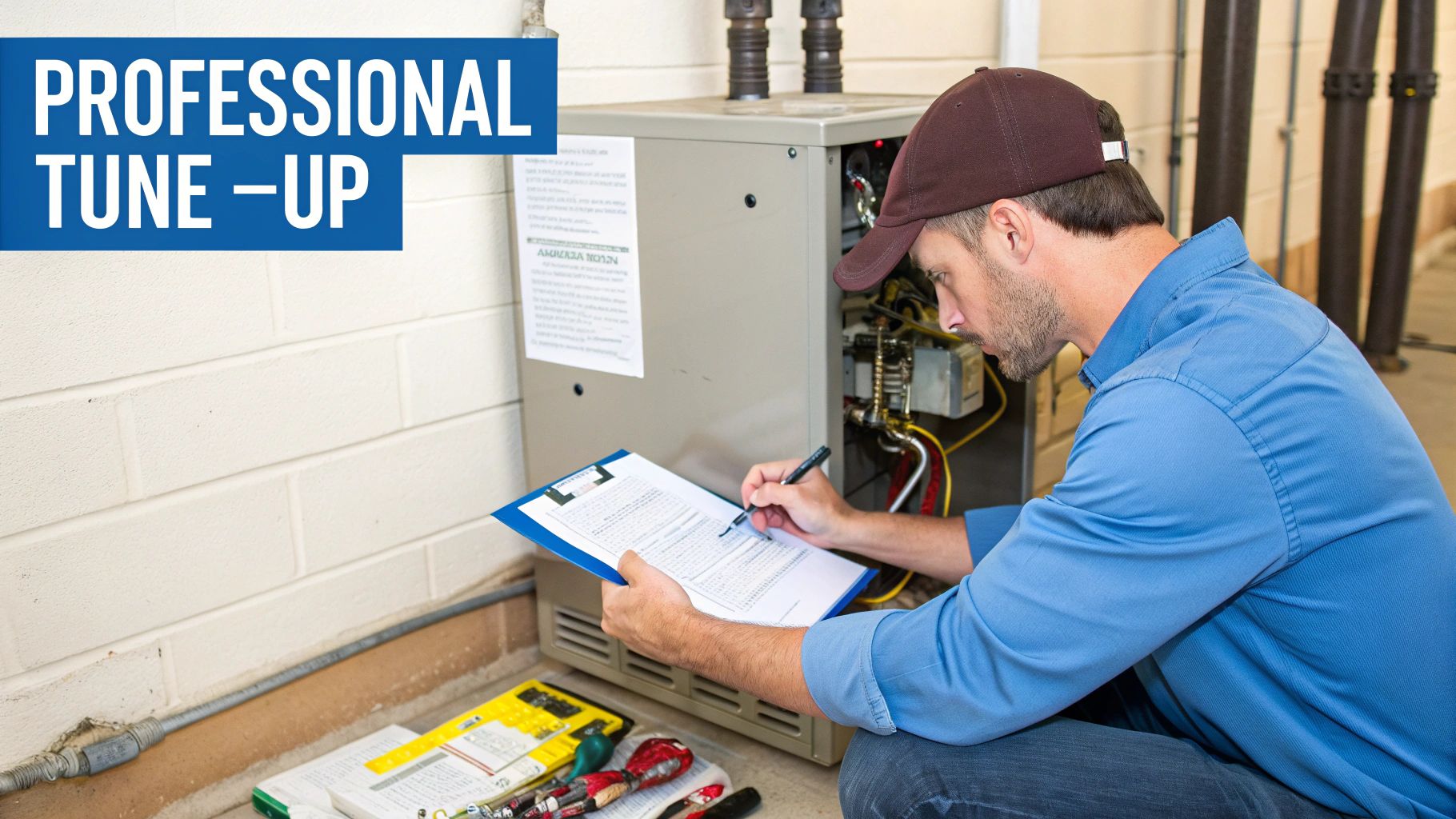
When a licensed HVAC technician shows up for your furnace tune-up, they’re doing a whole lot more than just peeking at it. Think of it as a comprehensive annual physical for the heart of your home. They follow a detailed checklist designed to spot the small stuff before it snowballs into an expensive, no-heat emergency in the middle of a January night.
This isn't just about wiping down a few parts. It’s a meticulous inspection that covers the safety, efficiency, and overall mechanical health of your system. Understanding what that involves really shows you the value and expertise a pro brings to the table.
Critical Safety Inspections
The absolute first priority is making sure your furnace can run without putting your family at risk. A technician’s safety check is thorough, non-negotiable, and focused on the system’s most vulnerable points.
Key tasks in this phase include:
- Heat Exchanger Inspection: The tech will carefully examine the heat exchanger for any cracks or signs of wear. This part is critical—it separates the combustion gases from the air you breathe. A breach here could lead to dangerous carbon monoxide leaks.
- Gas Connection Verification: They’ll check all gas lines and connections for leaks, ensure the gas pressure is just right, and verify that the fuel is burning safely and cleanly.
- Safety Sensor Testing: Modern furnaces are loaded with safety switches and sensors that shut the system down if something goes wrong. A tech tests these controls to make sure they’re still doing their job.
Fine-Tuning for Maximum Efficiency
Once everything is confirmed safe, the focus shifts to performance. An inefficient furnace has to work harder, burn more fuel, and ultimately costs you more money on your utility bills every month. This part of the tune-up is all about getting your system back to its peak operating condition.
For example, a technician will clean the burners to ensure a clean, efficient flame, scrubbing away any buildup that hurts performance. They’ll also inspect and clean the blower motor and its components, which are responsible for pushing that warm air through your home. A clean blower doesn’t have to fight against dirt and gunk, and that translates directly into lower energy bills.
Did you know that skipping yearly furnace maintenance can shorten its lifespan by up to 50%? The average furnace lasts about 15-20 years with proper care, but neglect can cause that to drop dramatically due to accumulating issues. In Central Minnesota, where a reliable furnace is essential, you can explore more key HVAC statistics from industry experts at ServiceTitan.
Mechanical Health and Longevity Checks
Finally, the technician gets down to the nuts and bolts of the furnace’s mechanical integrity. This preventative work is what helps your system reach its full potential lifespan and avoid breaking down prematurely.
This includes lubricating all moving parts to cut down on friction and wear, tightening any loose electrical connections to prevent shorts or system failures, and checking belts for signs of cracking or damage. Every single step in a professional tune-up is a deliberate action designed to keep your furnace running strong all winter. To see our full checklist, you can learn more about our professional furnace tune-up service.
The Four Core Benefits Of Annual Furnace Maintenance
Putting yearly furnace maintenance on your calendar isn’t just another chore to check off the list—it's one of the smartest investments you can make in your home's safety, comfort, and your own budget. We can talk about the technical checklists all day, but the real value is in the tangible rewards you see and feel, season after season.
From protecting your family against silent dangers to keeping more of your hard-earned money in your wallet, let's break down the four biggest reasons why an annual furnace service is a no-brainer for any Minnesota homeowner.
Enhanced Safety For Your Family
Hands down, the single most important benefit of a professional furnace tune-up is safety. Your furnace works by burning fuel to create heat, and that process has to be perfectly controlled. A critical part called the heat exchanger is what keeps the combustion fumes separate from the clean, warm air that blows through your vents.
Over the years, the constant heating and cooling can cause tiny cracks to form in the heat exchanger. Even a hairline fracture is big enough to let colorless, odorless carbon monoxide (CO) leak into your home’s air supply—a serious and silent health risk. During an annual inspection, a licensed tech will meticulously examine the heat exchanger to make sure it’s solid, protecting your family from this hidden threat.
Lower Energy Bills Every Winter
An unmaintained furnace is an inefficient furnace. Simple as that. When dust and grime build up on components like the blower wheel, burners, and coils, your system has to fight much harder to generate the same amount of heat. That struggle shows up directly on your monthly utility bills.
A clean, well-calibrated system doesn't just run better; it runs cheaper. By cleaning the burners, lubricating moving parts, and ensuring proper airflow, a technician can bring your furnace back to its peak efficiency, often cutting its energy use by a noticeable amount.
A Longer Lifespan For Your Furnace
A new furnace is a major investment, and you want it to last for its full expected lifespan of 15-20 years. Regular maintenance is how you get there. Think of it like a routine check-up with your doctor—it’s all about catching small problems before they snowball into serious, long-term issues.
When you neglect your system, minor things like worn belts, loose wires, and clogged filters put cumulative stress on the whole unit. This constant strain leads to premature failure of major components, potentially forcing you into a costly replacement years ahead of schedule.
Fewer Emergency Breakdowns
There’s nothing worse than your furnace quitting on you during a -20°F Minnesota cold snap. Those emergency breakdowns are not only incredibly stressful but are also way more expensive than a scheduled service call. Yearly maintenance is your best defense against those middle-of-the-night disasters.
A technician can spot a wearing part in October and replace it for a predictable cost. But if that same part fails in the dead of January, you’re suddenly dealing with emergency service fees and the very real risk of frozen pipes. This proactive approach ensures your system is battle-ready for whatever winter throws at it. You can learn more about how proactive care prevents emergency furnace repairs in our detailed guide.
DIY Furnace Care Vs. When To Call A Professional
Knowing what you can handle yourself and when you need to call in an expert is a huge part of being a smart homeowner. When it comes to your furnace, that line is especially important—not just for your system's health, but for your safety.
Simple upkeep is always a good idea, but the moment a task involves messing with gas lines, electrical components, or the guts of the combustion process, it’s strictly professional territory. Your job is to handle the basic, routine things that help your system breathe easier between those yearly professional tune-ups.
Your Simple DIY Checklist
There are a few key jobs every homeowner can—and should—do on a regular basis. You don't need any special tools for these, but they make a surprisingly big difference in your furnace's performance and efficiency.
- Change Your Air Filter: This is the single most important thing you can do. A dirty, clogged filter basically suffocates your furnace, making it work way harder and spiking your energy bills. Check it every month and plan on replacing it every 1-3 months.
- Keep the Area Clear: Your furnace needs space to operate safely. Make sure the area around it is totally free of clutter, boxes, and especially flammable stuff like paint, gasoline, or cleaning chemicals. A 3-foot clearance on all sides is the gold standard.
- Check Your Vents: Take a quick walk through your house. Are all the supply and return air vents open? Are they blocked by furniture, rugs, or drapes? Good airflow is absolutely critical for heating your home evenly.
This flowchart gives you a great visual breakdown of why regular maintenance—whether it’s your part or ours—is such a no-brainer.
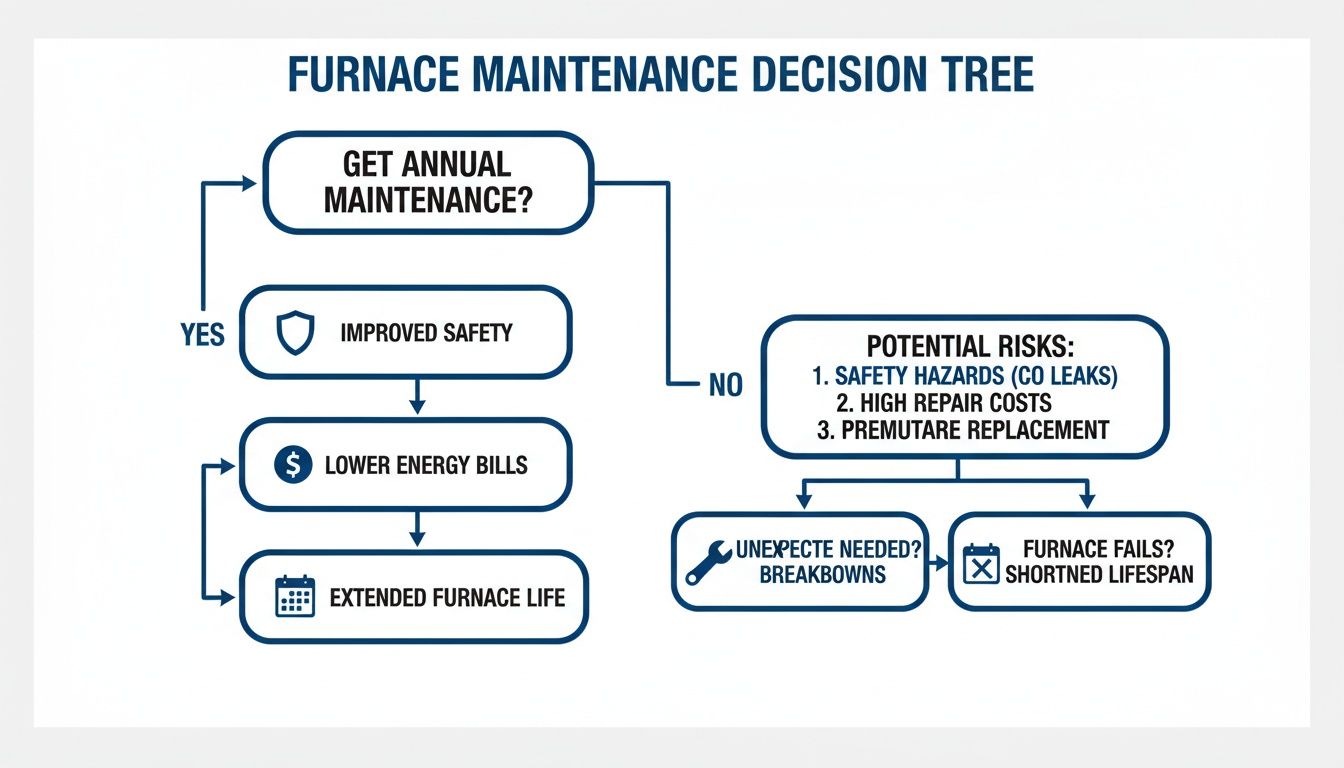
As you can see, every path that starts with "get maintenance" leads to a good outcome for your home, from better safety to long-term savings.
When To Call A Neighborhood Professional
While those DIY tasks are essential, they're really just the tip of the iceberg. The complex machinery humming away inside your furnace requires a trained, licensed technician to service it safely and correctly.
To make it crystal clear, we've put together a simple table comparing what you should handle versus what we should.
DIY Vs Professional Furnace Maintenance Checklist
| Maintenance Task | Recommended for Homeowner (DIY) | Requires a Professional Technician |
|---|---|---|
| Replace Air Filter | ✅ | |
| Clear Area Around Furnace | ✅ | |
| Keep Vents Unblocked | ✅ | |
| Clean Burner Assembly | ✅ | |
| Inspect Heat Exchanger | ✅ | |
| Test Gas Pressure & Valve | ✅ | |
| Check Electrical Connections | ✅ | |
| Clean Flame Sensor | ✅ | |
| Inspect Blower Motor | ✅ | |
| Check Thermostat Calibration | ✅ |
Ultimately, a professional tune-up is a deep dive into the parts of your furnace that can be dangerous or require specialized tools.
Any maintenance that requires opening up the main furnace cabinet should be left to a professional. This includes tasks involving the gas valve, electrical wiring, burners, and the heat exchanger—all components that carry significant safety risks if handled improperly.
It also helps to know that when you call a pro, they're running an efficient operation behind the scenes. Many of the best HVAC companies rely on things like HVAC business management software to keep scheduling and service calls running smoothly. At Neighborhood, our technicians have the expertise and the tools to handle all those critical checks, making sure your furnace is ready to run safely and efficiently all winter long.
The Best Time To Schedule Your Furnace Maintenance In Minnesota
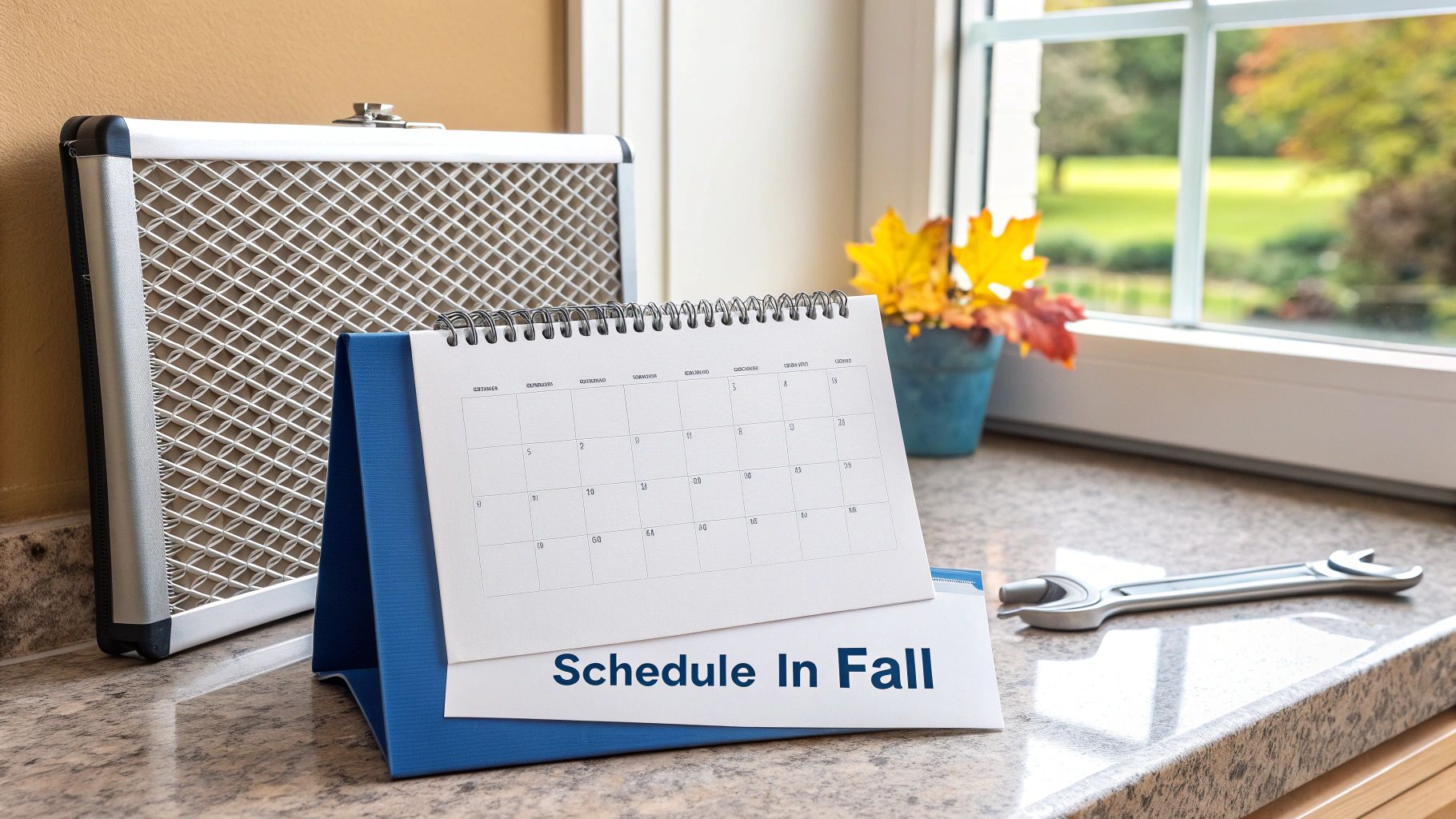
Timing is everything, especially when you're getting your home ready for another Central Minnesota winter. While yearly maintenance on furnace is always a good idea, when you schedule it can make a huge difference for your schedule, your wallet, and your peace of mind. Getting ahead of the curve is the smartest play.
The absolute best time to book that furnace tune-up is in the early fall. Think September or October, right as the air starts to get crisp but before you actually need to flip the heat on. This isn't just a casual suggestion—it’s a strategic move for any homeowner in Foley, Sauk Rapids, or Chisago City.
Why Early Fall Is The Golden Window
Scheduling your service during this pre-season sweet spot gives you three big advantages that you just won't get if you wait until the first cold snap hits. Homeowners who plan ahead are always a step ahead.
Here’s why it pays to book early:
- Scheduling Flexibility: Let's be honest, HVAC companies get slammed once the weather turns. By calling in the fall, you get your pick of appointments instead of scrambling for whatever is left during the first-freeze chaos.
- Pre-Season Problem Solving: If our technician finds an issue that needs a special part, there’s plenty of time to get it ordered and installed. This keeps a minor repair from turning into a no-heat emergency on a freezing night.
- Avoiding the Emergency Rush: The moment the temperature drops, our phone lines light up with calls from people whose furnaces suddenly won't turn on. Scheduling early means you get to skip all that chaos and potential delays.
Think of it like this: You wouldn't wait for the first blizzard to put snow tires on your car. Scheduling your furnace maintenance in the fall is the exact same logic. It’s all about preparing for the season ahead of time so you can be sure you're safe and comfortable when it matters most.
Furnace Maintenance FAQs
Even after you know why it's important, you probably still have a few practical questions about getting your furnace checked out every year. We get it. Let’s walk through the most common ones we hear from homeowners around Central Minnesota.
How Much Does Yearly Furnace Maintenance Cost?
Here in Central Minnesota, you can expect a professional furnace tune-up to cost somewhere between $100 and $250. It’s easy to see that as just another bill, but it's smarter to think of it as a small, predictable investment. That annual service fee is nothing compared to an emergency repair, which can easily hit $400 or more, not to mention a full replacement that runs into the thousands.
Many HVAC companies, including us, also offer maintenance plans that can bundle services together for a lower yearly price, which makes it an even better deal.
Can I Skip A Year Of Furnace Maintenance?
You technically can, but it’s a gamble we’d never recommend. Skipping even one season allows a surprising amount of dust and grime to build up on critical parts, forcing your system to work harder and burn more fuel.
More importantly, it means you miss a professional safety inspection of the heat exchanger. That's the one component you really don't want to neglect, as a crack could lead to a carbon monoxide leak. Consistency is everything; your furnace doesn’t get a year off from wear and tear.
The real question isn’t if a problem will develop, but when. Annual check-ups are designed to catch wearing parts and potential safety issues before they escalate into a middle-of-the-night crisis.
Does A New Furnace Still Need Yearly Maintenance?
Yes, absolutely. In fact, it’s arguably even more important for a brand-new system. Most manufacturers actually require proof of annual professional maintenance to keep your warranty valid.
If you skip a tune-up and a major component fails a few years down the road, you could be stuck paying out-of-pocket for a repair that should have been covered. It's also the only way to make sure that shiny, new high-efficiency unit you paid for is actually running at the peak performance you expect right from the start.
Ready to make sure your furnace is safe, efficient, and prepared for another Minnesota winter? The licensed pros at Neighborhood Plumbing, HVAC, and Electrical are here to help. Schedule your furnace tune-up today and get some peace of mind for the cold season ahead.