

When your furnace flame kicks on only to shut off a few seconds later, it's not just being difficult—it's usually a safety feature at work. This annoying little problem is called "short cycling," and it's your furnace’s way of telling you something isn't right. Often, the culprit is something simple like a dirty flame sensor, a clogged air filter causing it to overheat, or even a failing ignitor.
Getting a handle on this starts with understanding how your furnace is supposed to work in the first place.
What a Normal Furnace Startup Looks Like
To figure out why your furnace flame won't stay lit, you need to know what a normal startup sequence looks like. Think of it as a domino rally—each piece has to fall perfectly for the next one to go. If any step in that chain fails, the whole system shuts down. It's designed that way to prevent serious problems, like pumping unburnt gas into your home.
This whole process is surprisingly quick, usually taking less than a minute from start to finish. It all begins with that familiar click from your thermostat, which is basically mission control sending the "go" signal to the furnace's control board.
The Call for Heat
It all starts when your thermostat senses the room temperature has dipped below your setting. That's the trigger. The control board gets the message and does a quick systems check to make sure everything is ready to go.
First up, the draft inducer motor kicks on. This is a small fan with a big job: it pushes out any leftover gases from the last cycle and makes sure the exhaust vent is clear. A pressure switch then verifies that the fan is creating enough suction, confirming there's a clear path for exhaust fumes to get outside. If that switch doesn't get the right signal, the sequence stops right there.
Pro Tip: That first humming sound you hear from your furnace? That's the draft inducer motor. If you hear that hum but nothing else happens, you might have a bad pressure switch or a blocked vent pipe—a classic issue here in Minnesota once the snow starts flying.
Ignition and Flame Detection
Once the pressure switch gives the green light, it's time to make some fire.
- The Ignitor Gets Hot: The control board sends electricity to the ignitor, a small part that heats up and glows bright orange, kind of like the filament in an old lightbulb.
- The Gas Valve Opens: After about 30 to 60 seconds, the control board opens the gas valve, releasing a controlled flow of natural gas or propane to the burners.
- We Have Flame: The glowing-hot ignitor instantly lights the gas, and you get those nice blue flames in the burner chamber.
Now comes the moment of truth. The instant those burners light, another part called the flame sensor gets to work. This is just a thin metal rod that sits right in the path of the flames. Its only job is to confirm that there's actually a fire burning. It does this by sending a tiny electrical signal (microamps) back to the control board.
If the board gets that signal, it knows everything is working as it should and keeps the gas valve open. But if it doesn't get that signal within a few seconds, it assumes the gas failed to ignite and immediately shuts the gas valve off. This is, by far, the most common reason a furnace flame starts and then stops. Usually, it's because the sensor is covered in soot and can't feel the heat.
Your DIY Furnace Troubleshooting Checklist
When your furnace flame kicks on and then shuts right back off, it feels like a big, expensive problem is brewing. But before you pick up the phone to call for a repair, there are a few safe and simple checks you can do yourself. This isn't about getting in over your head with risky repairs; it's about ruling out the common, easy-to-fix issues that cause most furnace short cycling problems.
Think of it like being a detective. By methodically checking a few key areas, you can often figure out what's going on and maybe even save yourself the cost of a service call. Let's walk through a safety-first process, starting with the easiest stuff.
Start with the Thermostat
Your thermostat is the command center for your entire heating system. Sometimes, the problem isn't with the furnace at all—it's just a confused thermostat. A simple settings mix-up or dead batteries can send the wrong signals, causing the furnace to act erratically. It's always the first and easiest place to look.
Before digging into the furnace itself, take a quick look at your thermostat and confirm a few things:
- Check the Batteries: If your thermostat runs on batteries, the first thing to do is pop in a fresh set. Weak batteries are a notorious cause of bizarre furnace behavior.
- Confirm the Settings: Make sure it's set to "Heat" and the temperature is cranked up a few degrees higher than the current room temp. It sounds basic, but you'd be surprised how often it's just an accidental bump of the controls.
- Inspect the Wiring: A quick visual check is all you need. Are any wires visibly loose? Sometimes a poor connection is the culprit.
Inspect the Furnace Air Filter
If the thermostat is all good, your next stop is the furnace itself to check the air filter. A dirty, clogged filter is hands-down one of the most common reasons a furnace will overheat and shut itself down as a safety precaution.
When the filter is packed with dust and debris, airflow gets choked off. Heat builds up inside the furnace until a safety sensor called the high-limit switch trips, shutting down the burners to prevent damage or a potential fire.
A badly clogged filter can slash your furnace's efficiency by up to 15%. That forces it to run harder and longer, leading to premature wear and tear on expensive components.
Changing the filter is easy. Find the filter slot on your furnace, slide out the old one, and make a note of the size printed on the cardboard frame. Slide the new one in, making sure the little airflow arrows on the side are pointing toward the furnace blower motor.
This flowchart gives you a great visual of the most common reasons your furnace flame is acting up, from simple sensor issues to ignitor trouble.
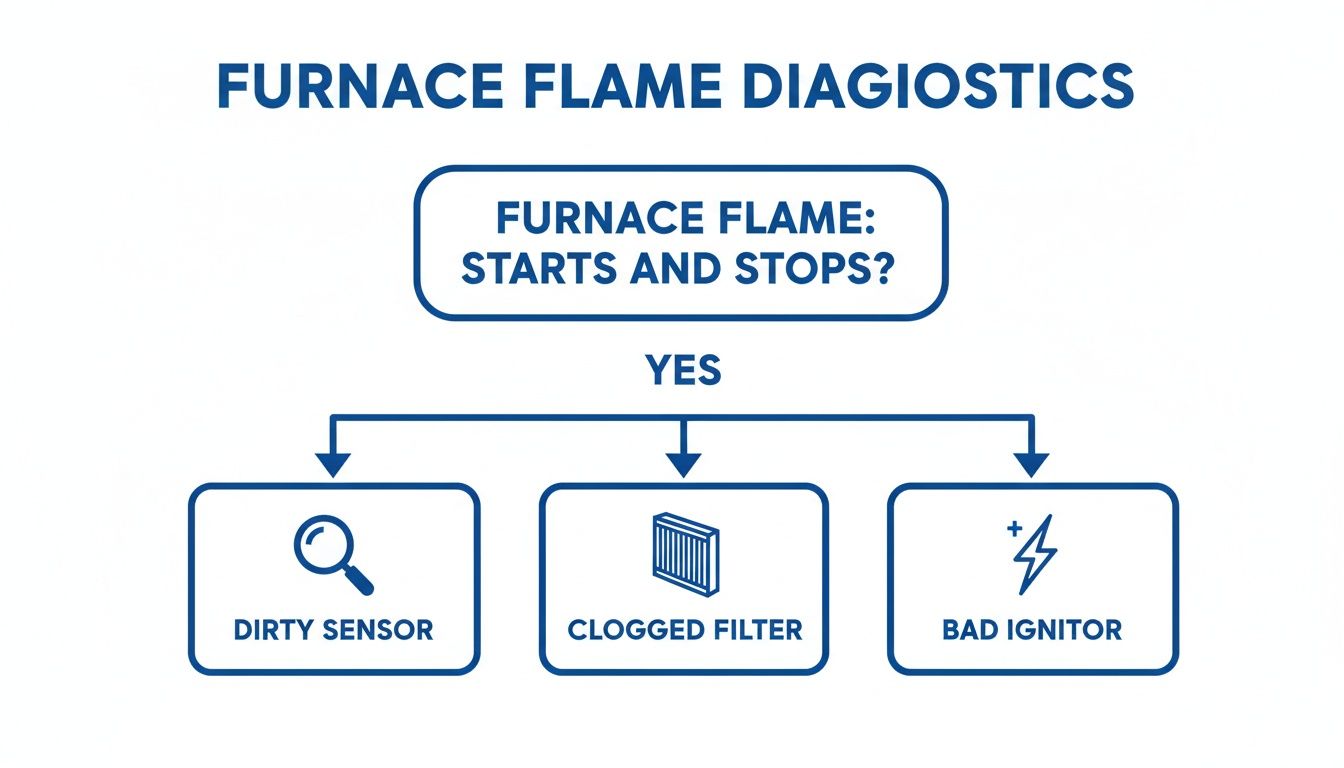
As you can see, a dirty flame sensor, a clogged filter, and a faulty ignitor are the big three offenders when it comes to an intermittent flame.
Clean the Flame Sensor
Okay, so you've tried a fresh filter and the problem is still there. The next likely suspect is a dirty flame sensor. This little metal rod sticks out into the path of the burner flame, and its only job is to confirm that fire is present when the gas valve is open.
Over time, it gets covered in a thin layer of carbon soot. When that happens, it can't "see" the flame anymore, so the furnace control board thinks the gas failed to ignite and shuts everything down for safety.
Cleaning it is a pretty straightforward job, but you absolutely must prioritize safety.
- First, kill the power to your furnace. Do this at both the main circuit breaker and the power switch right next to the unit.
- Next, shut off the gas supply. You’ll find a valve on the gas pipe leading into the furnace.
- Now, find the flame sensor. It’s a thin, L-shaped metal rod held in place by a single screw, right next to the burners. If you need help, our guide can show you in more detail where the flame sensor is on a furnace.
- Remove that one screw and gently pull the sensor out.
- Using a piece of fine steel wool or even a crisp dollar bill, lightly scrub the metal rod to remove the carbon buildup. Never use sandpaper, as it’s too abrasive and will ruin the sensor.
- Slide the sensor back in, replace the screw, and turn the gas and power back on. Then, run the heat and see what happens. More often than not, this simple cleaning does the trick.
Knowing When to Call an HVAC Professional
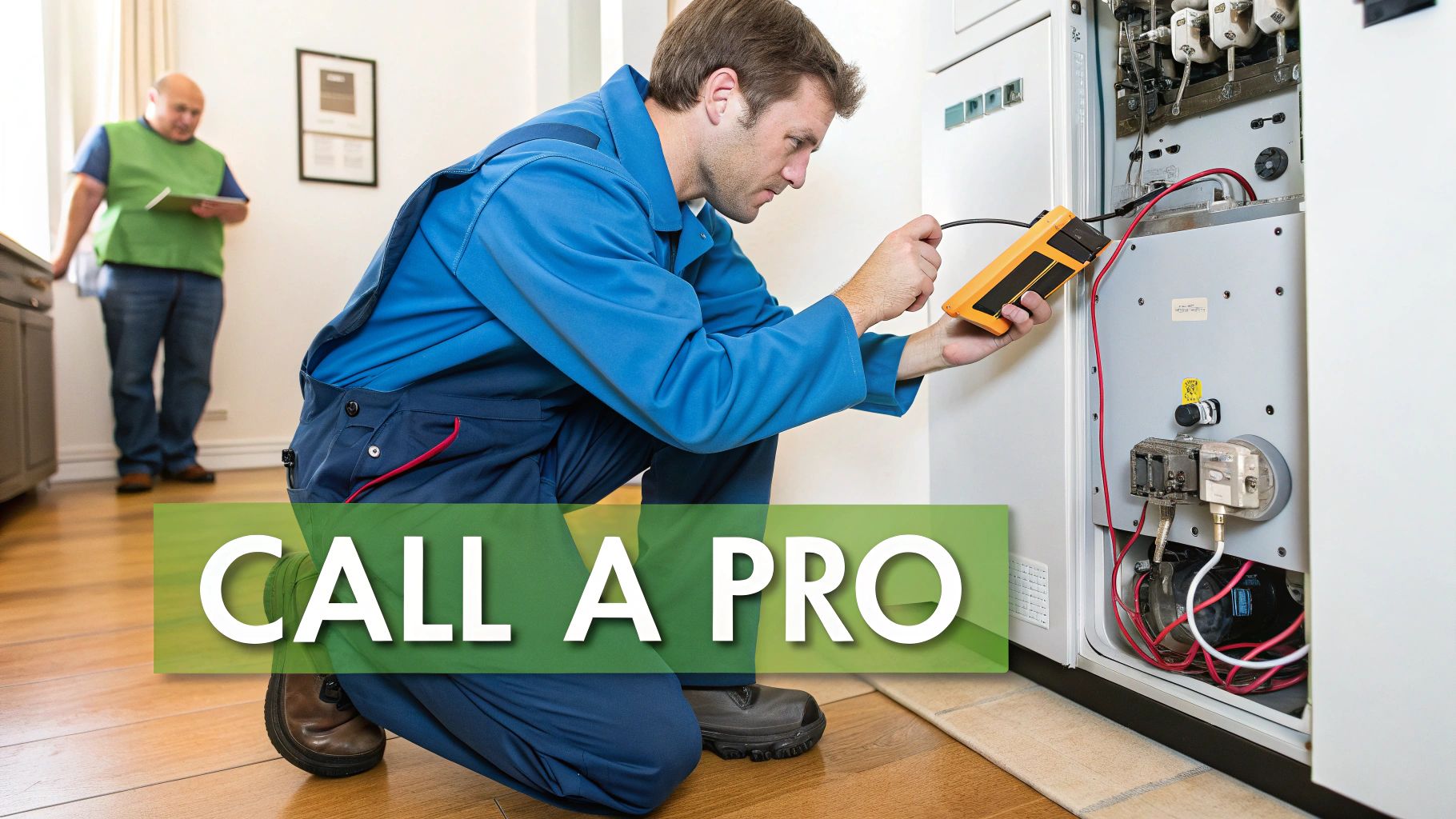
While cleaning a flame sensor or swapping out a dirty filter are pretty satisfying DIY wins, some furnace problems are firmly in the "call a professional" category. When you start dealing with complex electrical or gas components, a simple repair can quickly turn into a hazardous and expensive ordeal if you don't have the right training and tools. Knowing the signs that point to a deeper issue is key to staying safe and warm.
One of the most common culprits we see on service calls is a failing ignitor. You might hear the furnace click and even see the ignitor start to glow orange, but if it doesn't get hot enough, it won’t light the gas. This often leads to a cycle where the furnace tries a few times before just giving up—a classic symptom when your furnace flame starts and stops.
Signs of a Failing Furnace Ignitor
A bad furnace ignitor is one of the most frequent reasons for no-heat calls, hands down. It's just one of those parts that wears out over time. On average, you can expect an ignitor to last between 3 to 7 years, which means most homeowners here in Central Minnesota will probably have to replace one within the first decade of owning their furnace.
The good news is that it’s a relatively straightforward fix for a pro. This repair typically costs between $100 to $350 for both the part and the labor, making it an affordable but necessary service.
Keep an eye out for these clear indicators:
- The furnace clicks but never ignites. You can hear the whole startup sequence begin, but the burners never actually roar to life.
- You see the ignitor glow, but no flame appears. This is a dead giveaway. It means the ignitor is getting power but isn't reaching the critical temperature needed to light the gas.
- The system locks out after multiple attempts. Your furnace's control board is smart enough to know when something's wrong. If it fails to detect a flame after several tries, it will shut down for safety, which is called a safety lockout. For more on this, check out our guide on how to fix an ignition lockout on your furnace: https://4neighborhood.com/how-to-fix-ignition-lockout-furnace/
More Serious Furnace Problems
Beyond the ignitor, several other critical components can cause your furnace to short cycle. These issues pose significant safety risks and always, always require an expert from Neighborhood Plumbing, HVAC, and Electrical.
Safety First: If you ever smell gas or your carbon monoxide detector goes off, don't hesitate. Turn off the furnace at the emergency switch and shut off the gas valve immediately. Get everyone out of the house and call for emergency service from a safe location.
Serious problems that absolutely demand a professional include:
- Malfunctioning Gas Valve: A gas valve that sticks open or closed is a major hazard. It can lead to dangerous gas leaks or a complete lack of fuel for the burners.
- Faulty Control Board: The control board is the furnace's brain. If it starts to fail, it can send incorrect signals, causing all sorts of erratic behavior or just a total shutdown.
- Blocked Exhaust Vent: This one is especially dangerous because it can cause carbon monoxide to back up right into your home. Here in Minnesota, it's not uncommon for vents to get blocked by heavy snow and ice, so keeping them clear is a crucial piece of winter maintenance.
Understanding how professionals provide reliable service, especially during an emergency, can help you decide when it's time to pick up the phone. For instance, an HVAC answering service plays a huge role in making sure panicked homeowners can get immediate help when their furnace breaks down in the middle of a freezing night.
Preventing Future Furnace Flame Problems
The best way to deal with a furnace flame that keeps quitting is to make sure it never happens in the first place. A little proactive care is a lot less stressful than a no-heat emergency, especially when a Minnesota cold snap hits. Trust me, a few simple habits can make a huge difference in your furnace's reliability and lifespan.
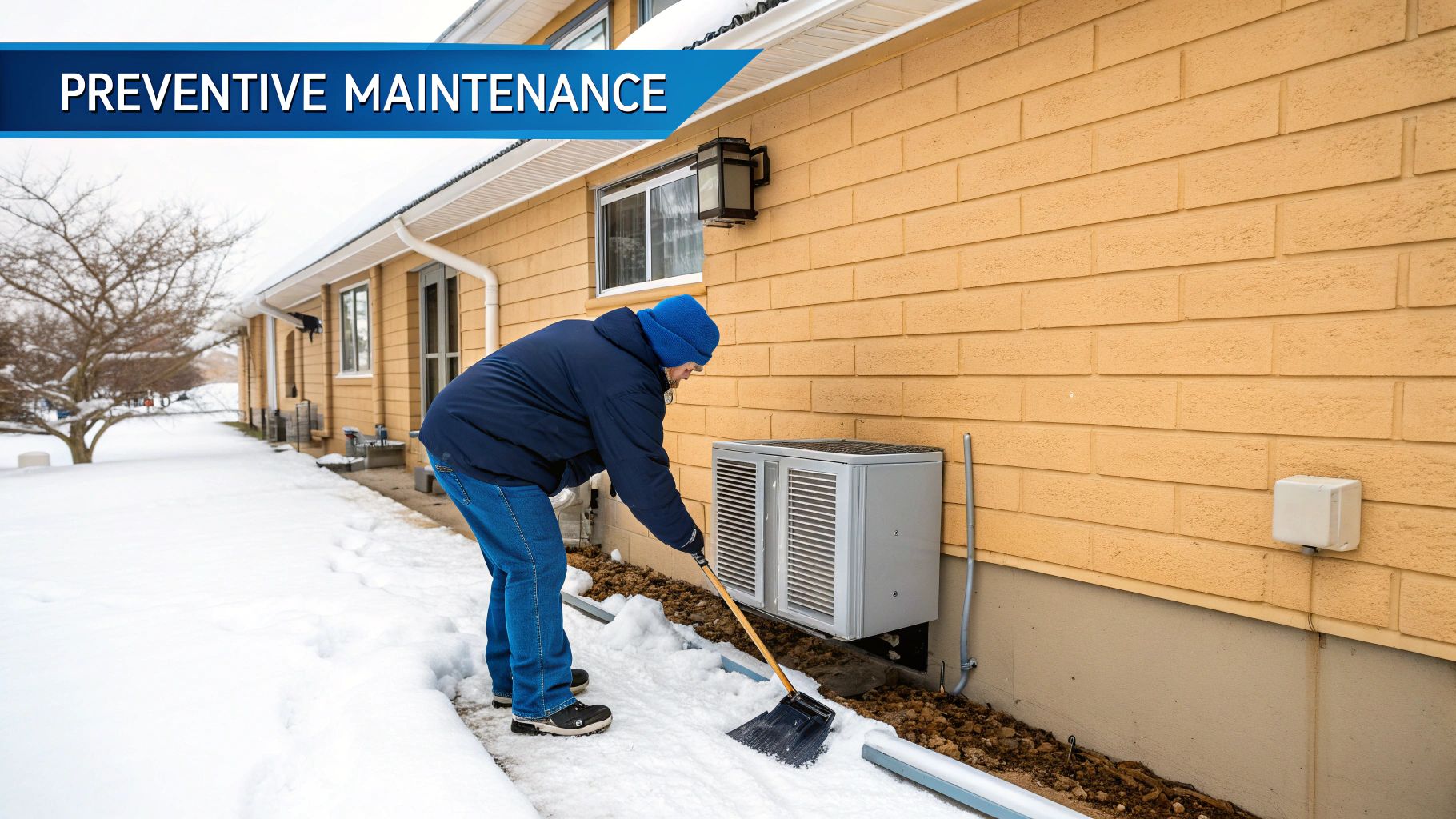
Think of it like maintaining your car; small, consistent efforts go a long way in preventing a major breakdown. These aren't complicated, technical jobs—just a simple checklist of good practices to keep your system humming all winter long.
Your Seasonal Maintenance Checklist
Working these small tasks into your routine helps ensure your furnace runs smoothly when you need it most. It’s often the little things, like a lack of clearance or a blocked vent, that lead to the kind of overheating that causes a furnace to short cycle.
Here are a few key things you can do as a homeowner:
- Keep the Area Clear: Your furnace needs room to breathe. Make sure you don't store boxes, laundry, or anything flammable within three feet of the unit. This ensures proper airflow and, more importantly, prevents a serious fire hazard.
- Check the Flame Color: Every so often, take a peek through the small observation window on your furnace while it’s running. You’re looking for a steady, vibrant blue flame. If you see a flickering, yellow, or orange flame, that’s a sign of a combustion problem that needs professional attention right away.
- Clear Exterior Vents: This is a big one for us Minnesotans. After every significant snowfall, make it a habit to check your furnace's intake and exhaust pipes outside. Drifting snow, ice, or even a pile of autumn leaves can block them up, causing the furnace to shut down as a safety precaution.
The Value of an Annual Professional Tune-Up
While everything you do at home is vital, it doesn't replace an annual professional tune-up. This is easily the single most important step you can take to head off problems down the road. A certified technician does a lot more than a basic cleaning; they run a full diagnostic check that can spot trouble before it leaves you in the cold.
An annual service can improve furnace efficiency by up to 15% and significantly extend the unit's lifespan. It's an investment that pays for itself in lower energy bills and fewer emergency repair calls.
During a tune-up, a technician will dig into the details:
- They inspect the heat exchanger for dangerous cracks.
- They test and calibrate all the safety controls.
- They check and adjust the gas pressure for optimal combustion.
- They clean critical components like the burners and flame sensor.
This yearly service is really the cornerstone of a reliable heating system. You can learn more about how these preventive tasks stop major breakdowns by reading our guide on how maintenance can prevent a furnace repair. Taking these proactive steps is the best way to make sure you won't be left shivering when the next polar vortex decides to visit.
Your Partner for Reliable Minnesota Heating
Dealing with a furnace that won't cooperate is frustrating, especially when a Minnesota winter is just getting started. You’ve done the smart thing—checked the filter, maybe even cleaned the flame sensor—but the flame still sputters out. When you’ve exhausted the DIY checklist and the problem persists, that’s your cue to call in a trusted local expert.
At Neighborhood Plumbing, HVAC, and Electrical, we’re not just another repair service; we're your partners in keeping your home safe and comfortable. We know furnace emergencies don’t stick to a 9-to-5 schedule, which is exactly why our licensed technicians are on call 24/7 for any heating crisis you might face. Our focus is always on delivering a lasting solution, not just a temporary patch.
Why Choose Neighborhood
When you call us, you’re getting a fourth-generation, family-owned company that was built on transparency and quality. We stand behind every job with comprehensive warranties and give you honest, upfront pricing before we even pick up a tool. No surprises, no hidden fees—just reliable service from people who live in your community.
We believe an informed homeowner is a safe homeowner. That's why we take the time to explain the 'why' behind the repair, so you understand your system better and know how to prevent future issues.
From St. Cloud to the East Metro, our team is ready to restore your peace of mind. Whether you need an emergency fix for that intermittent flame or want a free furnace efficiency test to get ahead of the season, we're here to help. Don’t let a small issue snowball into a major, costly problem.
Schedule your service with Neighborhood today and see what it’s like to work with a team that truly cares about your home’s comfort and safety.
Got Questions About Your Furnace Flame? We've Got Answers.
Even after you've checked the usual suspects, it's totally normal to have questions when your furnace flame starts acting up. That on-again, off-again behavior can be nerve-wracking, especially when you see a Minnesota cold front in the forecast. We get these calls all the time, so we've put together some of the most common questions homeowners ask us.
How Long Should I Wait to Call for Help?
Honestly, not long. If you've already done the simple DIY checks—like putting in a fresh air filter and making sure the thermostat has new batteries and the right settings—you shouldn't let it go for more than a day.
When a furnace short cycles constantly, it puts a ton of extra strain on critical parts like the blower motor and the ignitor. That added wear and tear can quickly turn what might have been a simple, affordable fix into a much bigger and more expensive component replacement. Now, if you smell gas or your carbon monoxide detector goes off, that's a completely different situation.
Critical Safety Warning: If you even think you smell gas or your CO alarm sounds, shut the furnace off immediately using the emergency switch. Don't hesitate. Get everyone out of the house, and then call for emergency service from a safe distance.
Can a Dirty Flame Sensor Really Stop the Furnace from Working?
Yes, 100%. That little metal rod is one of the most important safety devices in your entire system. Its only job is to confirm that a flame has actually lit after the gas valve opens.
If that sensor gets covered in a layer of soot or corrosion, it can't sense the heat from the flame. The furnace's main control board sees that lack of a signal as a failed ignition. To prevent a dangerous situation where unburned gas fills your system, it immediately shuts the gas valve. After a few tries (usually three to five), most modern furnaces will just give up and go into a "lockout" mode, refusing to start again until a pro services it.
Is a Yellow or Orange Furnace Flame a Bad Sign?
A healthy, efficient furnace flame should be a strong, steady blue. If you peek inside and see a flame that's yellow, orange, or looks weak and lazy as it flickers, that’s a definite red flag. It’s a classic sign of incomplete combustion.
This is usually caused by dirty burners or the fuel-to-air mixture being off. Not only does this kill your furnace's efficiency and drive up your heating bills, but it's also a safety hazard. An improper burn can produce dangerous levels of carbon monoxide. A yellow flame means you need to get a professional inspection right away.
What Is a Furnace Lockout and How Do I Reset It?
A furnace lockout is a safety feature. It's the system's way of protecting itself after it fails to ignite several times in a row. It’s designed to prevent further damage or an unsafe condition. Resetting the furnace is usually pretty simple.
- First, find the power switch on or right next to the furnace unit and turn it off.
- For a full reset, head to your home's electrical panel and flip the breaker for the furnace to the off position as well.
- Wait a full 60 seconds. This gives the internal circuits time to completely discharge and reset.
- Turn the power back on, starting with the breaker and then the switch by the unit.
This power cycle will typically clear the lockout mode. But remember, a reset is just a temporary fix, not a solution. If you haven't addressed the root problem that caused the flame issue in the first place, the furnace will just try again, fail, and go right back into lockout.
When you’ve tried a reset and the problem just comes right back, it’s a clear sign you need professional help. The licensed technicians at Neighborhood Plumbing, HVAC, and Electrical are pros at diagnosing these issues correctly and getting a solid, lasting solution in place. Schedule your service today and let's get your heat running reliably again.