

When your furnace gives up in the middle of a Minnesota winter, only one question really matters: how much is this going to cost me?
An emergency furnace repair cost in MN can run anywhere from $250 to over $1,500, depending on what time of day it is and which part decided to fail. That price tag includes the premium for after-hours labor, which is always going to be higher than a standard service call.
Your Quick Guide to Emergency Furnace Repair Costs in MN
When a furnace dies on a sub-zero night, it’s not just an inconvenience—it’s a genuine safety issue. The cost of an emergency repair reflects that urgency.
Think of it like a trip to the emergency room versus a scheduled doctor's visit. You’re paying a premium for immediate, priority access to a skilled professional who can get your heat—and your family's safety—restored right now. A repair that might cost around $300 during the day can easily double if it's after hours or on a holiday.
Understanding the Price Jump
The main reason for the higher cost is the emergency service premium. This covers the higher labor rates for technicians working outside of normal business hours and the dispatch fee to get a fully stocked truck to your home immediately. Homeowners across Central Minnesota, from St. Cloud to Blaine, should expect this jump when an unexpected breakdown happens.
To give you a clearer picture, here's a breakdown of what you can generally expect. These numbers factor in the extra costs that come with urgent, after-hours service.
Key Takeaway: An emergency call isn't just another repair; it's a rapid-response service. The final bill reflects the technician's expertise, the price of the parts, and the premium for being available 24/7 when you need it most.
Common Emergency Repairs and Estimated Costs
To help you get a sense of the potential costs, I've put together a table of common furnace problems and what you might expect to pay for an emergency fix. These are just estimates, of course. A technician can only give you an exact quote after they've had a chance to diagnose the specific issue with your system.
Estimated Emergency Furnace Repair Costs in Central MN
This table breaks down some of the most frequent furnace issues and their estimated emergency repair costs, which include the premium for after-hours labor, diagnostic fees, and parts.
| Furnace Component or Issue | Average Standard Repair Cost | Estimated Emergency Repair Cost Range |
|---|---|---|
| Thermostat Malfunction | $100 – $300 | $200 – $450 |
| Flame Sensor Replacement | $80 – $250 | $250 – $400 |
| Ignitor Replacement | $150 – $400 | $300 – $550 |
| Draft Inducer Motor | $400 – $900 | $600 – $1,200 |
| Blower Motor Replacement | $500 – $1,500 | $750 – $2,000+ |
| Cracked Heat Exchanger | $1,500 – $3,500 | $2,000 – $4,000+ (Often leads to replacement) |
Remember, these figures are a guide. A simple fix like a new flame sensor is on the lower end, while a major component failure like a blower motor will naturally cost more. And a cracked heat exchanger is a serious safety hazard that often means it's time to consider a full furnace replacement.
Breaking Down Your Emergency Furnace Repair Bill
When an HVAC tech hands you an invoice for an emergency repair, that total can be a bit of a shock. It helps to understand what you're actually paying for—it’s not just a part, but a blend of expertise, speed, and availability rolled into one. Seeing the breakdown can take a lot of the stress out of the situation.
Think of it like ordering a pizza at 2 AM. You aren’t just paying for dough and cheese; you’re paying for the convenience of a kitchen being open and a driver willing to head out when everyone else is asleep. Your emergency furnace bill works the same way, combining a few key costs to get your heat back on now.
The Diagnostic or Trip Fee
The first thing you’ll almost always see on the bill is a diagnostic fee, sometimes called a trip charge. This is a flat rate that covers the technician's visit to your home. It pays for their travel time, gas, and most importantly, the skill it takes to figure out exactly what’s wrong with your furnace.
This fee ensures a certified pro can properly assess your system, whether the problem takes ten minutes to spot or two hours to diagnose. It’s the price of getting an expert’s eyes on the problem, which is always the most critical first step.
After-Hours Labor Rates
Labor is usually the biggest variable when it comes to the emergency furnace repair cost in MN. The hourly rate for a technician during normal business hours is one thing, but calling for help on a weekend, a holiday, or in the middle of a frozen Minnesota night means you’re paying a premium for after-hours labor. That extra cost compensates the technician for dropping everything to be available when you need them most.
A lot goes into calculating these charges. For a deeper dive, understanding labor costs for home services can give you a better sense of how technicians' time is billed across different trades.
This is where a standard repair bill can quickly escalate into an emergency expense.
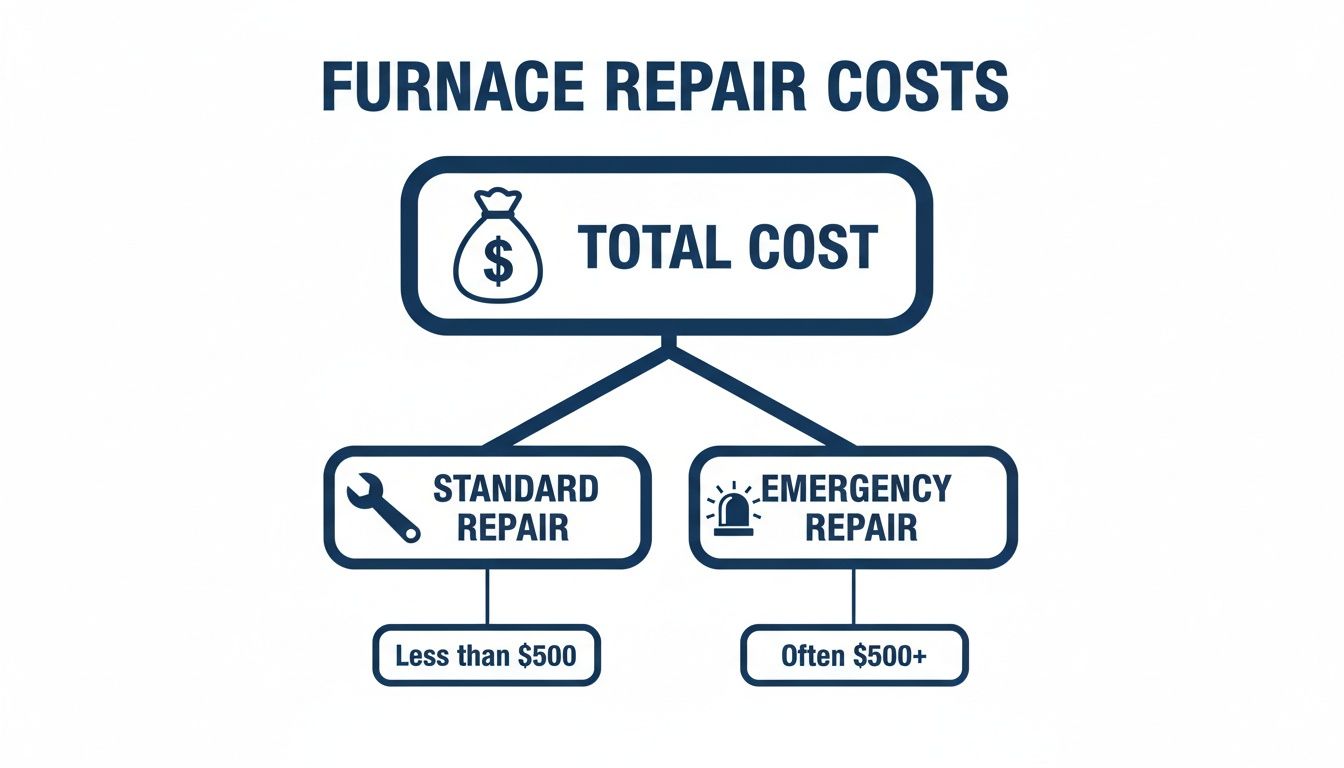
As you can see, the premium charges for an after-hours call are what really drive up the final cost compared to a scheduled repair.
The Cost of Replacement Parts
The third piece of the puzzle is the cost of the parts themselves. This can range wildly depending on what decided to fail.
- Minor Parts: Things like a flame sensor or an ignitor are fairly cheap, often under $50 for the component itself.
- Major Components: On the other hand, a blower motor, draft inducer, or control board can set you back several hundred dollars or more.
The price tag really depends on your furnace brand, its model, and how complex the part is. Our service vans are stocked with the most common parts, but if you need something rare or specific to your unit, a special order might be necessary, which can also affect the final cost.
The Emergency Service Premium
Finally, lots of companies tack on a specific emergency service premium. Think of this as a "skip-the-line" fee that’s layered on top of the diagnostic fee and the higher labor rate. It bumps your call to the absolute top of the list for immediate dispatch.
In a Minnesota winter, the stakes are high, and this premium reflects that urgency. After-hours labor rates can jump to $150–$215 per hour from the standard $75–$150. When a major part like a variable-speed blower motor fails, that can easily push the total repair cost into the $750–$2,000+ range.
This charge is what allows a company to keep a roster of technicians on-call 24/7, ready to head out to communities like Sauk Rapids and Blaine at a moment’s notice. It’s the price you pay for guaranteed help when you absolutely can’t wait.
Common Furnace Failures and Their Repair Costs
When your furnace quits in the middle of a frigid Minnesota night, the specific problem isn't immediately obvious—all you know is that it's dangerously cold. But not all furnace breakdowns are created equal. Some are quick fixes, while others are major system failures that hit your wallet hard.
Knowing the most common issues can help you get a sense of the problem and prepare for the potential emergency furnace repair cost in MN. We can break down most furnace failures into three categories: minor hiccups, moderate component failures, and major system breakdowns. Each one comes with its own symptoms and, more importantly, its own price tag.
Minor Repairs: Simple but Critical Fixes
Minor repairs usually involve small, inexpensive parts that, despite their size, play a huge role in getting your furnace to run. While the component itself might not cost much, you're paying for a pro's expertise to correctly diagnose the problem and safely install the new part during an emergency call.
Two of the most common culprits are:
- Faulty Ignitor: Think of this as the spark plug for your furnace. If it cracks or fails, the furnace can't light its burners to create heat. You might hear the furnace click on, but you'll never feel warm air. An emergency replacement typically costs $300 to $550.
- Dirty or Faulty Flame Sensor: This is a crucial safety device that confirms a flame is present after the ignitor does its job. If it's dirty or broken, it shuts the whole system down to prevent unburned gas from pumping into your home. It’s a quick fix for a technician, usually running $250 to $400 for an emergency visit.
These two parts are behind a surprising number of "furnace won't start" calls. You can dive deeper into what might be going on by exploring the common causes of furnace repairs in our detailed guide.
Moderate Repairs: When Key Components Fail
Moving up the ladder, moderate repairs involve more complex and expensive mechanical parts. These are the workhorses of your system, and when they fail, everything grinds to a halt. The parts are pricier, and the labor is more involved.
A classic example is a failed draft inducer motor. This little fan is responsible for pushing exhaust gases safely out of your home. If it breaks down, your furnace will shut off as a safety measure. You might hear a loud humming or rattling sound right before it gives up completely. An emergency replacement can range from $600 to $1,200.
Another common moderate repair is a bad control board. This is the furnace's brain, telling all the other parts when to turn on and off. If it fries, your furnace might not start at all, or it could just act erratically. Replacing it on an emergency basis often costs between $500 and $900.
In Minneapolis, the average cost for a standard furnace repair is around $289, with most jobs falling between $115 and $463. But when you're dealing with an emergency in the dead of winter, those numbers can climb fast. The city's cost of living is 16% above the national average, which pushes labor rates up. While a simple fix is affordable, something complex like a blower motor or coil replacement can easily top $1,500 once you factor in after-hours premiums.
Major Failures: The Most Serious and Costly Breakdowns
Major failures are the breakdowns every homeowner dreads. These involve the most critical—and expensive—components of your furnace. At this point, the repair costs can start to get uncomfortably close to the price of a brand-new unit.
- Cracked Heat Exchanger: This is the most serious and dangerous failure possible. The heat exchanger is what separates the toxic combustion gases from the breathable air blown into your home. A crack can leak deadly carbon monoxide gas. Because of the extreme safety risk and the intense labor involved, a replacement can cost $2,000 to $4,000+. Honestly, in most cases, replacing the entire furnace is the safer and more financially sound choice.
- Dead Blower Motor: The blower motor is the powerful fan that circulates warm air through your ducts. If it dies, your furnace might be making heat, but none of it is going anywhere. This is a labor-intensive job, with emergency costs often ranging from $750 to over $2,000, depending on the type of motor in your system.
When you’re facing a major repair bill, you’ve got a tough decision to make. It’s often the tipping point where you have to seriously weigh the cost of the repair against the age, efficiency, and overall health of your current furnace.
Deciding Between a Costly Repair and a Full Replacement
When a major component fails, it's easy to get sticker shock. But before you drain your savings on a hefty repair, take a step back. Use this table to weigh the cost against the age and efficiency of your furnace. This can help you make a sound financial decision for the long term.
| Furnace Age | Type of Repair Needed | Recommendation | Long-Term Cost Consideration |
|---|---|---|---|
| 0-7 years | Any repair under $1,500 | Repair. Your furnace is still relatively new and likely has years of life left. | A single repair is cost-effective. Multiple repairs might signal a "lemon" unit, but that's rare. |
| 8-12 years | Blower motor, control board | Consider both. If the repair is more than 50% of replacement cost, lean toward replacement. | An older furnace is less efficient. A new unit could save you hundreds on energy bills over time. |
| 12+ years | Cracked heat exchanger, major motor | Strongly consider replacement. The unit is near the end of its typical lifespan. | A new furnace comes with a warranty and will be far more energy-efficient, paying for itself over time. |
| Any age | Cracked heat exchanger | Replace immediately. This is a serious safety hazard that should not be repaired. | The safety risk of carbon monoxide poisoning far outweighs the cost of a new furnace. |
Ultimately, pouring thousands into an old, inefficient furnace is often just delaying the inevitable. A new, high-efficiency unit not only gives you peace of mind with a fresh warranty but can also significantly lower your monthly heating bills.
How to Reduce Repair Costs and Avoid Future Breakdowns
Look, nobody wants to deal with a furnace failure, but there are absolutely things you can do to manage the emergency furnace repair cost in MN and hopefully sidestep the next crisis. It’s all about shifting from a reactive mindset to a proactive one. Doing this won't just save you a pile of cash; it'll also save you the sheer panic of a no-heat emergency on a bone-chilling Minnesota night.
The single most powerful tool you have is preventive maintenance. Think of your furnace like your car—you wouldn't drive it for 50,000 miles without an oil change and expect it to run perfectly, right? Your furnace is a hard-working machine that needs a little TLC to operate safely and efficiently.
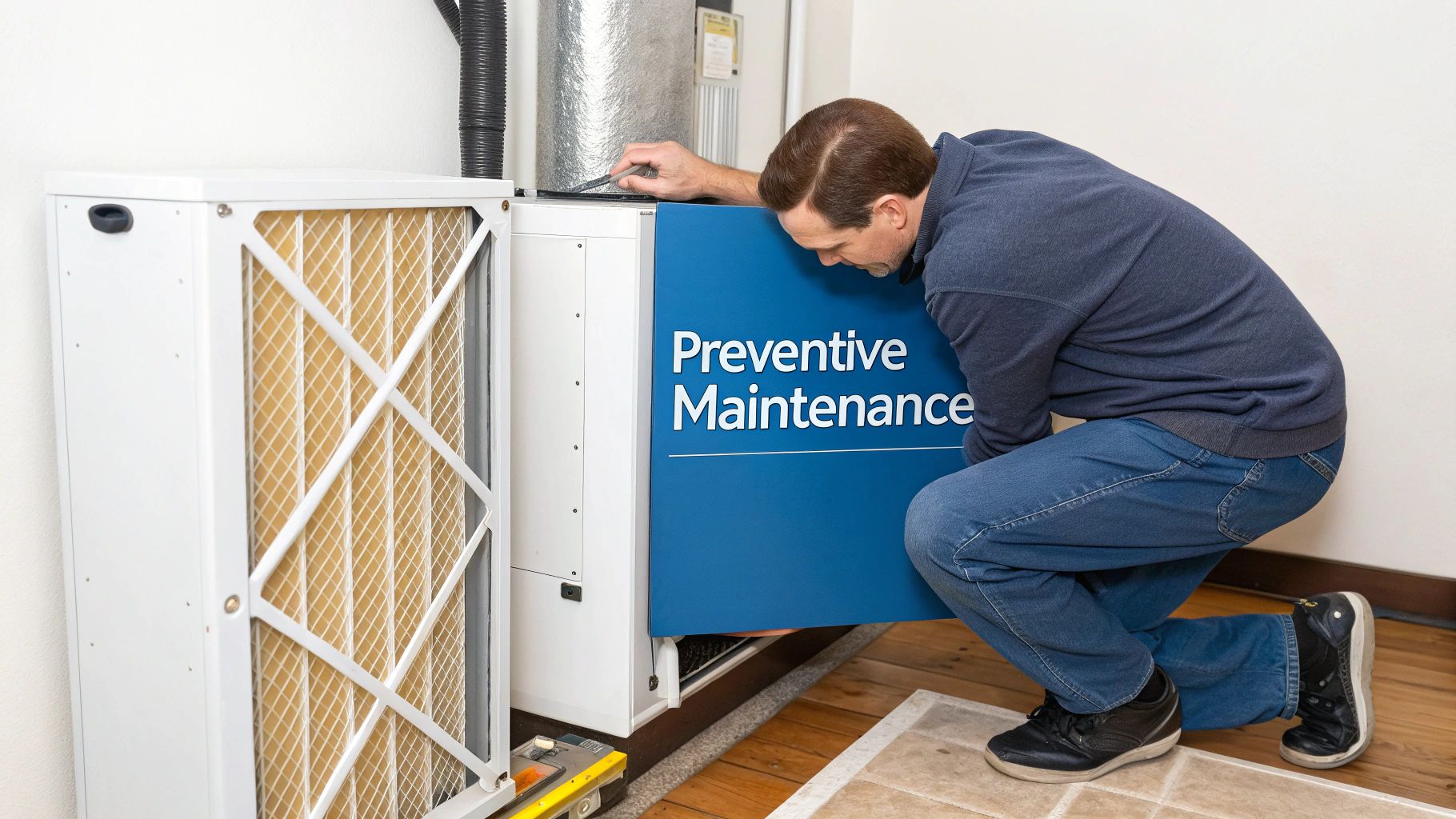
Embrace Proactive Furnace Maintenance
An annual maintenance plan is hands-down the best way to catch small problems before they explode into major failures. A trained technician can spot a worn-out part, clean critical components, and make sure your system is running at its best. This simple step can cut down your need for emergency repairs by over 30%.
These tune-ups are designed to find trouble in a low-stakes environment, not during a blizzard at 2 AM. A tech might spot a weakening ignitor or a dirty flame sensor that's about to give up, letting you schedule a cheap, simple fix instead of paying for a premium-priced emergency call. You can learn more about how maintenance can prevent a furnace repair and see why it’s such a smart move for any Minnesota homeowner.
To really get ahead of costly breakdowns and keep your furnace running longer, it helps to have a solid HVAC maintenance plan. A structured approach like this ensures every critical part gets checked on a regular schedule.
Simple Steps for Every Homeowner
Beyond calling in the pros, there are a few dead-simple tasks you can do yourself to keep your furnace happy and your wallet fuller. The most important one is also the easiest.
Change Your Air Filter Regularly. I can't say this enough. A clogged air filter is the number one cause of furnace breakdowns, hands down. It's a factor in more than half of all service calls because it chokes the airflow, forcing your furnace to work way too hard, overheat, and eventually just quit.
Here are a few other simple but effective tips:
- Keep Vents and Registers Clear: Make sure furniture, rugs, or drapes aren't blocking any of your air vents. Good airflow is everything—it keeps the system efficient and prevents strain on the blower motor.
- Listen for Strange Noises: Pay attention to new sounds. Banging, rattling, or screeching noises are your furnace’s way of screaming for help before it completely gives out.
- Check Your Thermostat Batteries: Seriously. Before you assume the worst, check the thermostat. Sometimes, the fix is as simple as popping in a new pair of batteries.
Smart Strategies During an Emergency
Even with perfect maintenance, emergencies can still pop up. When you're in that stressful moment, you can still take steps to control the cost and make sure you're getting a fair shake.
First, when you call for a repair, ask how they bill. Do they use flat-rate pricing for the job, or is it a straight hourly billing model? A flat rate is great because you get a clear, upfront cost, so you won't be watching the clock and worrying about a bill that keeps climbing.
Next, always ask if they have any specials or discounts running. Many companies, including us here at Neighborhood, offer seasonal promotions that can help soften the blow of a repair, even an emergency one. It never hurts to ask, and it could easily save you a good chunk of change. Taking these small steps can give you a bit of control during a chaotic time and help keep the final bill in check.
Why Choose Neighborhood for Your Emergency Furnace Repair
When your furnace quits in the middle of a Minnesota winter, the company you call matters just as much as the repair itself. You need a team that gets the urgency, respects your budget, and has the skill to get the job done right—the first time. It’s about more than just fixing a machine; it's about restoring safety and peace of mind when you feel most vulnerable.
At Neighborhood Plumbing, HVAC, and Electrical, we've built our reputation on being that reliable partner for homeowners across Central Minnesota. We know a late-night breakdown is stressful enough without the added anxiety of a ticking meter. That’s why our whole approach is designed to put you at ease, starting with our clear, upfront pricing.
Upfront Pricing Instead of Hourly Billing
One of the biggest worries during an emergency is not knowing what the final bill will be. Lots of companies bill by the hour, which means a tricky diagnosis or a hard-to-find part can make your bill spiral out of control. We do things differently.
We provide upfront, job-based pricing before any work begins. After our technician figures out the issue, they'll walk you through the solution and give you a firm, transparent price for the entire job. Whether the repair takes one hour or three, that price won’t change. This takes away the stress of "watching the clock" and lets you approve the repair with total confidence, knowing exactly what to expect.
Rapid, Local Response When You Need It Most
An emergency is no time to wait for a technician driving from across the state. We are a truly local company with offices strategically located in Foley, Sauk Rapids, and Chisago City. This means when you call us for help, a highly trained, certified technician is already in your area.
Our local presence allows us to offer genuine 24/7 availability and lightning-fast response times. We can get a fully stocked service truck to your home quickly, whether you're in St. Cloud, Forest Lake, Blaine, or anywhere in between. Our team is ready to provide expert 24-hour emergency heating service whenever you call.
Your family's safety is our top priority. We don't just fix furnaces; we restore comfort and security with a commitment to our community. This includes initiatives like donating carbon monoxide detectors to ensure your home remains a safe haven.
Guarantees and Flexible Options
We stand behind our work, and that promise covers our parts and labor. Every repair we perform is backed by a solid warranty, giving you peace of mind that the fix is built to last. We use high-quality parts and follow the industry’s best practices, ensuring your furnace operates safely and reliably after we leave.
We also know that a major, unexpected repair can strain any household budget. The emergency furnace repair cost in MN can be a significant expense, which is why we offer flexible financing options. These plans let you get the critical repair you need now and pay over time, ensuring your family stays warm without breaking the bank. Don't hesitate to ask our team about the options available to you.
Answering Your Top Emergency Furnace Repair Questions
When your furnace quits in the middle of a Minnesota winter, your mind starts racing. How much is this going to cost? Is it even safe to stay here? How fast can someone get here? It's completely normal to feel overwhelmed.
This section is designed to give you clear, straight-to-the-point answers to the questions we hear most often during a heating emergency. The goal is to help you make smart decisions when the pressure is on.
How Much Should I Expect to Pay for an Emergency Repair?
This is always the first question, and for good reason. While every situation is different, the emergency furnace repair cost in MN usually falls somewhere between $250 for a minor fix and over $1,500 for a major part replacement. That price tag includes the extra charge for getting a technician out to you after hours, on a weekend, or during a holiday.
The urgency is the biggest factor here. Furnace repair costs in cold climates like ours can swing pretty wildly. For example, a standard daytime repair in Minneapolis might average around $289. But when it's an emergency, that bill can jump by 30–50% because of the higher labor rates and the need to dispatch someone immediately.
That premium exists because, in a state with roughly 7,000 heating degree days a year, a dead furnace isn't just an inconvenience—it's a serious safety issue. You can learn more about how these furnace repair costs are calculated and see a detailed breakdown of what to expect.
What Is Included in the Emergency Service Fee?
That initial emergency fee—sometimes called a trip charge or diagnostic fee—is paying for two critical things: getting a certified technician to drop everything and head to your home outside of normal hours, and their expertise in figuring out exactly what went wrong.
Think of it this way: you're paying to get a fully stocked service truck and a trained professional to your door, putting you at the very top of the priority list. This fee is separate from the cost of any parts or the labor needed to actually perform the repair.
Is It Safe to Stay Home if My Furnace Is Broken?
This really depends on what your furnace is doing (or not doing). If it simply stopped blowing hot air, your main problem is the cold. It’s generally safe to stay home as long as you can keep the house at a safe temperature with other heat sources, like a fireplace or properly used space heaters.
However, some symptoms are immediate red flags. You should leave your home right away and call for help from a safe distance if you notice any of these signs:
- A rotten egg smell: This is the classic sign of a natural gas leak and is extremely dangerous.
- The carbon monoxide (CO) detector is alarming: This is a life-or-death emergency. Get out immediately.
- You see smoke or flames: This indicates a fire hazard.
In any of those scenarios, get your family out of the house first. Then, call your utility company and a trusted HVAC professional like us.
Crucial Safety Tip: Every single home in Minnesota with a furnace or any fuel-burning appliance needs working carbon monoxide detectors on each level. Test them once a month and put in fresh batteries twice a year. That little device is your best defense against an invisible, odorless killer.
Can I Do Anything Myself Before Calling for Help?
Absolutely. Before you pick up the phone, running through a few simple troubleshooting steps could solve the problem and save you the cost of an emergency visit. Give this quick checklist a try:
- Check Your Thermostat: Is it actually set to "HEAT"? Sometimes it gets bumped to "COOL" or "OFF" by accident. Also, check the batteries—a dead thermostat is a common culprit.
- Inspect Your Air Filter: A filter that's caked with dust and debris can choke off airflow and cause the furnace to shut down to protect itself. If it looks filthy, swapping in a clean one might be all it needs.
- Find the Furnace Power Switch: There’s usually a switch that looks just like a light switch on or near the furnace unit. Make sure it hasn't been flipped to the "OFF" position.
- Look at Your Circuit Breaker: Head to your electrical panel and find the breaker labeled for your furnace. If it's tripped, flip it back on once. If it trips again right away, don't touch it again and call a pro immediately.
If you've tried all that and still have no heat, it's time to call in the professionals. Trying to perform complex repairs on a gas furnace yourself isn't just difficult—it can be incredibly dangerous.
How Quickly Can a Technician Arrive for an Emergency?
Response times will vary, but any reputable local company should be able to get a technician on the road quickly, often within an hour or two of your call—especially for a no-heat emergency in the dead of winter. At Neighborhood, our local offices in Foley, Sauk Rapids, and Chisago City are positioned to get our team across Central Minnesota fast.
When you call, make sure you tell the dispatcher you have a "no-heat" emergency. This magic phrase ensures your call gets flagged as a top priority. Our team is on standby 24/7 because we know furnaces don't care about 9-to-5 business hours.
When a heating emergency hits, you need a team you can trust for fast, honest, and reliable service. At Neighborhood Plumbing, HVAC, and Electrical, we believe in upfront pricing and expert repairs to get your home safe and comfortable again. If your furnace needs immediate help, visit us at https://4neighborhood.com to schedule your emergency service now.