

When your furnace suddenly quits on you, it’s easy to jump to the worst conclusion. But more often than not, the culprit is something surprisingly simple—like wrong thermostat settings, dead batteries, or a tripped circuit breaker.
These common hiccups can stop your heating system from getting the signal to start, leaving your home chilly and you stressed out.
Your First Five Checks When Your Furnace Won't Turn On
That sudden chill creeping through your house is never a welcome feeling, but don’t panic just yet. Before you even think about calling for a repair, there are a few simple checks you can do yourself that often solve the problem in minutes.
Many furnace issues are surprisingly straightforward. Running through this initial checklist can save you time, money, and a whole lot of frustration. This is your immediate action plan for the most common reasons a furnace fails to kick on.
The Thermostat: Your System's Brain
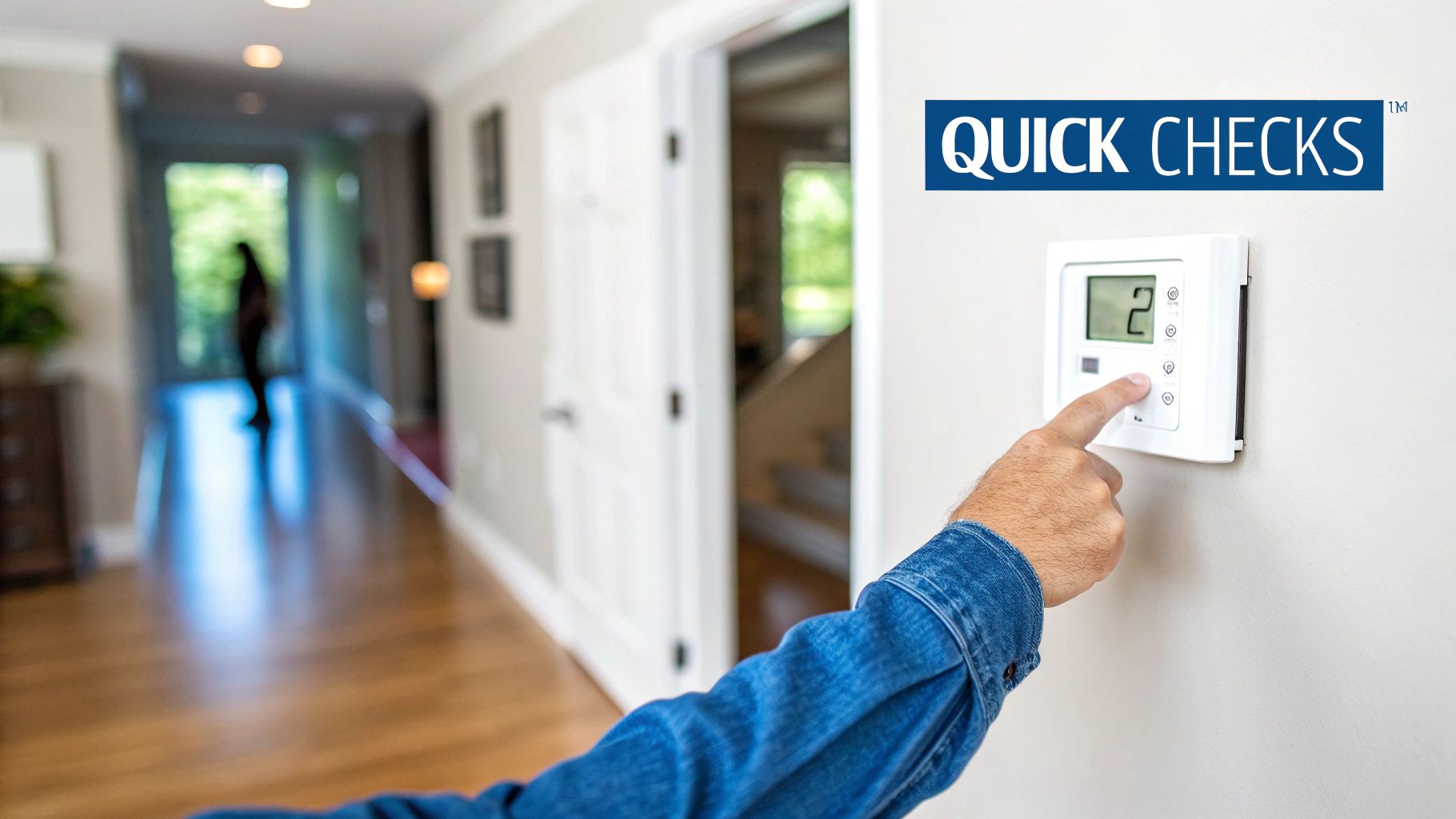
Start with the easiest and most frequent offender: the thermostat. Think of it as the command center for your entire heating system. If it’s not communicating correctly, nothing else will work.
First, make sure it’s actually set to “HEAT” and that the temperature is set at least five degrees higher than the current room temperature. You'd be surprised how often this simple oversight is the real issue.
Next, check the batteries. A thermostat with weak or dead batteries can’t send the signal to your furnace. In fact, just replacing the batteries resolves the issue in about 15-20% of no-heat service calls—a quick fix that only costs a few dollars. You can find out more about common causes of furnace failure from HVAC experts to see just how frequent this is.
Power Supply Checks
Your furnace needs electricity to run, so any interruption in power will shut it down completely. There are two key spots you need to check right away.
- The Furnace Power Switch: Most furnaces have a dedicated power switch that looks just like a standard light switch. It's usually located right on or near the furnace unit. This switch can easily be flipped off by accident, especially if it’s in a high-traffic area.
- The Circuit Breaker: Head over to your home's main electrical panel and find the breaker labeled "Furnace," "HVAC," or something similar. If it has tripped to the middle or "OFF" position, push it firmly back to "ON."
To help you visualize these first steps, we’ve put together a simple troubleshooting checklist. It covers the most common issues and what you can do about them before calling for help.
Initial Furnace Troubleshooting Checklist
| Check | Common Symptom | Action to Take | Tools Needed |
|---|---|---|---|
| Thermostat Settings | Furnace is completely silent; no fan, no sounds. | Set to HEAT and raise the temperature 5+ degrees above the room temp. | None |
| Thermostat Batteries | Blank thermostat screen or a low battery warning. | Replace the batteries with a fresh set. | New AA or AAA batteries |
| Furnace Power Switch | No power to the furnace at all. | Ensure the switch (near the unit) is in the ON position. | None |
| Circuit Breaker | Furnace and thermostat are both off. | Locate the breaker in your electrical panel and reset it to ON. | None |
| Clogged Air Filter | Furnace cycles on and off quickly or blows weak/cool air. | Inspect the filter; replace it if it's dirty or clogged. | New air filter |
This table summarizes the simple, no-tool checks that can often get your heat back on in minutes. If you’ve gone through these and still have no luck, it’s time to move on to the next steps.
This flowchart also helps visualize the initial troubleshooting path, guiding you from the thermostat to the breaker panel.
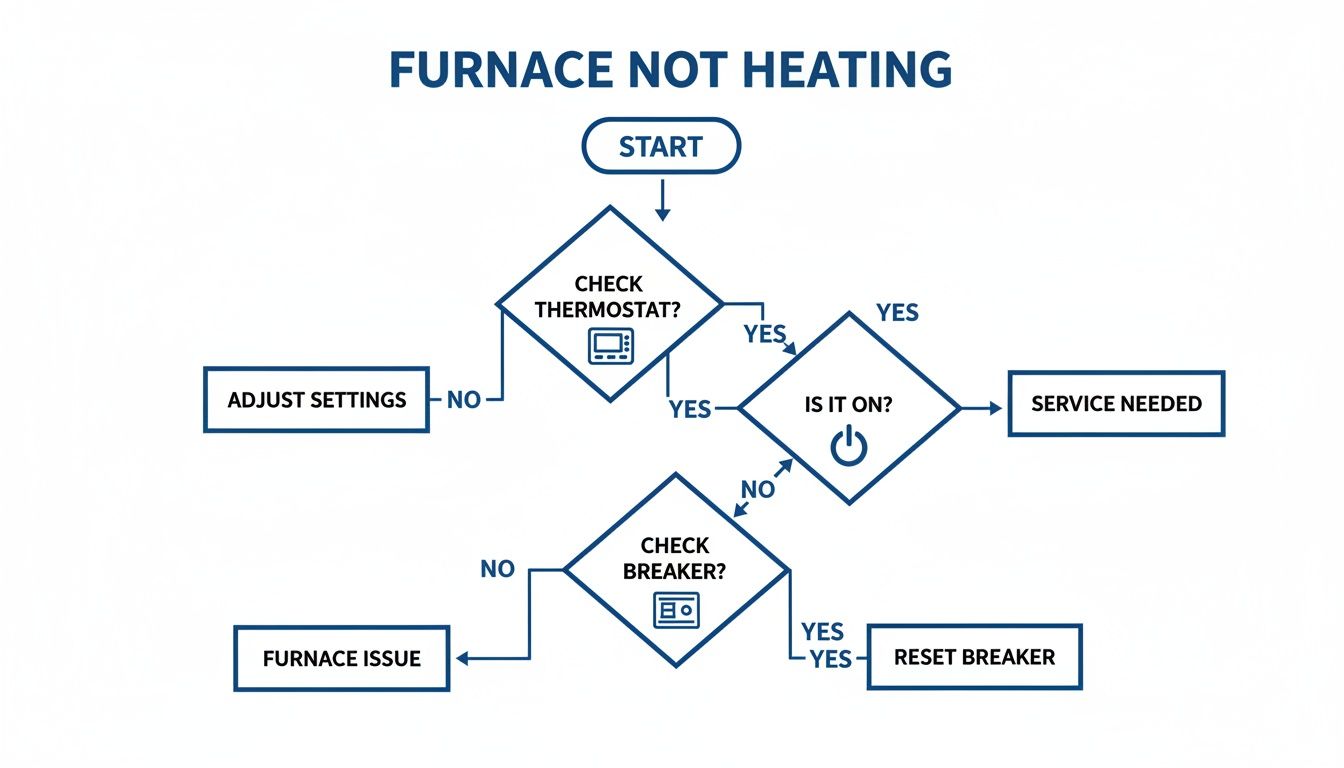
As the chart shows, these initial power-related checks are the most logical starting point and resolve a huge number of furnace problems without needing to pick up a single tool.
Pro Tip: If your circuit breaker trips repeatedly, that’s a red flag for a bigger electrical problem. Don't just keep resetting it. This is a clear signal that it’s time to call a professional technician from Neighborhood Plumbing, HVAC, and Electrical to diagnose the root cause safely.
How a Clogged Air Filter Can Stop Your Furnace
If the basic power checks didn't get you anywhere, your next stop should be the furnace air filter. A dirty filter is one of the most common culprits when a furnace won't fire up, but thankfully, it's also one of the easiest fixes for a homeowner.
Think of the filter as your furnace's lungs—it needs to breathe freely to do its job.
When that filter gets packed with dust, pet dander, and other gunk, it chokes off the airflow. This forces your furnace to work way harder than it should just to pull in enough air. Your system has a built-in safety net called a high-limit switch, which senses when things get too hot internally. A clogged filter is a classic cause of overheating, which trips this switch and shuts the whole unit down to prevent damage or even a fire.
Locating And Inspecting Your Furnace Filter
Finding the filter is usually pretty simple. Look for a slot in the blower compartment or in the return air duct, often housed in a metal or plastic cover on the side, top, or bottom of your furnace. Once you find the access panel, just slide the old filter out.
The easiest test? Hold it up to a light. If you can’t see the light through it, it’s definitely clogged and needs to go. A clean filter looks white or off-white; a dirty one will be an unmistakable shade of gray or brown, caked with a layer of dust.
Believe it or not, clogged filters are a massive contributor to HVAC failures, responsible for about 30% of all breakdowns. This is especially true here in Central Minnesota, where the changing seasons kick up tons of dust and pollen. The Department of Energy also points out that a dirty filter can drive up your energy use by as much as 15%, so this simple task is great for your wallet, too.
Choosing And Replacing The Filter
Before you head to the store, check the size printed right on the cardboard frame of your existing filter—it’ll say something like 16x25x1. Using the right size is non-negotiable if you want your system to work correctly.
Replacing it is a breeze if you follow these steps:
- Power Down First: Always kill the power to your furnace at the switch or circuit breaker before you open any panels. Safety first.
- Pull the Old Filter: Slide the dirty filter out of its slot.
- Check the Airflow Arrow: You'll see an arrow printed on the filter's frame. This shows the direction of the airflow and must point toward the furnace blower motor.
- Slide in the New One: Insert the new filter, making sure that arrow is pointing the right way.
- Power Back Up: Close the panel, then turn the furnace power back on.
Pro Tip: Set a recurring reminder on your phone or calendar to check your filter every 30-60 days. It’s the single best thing you can do to prevent this problem. Plus, a clean filter keeps your furnace happy and improves your home's air quality.
Swapping out the filter is a quick and satisfying fix. But if your furnace still won’t turn on after this, you might be dealing with a more complex issue. You can learn more about how a dirty furnace filter can cause no heat in our detailed guide.
Inspecting Your Pilot Light and Ignition System
Alright, so you’ve confirmed the furnace has power and the filter isn’t clogged. The next logical place to look is the ignition system. This is what actually sparks your furnace to life, and if it's not working, your furnace simply can't create heat, no matter what the thermostat is demanding.
Whether your furnace is a trusty older model or a newer high-efficiency unit, the ignition process is a critical checkpoint. The troubleshooting steps are a little different depending on the age of your system, so let's break down what to look for.
Standing Pilot Lights in Older Furnaces
If your furnace has been around for a decade or two, it probably uses a standing pilot light. Think of it as a small, continuous flame that’s always on, ready to ignite the main burners whenever the house needs heat. Sometimes, that little flame just goes out.
You can usually check this by peeking through a small window or opening on the front of the furnace. You’re looking for a small, steady blue flame. If you don't see one, you've likely found your problem. Relighting it is often straightforward, but you absolutely have to follow the instructions printed on the label inside your furnace's access panel.
Safety First: If you smell gas (that distinct rotten egg odor), stop what you're doing immediately. Do not try to relight the pilot. Get everyone out of the house, and call your gas company's emergency line from a safe distance.
Problems with pilot lights are a huge source of furnace failures, especially here in Central Minnesota where a reliable furnace is non-negotiable. A strong draft, a dirty sensor, or a worn-out part called a thermocouple can all cause the pilot to extinguish, shutting down the whole system right when you need it most.
Electronic Igniters in Modern Furnaces
Newer furnaces did away with the constantly burning pilot light to save energy. Instead, they use an electronic ignition system. These usually come in one of two flavors:
- Hot Surface Igniter: A small ceramic piece that heats up and glows bright orange-red to light the gas.
- Intermittent Pilot: A spark ignites a small flame just for a moment, right before the main burners kick on.
The telltale sign of a failing electronic igniter is hearing the furnace click on, but the burners never actually roar to life. You might hear a series of clicks as the system tries over and over again to light. A faulty igniter or a dirty flame sensor is the usual culprit.
While cleaning a flame sensor is something a handy homeowner can sometimes tackle, replacing an igniter is a job best left to a professional. If you think the flame sensor might be the issue, you might want to check out our guide on how to locate the flame sensor on a furnace.
Decoding Your Furnace's Blinking Error Codes
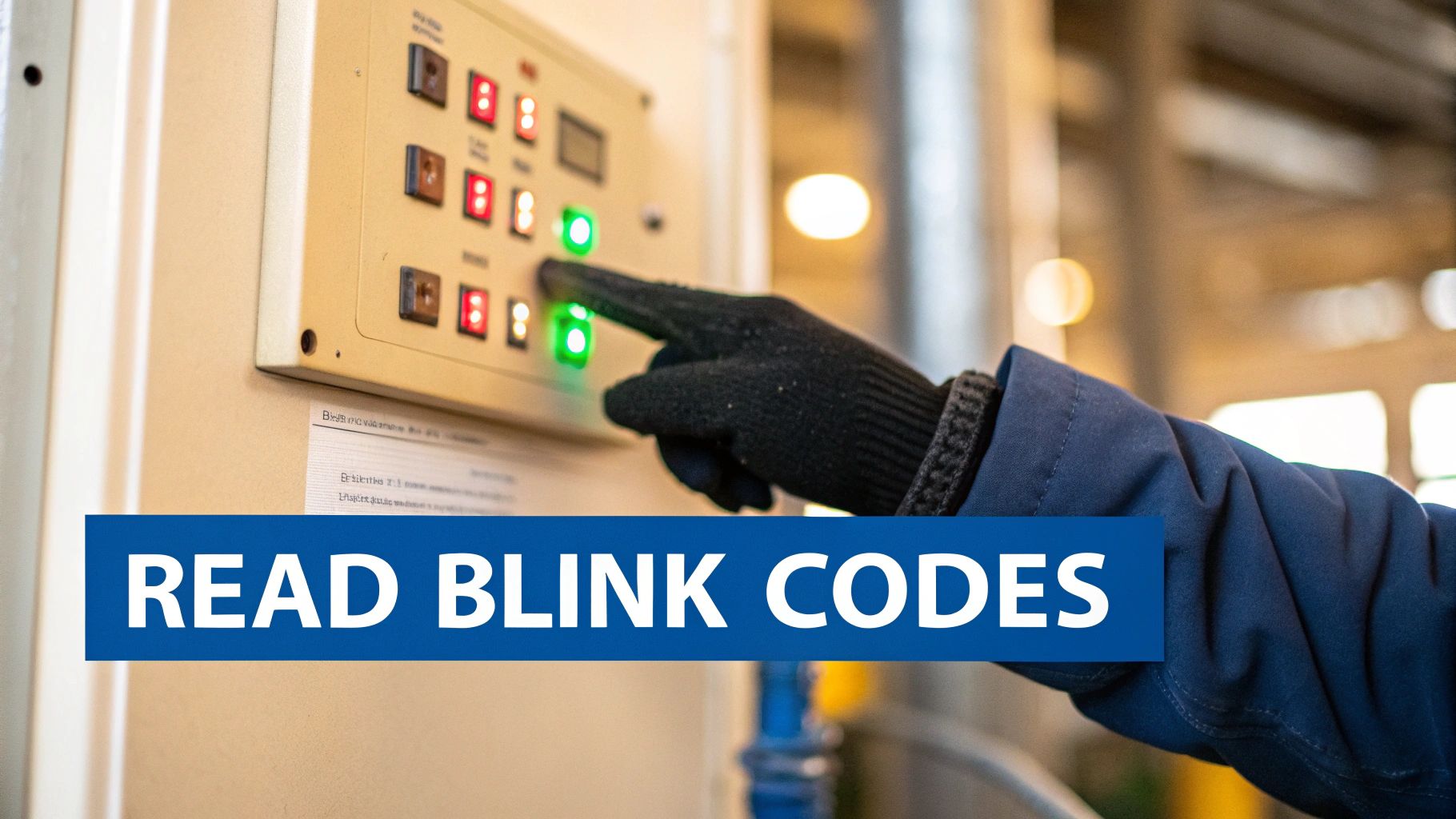
If your furnace is on the newer side, it might be trying to tell you exactly what’s wrong. Many modern systems have a small LED light on the control board that blinks in specific patterns, like a secret language for different problems. Think of it as your furnace’s way of asking for help when it won’t turn on.
To find these codes, you’ll have to get a look at the furnace's control panel. The first step, always, is to turn off the power to your furnace. You can usually find a dedicated switch right near the unit, or just flip the breaker in your main electrical panel. Most furnaces have a main service door and a smaller one covering the blower compartment—the blinking light is usually visible through a small viewport on that blower door.
Finding And Reading The Codes
Once you've spotted the viewport, you can turn the power back on and watch what the LED does. Don't just count the blinks; look for a pattern. It could be a series of fast flashes followed by slow ones, or a specific number of blinks that repeats itself.
That sequence is your error code. Furnace manufacturers are pretty good about putting a sticker on the inside of the furnace panel that acts as a legend, translating the blink patterns into plain English. If you don't see one, a quick online search for your furnace model's manual will pull up the chart you need.
This diagnostic feature is a huge help. It takes a lot of the guesswork out of why your furnace won't turn on and points you in the right direction. For instance, three blinks might mean a pressure switch fault, while a steady, continuous blink could signal a flame sensor problem.
Understanding these codes gives you a real advantage. It helps you figure out if you’re looking at a simple fix you can handle yourself or something more serious that needs a professional eye. Below are some common codes you might see, but remember they can vary a bit from brand to brand.
Common Furnace Error Codes And Their Meanings
Error codes can feel a little intimidating, but they're really just your furnace's way of giving you a heads-up. Here’s a quick translation of what some of the most common flash counts mean.
| Flash Count | Potential Problem | What It Means For You | Recommended Action |
|---|---|---|---|
| Steady ON | Normal Operation | The control board has power and is working correctly. | No action needed if the system is heating properly. |
| 1 Blink | Ignition Lockout | The furnace tried and failed to ignite multiple times. | Check for gas supply issues or a dirty flame sensor. |
| 3 Blinks | Pressure Switch Fault | A vent pipe is likely blocked or the switch has failed. | Check for obstructions in your intake/exhaust vents outside. |
| 4 Blinks | High-Limit Switch Open | The furnace is overheating, often due to a clogged air filter. | Turn off the power, replace the filter, and let it cool down. |
Knowing these codes isn’t just for DIY fixes—it makes you a smarter homeowner. If you do end up needing to call for a repair, being able to tell our technicians at Neighborhood Plumbing, HVAC, and Electrical the exact error code helps us diagnose the problem that much faster. We can often show up already prepared with the right parts, which saves you both time and money.
When You Should Call A Furnace Repair Professional
While doing your own troubleshooting is a great way to save time and money, it's even more important to know your limits. Your furnace combines electricity, natural gas, and combustion—a trio that demands respect and a whole lot of expertise. Certain warning signs are clear indicators that the problem has moved beyond a DIY fix and requires a licensed professional.
Attempting to fix complex electrical or gas-related issues without proper training isn't just risky for your furnace; it's a serious danger to your home and family. If you've run through the basic checks and are still stumped, or if you encounter any of the red flags below, it's time to put down the tools and pick up the phone.
Unmistakable Signs You Need an Expert
Some furnace symptoms should never be ignored or messed with. These are immediate "stop and call" situations that signal a deeper, potentially hazardous problem.
- You Smell Gas: This is the most critical warning sign, no exceptions. If you smell a rotten egg odor near your furnace or anywhere in your home, it signals a potential gas leak. Don't touch any electronics, light switches, or even your phone. Get everyone out of the house immediately and call your gas company's emergency line from a safe distance outside.
- Loud, Unsettling Noises: Your furnace should hum along quietly in the background. If you hear loud banging, screeching, or grinding sounds, it often points to a serious mechanical failure, like a broken blower motor component or a failing bearing. Turn it off.
- A Yellow Pilot Light: A healthy pilot light burns a steady, crisp blue. If you see a flame that is yellow, flickering, or looks weak and lazy, that's a sign of incomplete combustion. This can produce dangerous levels of carbon monoxide.
- Persistent Short Cycling: If your furnace turns on and off every few minutes after you've already changed the filter, it could be a sign of a bad high-limit switch, an electrical issue, or an oversized unit that's struggling.
When your furnace won’t turn on and you've exhausted the simple fixes, calling a pro is the smartest move. A licensed technician from Neighborhood Plumbing, HVAC, and Electrical has the diagnostic tools to pinpoint the exact cause, access to the right parts for the job, and the training to perform repairs safely and correctly.
The Benefits of a Professional Diagnosis
Calling in an expert provides more than just a fix; it delivers peace of mind. A pro can spot underlying issues you might have missed, ensuring a lasting and safe repair. While you wait for a technician to arrive, knowing the crucial dos and don'ts of handling HVAC system emergencies can help prevent further damage. Our technicians are trained to service all makes and models, guaranteeing the work is done right the first time.
Ultimately, while the initial troubleshooting steps can solve a lot of common problems, your safety is the top priority. If you're facing a furnace issue that seems complex or dangerous, don't hesitate. For a comprehensive look at what to expect during a service call, you can learn more about how to know when you need a furnace repair at https://4neighborhood.com/how-do-you-know-you-need-a-furnace-repair/.
Common Questions About Furnace Problems
Even after you’ve run through all the basic checks, it’s normal to have a few lingering questions. Certain furnace behaviors can be just plain confusing, and figuring out what’s really going on helps you know what to do next.
This is where we tackle some of the most common questions we get from homeowners right here in Central Minnesota. Think of it as a quick reference for those "what if" scenarios that always seem to pop up at the worst times.
How Often Should I Get My Furnace Professionally Maintained?
This is a big one. We strongly recommend a professional furnace inspection and tune-up at least once a year. The best time is in the fall, before you actually need to depend on it.
Annual maintenance isn't just about ticking a box. It's about making sure your system is running safely and efficiently. A good tune-up helps prevent those surprise breakdowns on a cold January night and can seriously extend the lifespan of your furnace. During the visit, a technician will clean and test all the critical parts, ensuring your system is reliable all winter long.
My Furnace Turns On But Then Shuts Off Quickly. What Causes That?
That frustrating on-again, off-again issue is called "short cycling," and it’s a clear signal that something’s wrong.
The number one culprit? A clogged air filter. When the filter is packed with dust and debris, it suffocates your furnace, restricting airflow. The system overheats as a result and triggers a safety switch to shut itself down.
Another common cause is a dirty or failing flame sensor. While swapping out an air filter is a simple DIY task, properly cleaning or replacing a flame sensor is a job for a pro. If a fresh filter doesn't fix the short cycling, it's time to schedule a service call to keep from damaging other components.
Key Takeaway: Short cycling is more than an annoyance—it puts a ton of extra wear and tear on your furnace. Checking the filter first is the easiest and cheapest fix, and it just might save you from a much bigger repair bill.
What Should I Do If I Smell Gas Near My Furnace?
Smelling gas is always an emergency. If you catch that distinct "rotten egg" odor, do not touch any light switches, unplug anything, or use your phone inside the house.
The first step is to get everyone out immediately.
Once you’re a safe distance away from the home, call your gas company's emergency line, and then call 911. A gas leak is extremely dangerous and needs to be handled by the utility company before any HVAC technician can safely even look at your furnace.
Can a Smart Thermostat Really Help Prevent Furnace Issues?
It's a fair question. While a smart thermostat can't stop a motor from breaking down, it absolutely plays a role in your system's overall health and can give you some pretty useful early warnings.
Modern smart thermostats help you stay ahead of problems in a few ways:
- Filter Change Reminders: They're smart enough to track your furnace's runtime and will ping your phone when it's time for a new filter, taking all the guesswork out of it.
- Abnormal Pattern Detection: Some of the more advanced models can actually detect when your furnace is running longer or more often than usual, which could be a sign of a developing issue. You might get an alert on your phone long before the system gives out completely.
- Reduced Wear and Tear: By creating efficient heating schedules, they prevent your furnace from running unnecessarily. Less strain means less wear on the components, which can help everything last longer.
Think of a smart thermostat as a great tool for proactive maintenance. It helps you handle the small stuff that prevents the big, expensive problems.
If you've worked through these steps and your furnace is still giving you the silent treatment, it's time to bring in the experts. For fast, reliable, and safe furnace repair, contact Neighborhood Plumbing, HVAC, and Electrical. Our certified technicians are ready 24/7 to get your heat back on. Schedule your service call online or give us a call today!