

When your furnace decides to blow cold air on a frigid Minnesota night, your first thought might be a costly repair call. But more often than not, the fix is surprisingly simple. The problem usually boils down to a basic thermostat setting or a quick power issue—things you can easily check and resolve yourself in just a few minutes.
Let's walk through the first crucial checks to get your heat back on.
Your First Checks for a Furnace Blowing Cold Air
That sinking feeling when you feel cold air puffing from your vents is something no homeowner wants to experience. But before you panic and assume the worst, take a deep breath. The most common culprits are also the easiest to fix.
This initial five-minute diagnostic can often solve the problem right away, saving you the stress and expense of an unnecessary service call. We'll start with the two biggest offenders: your thermostat and the furnace's power supply. Think of them as the brain and the heart of your heating system; a simple hiccup with either one can shut down the whole operation.
Investigate Your Thermostat Settings
The thermostat is your furnace's command center, but it’s also the source of countless "no heat" calls that could have been avoided. It’s incredibly easy to overlook a small setting that makes all the difference.
Here’s what to look for:
- Check the Mode: First things first, make sure the thermostat is actually set to ‘HEAT’. If it’s on ‘COOL’ or just ‘FAN,’ the blower will happily circulate air, but the burners won't get the message to ignite.
- Verify the Temperature: The temperature you’ve set needs to be higher than the current room temperature. If you have it set to 65°F and your house is already a cozy 68°F, the furnace has no reason to kick on.
- Inspect the Batteries: Many modern digital thermostats run on batteries. If they die, the screen might go blank or just fail to send the "turn on" signal to the furnace, leaving you in the cold.
A malfunctioning thermostat is a major player in no-heat situations. It's easy to imagine shivering in Mora while your furnace runs but only pushes out lukewarm air—a classic symptom. According to 2025 HVAC statistics, faulty thermostats are behind 20-25% of no-heat issues. These devices typically last 10-15 years but can fail due to anything from old batteries to corroded wiring, causing them to misread room temperatures and give your furnace the wrong instructions. For more on industry trends, you can check out a detailed market analysis about HVAC services from Research and Markets.
Before you get too deep into troubleshooting, running through a quick checklist for these common issues can save a lot of time.
Initial Furnace Troubleshooting Checklist
| Check Point | Common Issue | What to Do |
|---|---|---|
| Thermostat Mode | Set to ‘COOL’ or ‘FAN’ instead of ‘HEAT’. | Switch the mode to ‘HEAT’. |
| Temperature Setting | Set temperature is lower than room temperature. | Raise the set temperature a few degrees above the current room temp. |
| Thermostat Batteries | Dead or low batteries in a digital thermostat. | Replace the batteries with a fresh set. |
| Furnace Power Switch | The switch (often looks like a light switch) is off. | Flip the switch to the ‘ON’ position. |
| Circuit Breaker | The breaker for the furnace has been tripped. | Find the breaker in your electrical panel and reset it. |
This table covers the simple, high-impact checks that resolve a surprising number of furnace problems without needing any tools.
Confirm Your Furnace Has Power
Just like any other major appliance, your furnace needs electricity to run. Even gas furnaces rely on electricity to power the fan, ignition system, and safety controls. A simple loss of power will stop it dead in its tracks.
This flowchart gives you a simple, visual path to follow for these first crucial steps.
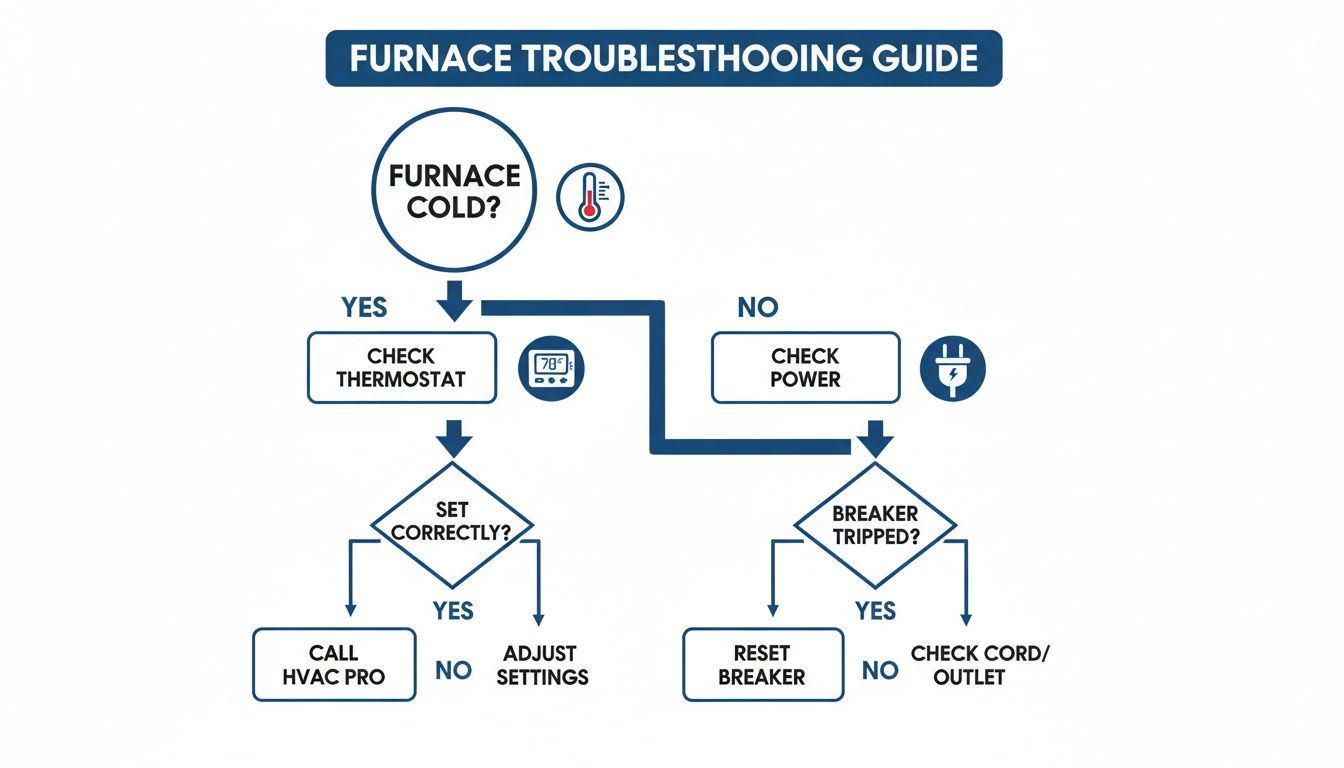
As the guide shows, always start with the thermostat and power sources. They are the logical first stops before you start digging into more complex mechanical or electrical issues.
If your thermostat is working and the furnace has power, the next place I always tell people to look is the air filter. It’s the unsung hero of your HVAC system, but when it gets clogged with dust, pet dander, and all the other gunk floating around your house, your furnace simply can't breathe.
A dirty filter is easily the most common reason a furnace stops blowing hot air.
When airflow is restricted, your furnace has to work way harder to pull air in. This extra strain makes the internal parts get dangerously hot, especially the heat exchanger. Thankfully, your furnace has a built-in safety feature—a high-limit switch—that trips and shuts down the burners to prevent a fire. The fan might keep running, but it's just pushing cold air through your vents.
Locating and Inspecting Your Air Filter
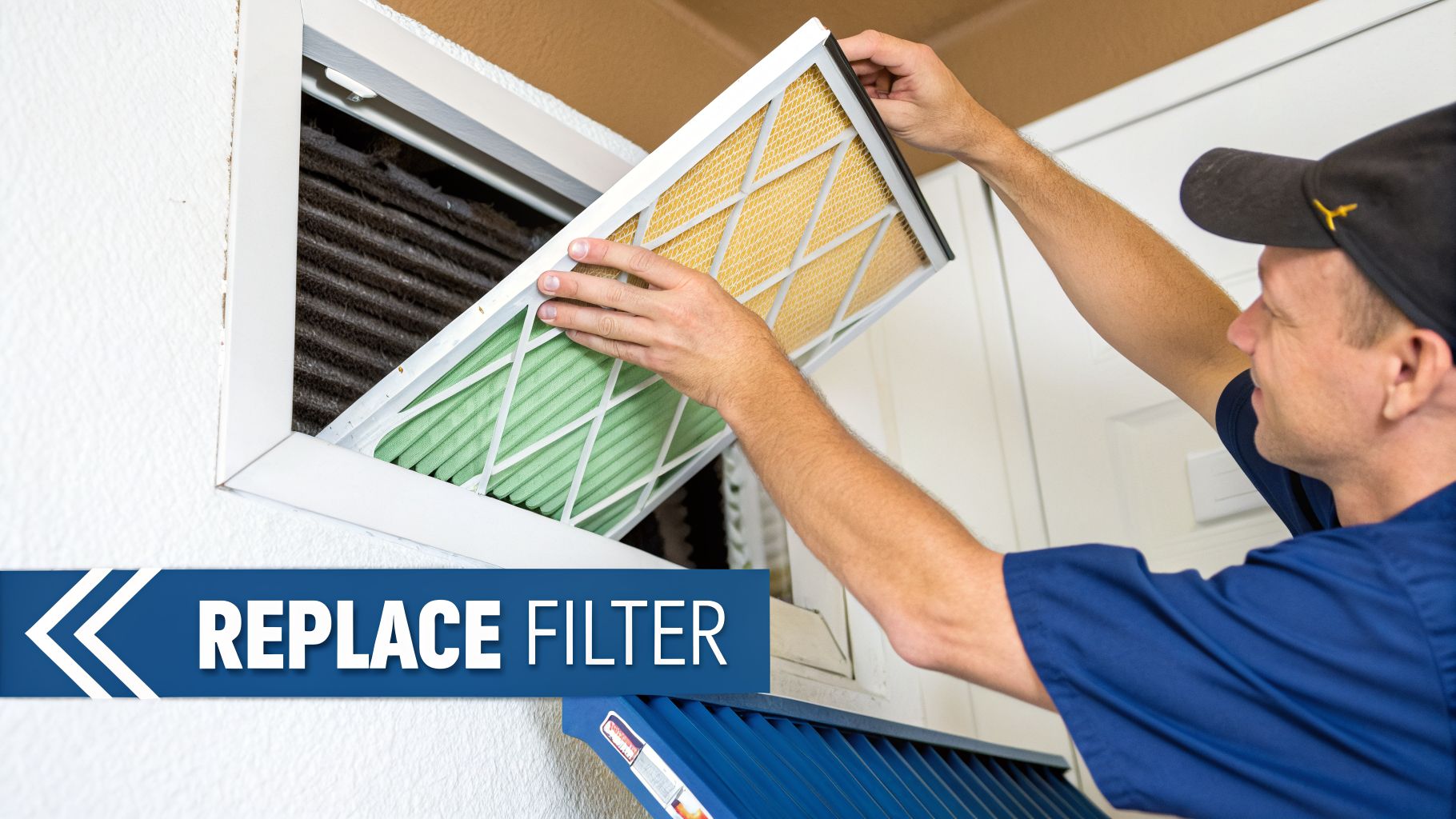
So, where is this thing? You’ll typically find the filter in a slot right where the main return air duct connects to the furnace unit. Look for a small metal or plastic door that slides or pops right off.
Pull the filter out and give it a quick look. The easiest test is to hold it up to a light. If you can’t see the light through it, it’s toast. Any visible layers of gray dust mean it’s long past its prime and needs to be replaced. For a deeper dive, you can learn more about how a https://4neighborhood.com/dirty-furnace-filter-cause-no-heat/.
Choosing the Right Replacement Filter
Look at the cardboard frame on your old filter. The dimensions should be printed right on the side (something like 16x25x1). This size is critical. A filter that doesn't fit snugly will let dusty air sneak around the edges, defeating the whole purpose.
You'll also see a MERV (Minimum Efficiency Reporting Value) rating. For most homes, a filter with a MERV rating between 8 and 11 is the sweet spot, offering a good mix of air-cleaning power without choking your system's airflow.
A humming furnace fan pushing cool air is a classic sign of a clogged air filter, which is responsible for roughly 40% of 'no hot air' complaints. With HVAC industry revenues projected to hit $156.2 billion in 2025, simple filter neglect drives a significant portion of repair calls and up to 55% of negative reviews. Many homeowners in Central Minnesota, especially in older homes, often forget this crucial step.
Here in Central Minnesota, things like having pets, living near a construction site, or just being in an older home mean you'll probably need to change your filter more often than the standard 90 days. Get in the habit of checking it every month.
If you find that a dirty filter was the problem, swapping it out is one of the most satisfying DIY fixes you can do. And if you have a reusable model, learning how to clean a furnace filter is a great skill that can save you a few bucks. Most of the time, this simple step is all it takes to get the heat flowing again.
Alright, you've confirmed the furnace has power and the filter is clean, but you're still getting the cold shoulder. The next logical culprit is the ignition system. This is where the magic happens—or, in this case, isn't happening. It's the part responsible for safely lighting the fuel to generate heat.
How your furnace does this really depends on its age. Old-school furnaces have a standing pilot light, which is a tiny flame that's always on, ready to ignite the main burners. Newer, more efficient models use an electronic ignition that only sparks up when it's time to make heat. Figuring out which one you have is the first step to cracking this case.
Checking an Older Furnace with a Pilot Light
If you've got a furnace with a standing pilot, the most common issue is simply that the flame went out. It happens. A strong draft, a brief interruption in the gas supply, or a bad thermocouple—the little safety sensor that shuts off the gas if the flame dies—can all be to blame.
Before you touch anything, do the sniff test. Check for the smell of gas. If you catch even a faint whiff of that rotten egg smell, stop what you're doing. Leave your home immediately and call your gas company and a licensed HVAC pro. Don't take chances with gas.
No gas smell? Okay, you can try relighting the pilot.
- Look for Instructions: Your furnace should have a sticker or a metal plate somewhere on the access panel with step-by-step directions for your specific model. Follow those instructions to the letter.
- Find the Gas Valve: You're looking for a knob that probably has three settings: "ON," "OFF," and "PILOT."
- Follow the Lighting Sequence: This usually involves turning the knob to "PILOT," pressing it down to get the gas flowing to the pilot assembly, and then using a long-handled lighter to ignite the flame.
Once the pilot is lit, don't let go of the knob just yet. You need to keep holding it down for up to a minute. This gives the thermocouple time to heat up, which tells the gas valve it's safe to stay open.
One of the most common reasons a furnace stops blowing hot air is a faulty pilot light or ignition system. These issues account for about 25-30% of all furnace service calls, making them a leading cause of winter heating failures. Given that gas furnaces still represent 45.1% of the residential market, problems like dirty flame sensors or extinguished pilot lights are something technicians see daily. You can explore more insights about HVAC repair service trends on MarketResearch.com.
Diagnosing a Modern Electronic Ignition
Modern high-efficiency furnaces are a different beast. They don't waste gas keeping a pilot lit 24/7. Instead, they use either a hot surface igniter (which glows red-hot) or a spark ignition to fire up the burners. When these parts fail, the furnace will try to start, fail a few times, and then shut itself down for safety—a state called "lockout."
You'll probably hear a distinct click, click, click as the furnace tries to light, but you won't hear that satisfying whoosh of the burners kicking on.
The two most common villains here are a cracked igniter or a dirty flame sensor. A flame sensor is just a small metal rod that pokes into the flame to confirm the burners have actually lit. If that rod gets covered in soot and grime, it can't sense the flame, so it tells the system to shut down the gas as a precaution. While cleaning a flame sensor is a pretty straightforward DIY job, you need to know what you're doing to avoid damaging it. Check out our guide on where to find the flame sensor on a furnace to get a better idea of what you're looking for.
Recognizing Deeper Furnace Problems
So, you’ve checked the thermostat, swapped out the filter, and made sure the pilot light or ignitor is doing its job, but your furnace is still blowing cold air. This is usually the point where the problem shifts from a simple fix to a more complex internal issue. Your role now changes from DIY repair person to an informed detective, gathering clues for when you call in a pro.
The good news? Your furnace often tells you exactly what’s wrong. Most modern units have a small, blinking LED light on the control board. You can usually see it through a little window on the main access panel. Don't ignore it—that flashing light is a diagnostic code, and it's your biggest clue.
Reading Your Furnace's Error Codes
First, find that flashing light. Watch the pattern carefully—maybe it flashes three times, pauses, and then repeats. Next, look for a chart, usually stuck to the inside of the furnace door, that deciphers these codes. It’s like a secret decoder ring for your heating system.
These codes often point to specific safety-related shutdowns. Some of the most common culprits include:
- Pressure Switch Fault: This one’s a classic, especially after a Minnesota blizzard. If the vent pipe outside gets blocked by snow, ice, or even a stray bird's nest, this switch detects that exhaust fumes aren't venting properly and shuts the furnace down. It's a critical safety feature.
- Limit Switch Lockout: The high-limit switch is your furnace's emergency brake. It shuts off the burners if the unit gets too hot, which is often a symptom of poor airflow (hello, dirty filter!). If it trips multiple times, the system might lock itself out to prevent damage.
- Flame Rollout Detected: This is a serious one. It means the flames aren't being pulled into the heat exchanger correctly, potentially "rolling out" into the burner compartment. This indicates a major blockage and is a significant fire hazard.
Listening is just as important as looking. Odd noises are your furnace's way of crying for help. A loud banging or popping can signal delayed ignition, where gas builds up before it lights—a mini-explosion you don't want. A high-pitched squealing often points to a worn-out blower motor belt, while a harsh scraping or metallic grinding sound could mean the motor's bearings are shot.
Other Potential Hidden Problems
If there are no error codes and no scary noises, a few other hidden issues could be at play.
On high-efficiency furnaces, a clogged condensate line is a common showstopper. These units produce moisture that drains out through a clear plastic tube. If that line freezes or gets gunked up, water backs up, and a safety switch will shut the whole system down.
It could also be a gas supply issue. You already checked the valve right next to the furnace, but what about further up the line? If your other gas appliances, like your stove or water heater, are also dead, the problem isn't your furnace—it's the main gas supply to your house.
Understanding these less obvious failures helps you describe the symptoms accurately to a professional, which is the key to getting a fast, effective repair. You can learn more about how to handle the most common furnace problems in our detailed guide. If you're still stuck or want to dig deeper, an expert's comprehensive HVAC troubleshooting guide can offer more advanced insights.
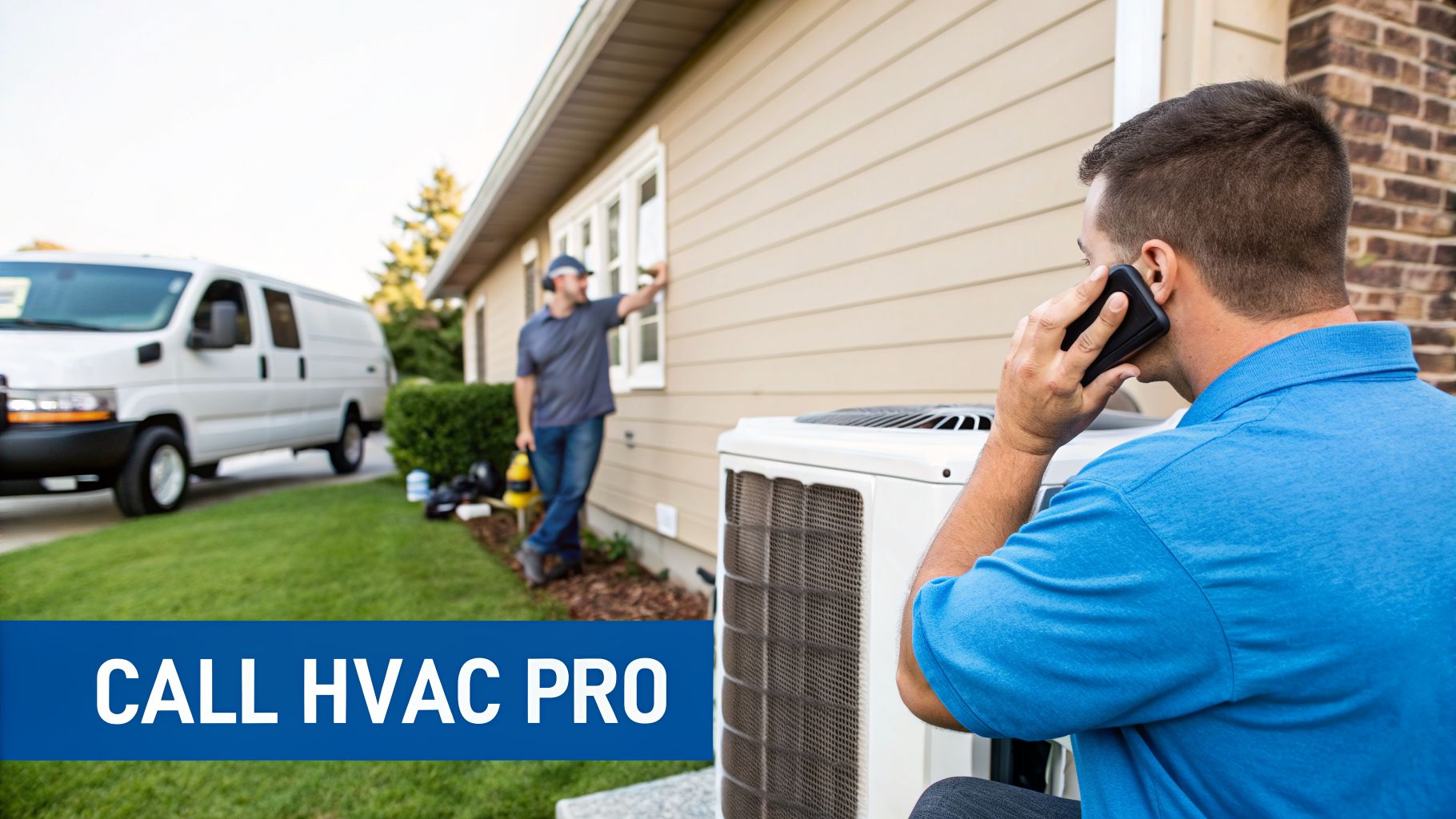
Knowing When to Call an HVAC Professional
Knowing your limits is the most important part of any DIY project, especially when you’re dealing with a furnace. While it feels great to solve a simple thermostat issue on your own, some problems are immediate red flags. Trying to fix them yourself isn't just risky—it can be downright dangerous.
These are the non-negotiable signs that you need to stop what you're doing and call a licensed technician right away.
Recognizing Serious Safety Warnings
Some symptoms go way beyond a simple malfunction; they point to serious safety hazards. If you notice any of the following, your next—and only—move should be to call for professional help.
- The Smell of Gas: If you smell rotten eggs anywhere in your home, it could mean a gas leak. Don't touch any light switches or electronics. Get everyone out of the house immediately, then call your gas company and a qualified HVAC professional from a safe location.
- Loud, Alarming Noises: Furnaces hum and click, but loud banging, scraping, or high-pitched squealing noises are signs of severe mechanical failure. A loud bang could signal delayed ignition (a mini-explosion inside your furnace), while a metallic grinding often means the blower motor's bearings have completely failed.
- Visible Soot or Scorch Marks: See black soot streaks around your furnace vents or panels? That’s a telltale sign of incomplete combustion, which can release dangerous carbon monoxide into your home.
- A Yellow Pilot Light Flame: If you have an older furnace, the pilot light flame should be a crisp, steady blue. A flickering, weak, or yellow flame points to a combustion problem that could be producing carbon monoxide.
These warnings are your furnace's way of screaming for help. Don’t ignore them.
The Risks of DIY Electrical and Gas Repairs
Beyond those immediate warnings, certain repairs should always be left to a trained and licensed technician. The inside of your furnace is a complex mix of high-voltage electricity and combustible gas, creating a high-risk environment for anyone who isn't trained to work on it.
Trying to replace electrical parts like capacitors or motors without proper training can lead to electric shock or fry the furnace’s control board. Likewise, working on gas lines or valves requires specialized tools and know-how to ensure there are zero leaks. A tiny mistake can have catastrophic consequences.
Making the safe choice is always the right choice. Homeowners are often tempted to save a few dollars, but the risks tied to improper gas or electrical work far outweigh any potential savings. Your family's safety is priority number one.
What to Expect From a Professional Service Call
When your furnace gives up and you're in our Central Minnesota service area, you need help, and you need it fast. We know how stressful it is to lose heat during a frigid cold snap, which is why we offer 24/7 emergency service.
When you call us, you can expect a licensed, insured technician to show up ready to get to the bottom of the issue. We believe in upfront, job-based pricing, so you’ll know the full cost of the repair before we even start the work—no surprises, ever. Our goal is to provide peace of mind and get your home warm and safe as quickly as possible.
Furnace Heat Problems: Your Questions Answered
When your furnace quits on a cold day, you've got questions—and you need answers fast. Let's cut through the noise and tackle some of the most common things homeowners ask when their furnace is blowing cold air.
How Much Does It Cost to Fix a Furnace Not Blowing Hot Air?
This is the big one, and the honest answer is: it depends entirely on what’s wrong.
A simple fix you can do yourself, like swapping out a clogged air filter, will only set you back about $20. If the problem is your thermostat, a professional replacement might run anywhere from $150 to $500.
For the more technical stuff, you'll need a pro, and costs go up from there:
- Igniter or Flame Sensor Service: These are incredibly common points of failure on modern furnaces. Expect to pay between $150 and $450 for a repair or replacement.
- Blower Motor Replacement: This is a much bigger job. A new blower motor typically costs between $450 and $1,500+, depending on your furnace model.
We get that surprise bills are the worst. That’s why we always give you a clear, job-based price before we start any work, so you know exactly what to expect.
Can a Dirty Filter Really Stop All Heat Production?
You better believe it. It’s actually one of the most frequent reasons we get called out for a "no heat" situation.
Think of a severely clogged filter as a dam. It completely chokes off the airflow your furnace needs to operate. When that happens, the heat exchanger—the part that actually heats the air—gets dangerously hot.
Your furnace has a built-in safety device called a high-limit switch that detects this overheating. To prevent a fire or serious damage, it shuts the burners down. The fan might keep running, but with the burners off, all it can do is push cold air through your vents. It’s a simple problem that’s 100% preventable with regular filter changes.
A Quick Tip for Minnesotans: If you have pets, just finished a renovation, or live in an older home, you'll likely need to change your filter more often than the standard 90 days. I always tell people to just take a quick peek at it once a month during heating season.
Is It Safe for Me to Relight My Pilot Light?
If you have an older furnace with a standing pilot light, you can usually relight it yourself. But—and this is a big but—you must follow the manufacturer's instructions exactly as they're printed on the label inside your furnace cabinet.
Your safety is the top priority here. If you smell gas at any point, stop what you're doing immediately. Don't touch any light switches or electronics. Just leave the house and call your gas company and an HVAC professional from a safe location.
It's also worth noting that newer, high-efficiency furnaces don't have standing pilots at all. They use electronic igniters, so there’s nothing to light manually.
How Often Should My Furnace Be Professionally Maintained?
We can't stress this enough: get your furnace professionally tuned up once a year. The best time is in the fall, right before you really need it.
An annual tune-up isn't just a quick look-over. A licensed technician will clean critical parts like the flame sensor and burners, check for dangerous gas or carbon monoxide leaks, and spot small issues before they turn into a full-blown emergency on the coldest night of the year.
When you've tried the basics and the cold air is still blowing, you need an expert you can trust. Neighborhood Plumbing, HVAC, and Electrical offers 24/7 emergency furnace repair across Central Minnesota. Contact us today for upfront pricing and service that gets your heat back on, fast.