

You’ve probably heard people talking about "on-demand" water heaters, and for good reason. A tankless water heater is exactly what it sounds like—a system that heats water the moment you need it, completely getting rid of the big, bulky storage tank you’re used to seeing.
This means you get a seemingly endless supply of hot water whenever you turn on the tap, all while cutting down on the energy that’s normally wasted keeping gallons of water hot around the clock.
Understanding the Magic of On-Demand Hot Water
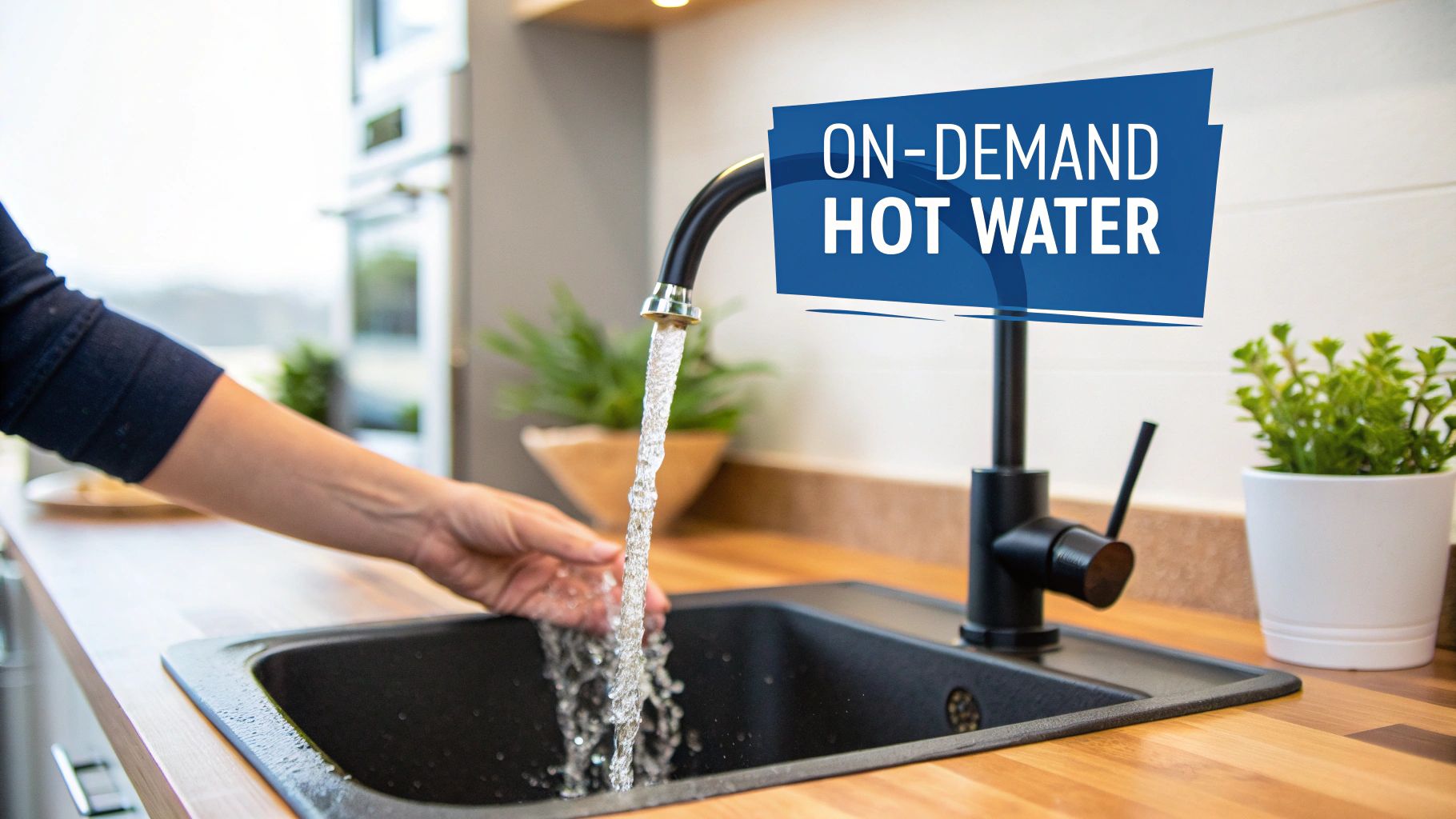
Think about how your coffee maker works. It doesn’t keep a full pot hot all day long, right? It brews a fresh, steaming cup right when you want it. That’s the same idea behind a tankless water heater. This technology completely changes how your home gets hot water, shifting away from the old "store and wait" approach of traditional tanks.
Instead of keeping 40 or 50 gallons of water heated constantly, a tankless unit sits quietly in standby mode. The second you turn on a hot water faucet, it springs to life, heating the water as it passes through. This "on-demand" method is the secret to its incredible efficiency and convenience.
The End of Standby Energy Loss
One of the biggest money-wasters with a traditional water heater is something called standby heat loss. It happens when the water stored in the tank naturally cools off, forcing the burner to kick on again and again, all day and all night, just to keep it at the right temperature. It's like leaving your car running in the driveway just in case you decide to go somewhere.
A tankless system cuts out this problem entirely. Because it only fires up when you actually need hot water, it uses far less energy. For those of us here in Central Minnesota, that means real savings on our utility bills, especially during our long, cold winters when water heaters have to work overtime.
By heating water only when you need it, tankless water heaters can be 24%–34% more energy efficient than standard storage tank models for homes that use 41 gallons or less of hot water each day.
Benefits That Go Beyond Savings
While saving money on energy is a huge plus, the advantages don't stop there. More and more homeowners are making the switch for a few very practical reasons. In fact, according to market analysis, homeowners drive this trend, accounting for about 72.8% of global revenue for these systems. That’s a pretty clear sign that people love their modern design and performance. You can dig into more consumer trends in the full tankless water heater market report.
Here’s a quick look at what people love most:
- Endless Hot Water: You can run the dishwasher and take a shower at the same time without worrying about the water turning cold.
- Space Savings: These compact units mount right on the wall, freeing up precious floor space in your utility room or basement.
- Longer Lifespan: A well-cared-for tankless heater can last 20 years or more—often double the life of a traditional tank.
Now that you’ve got the basics down, let's take a closer look at how this technology actually works. You can also learn more about the key advantages in our guide on the top 5 benefits of tankless water heaters.
How Your Water Gets Hot Instantly
So, how does a compact, wall-mounted box deliver an endless supply of hot water without a big, bulky tank? The process is surprisingly simple and incredibly fast, all thanks to a powerful component called a heat exchanger.
Think of it like this: instead of storing 40 or 50 gallons of hot water and keeping it heated all day, a tankless unit heats water exactly when you need it. It’s a smart, on-demand system.
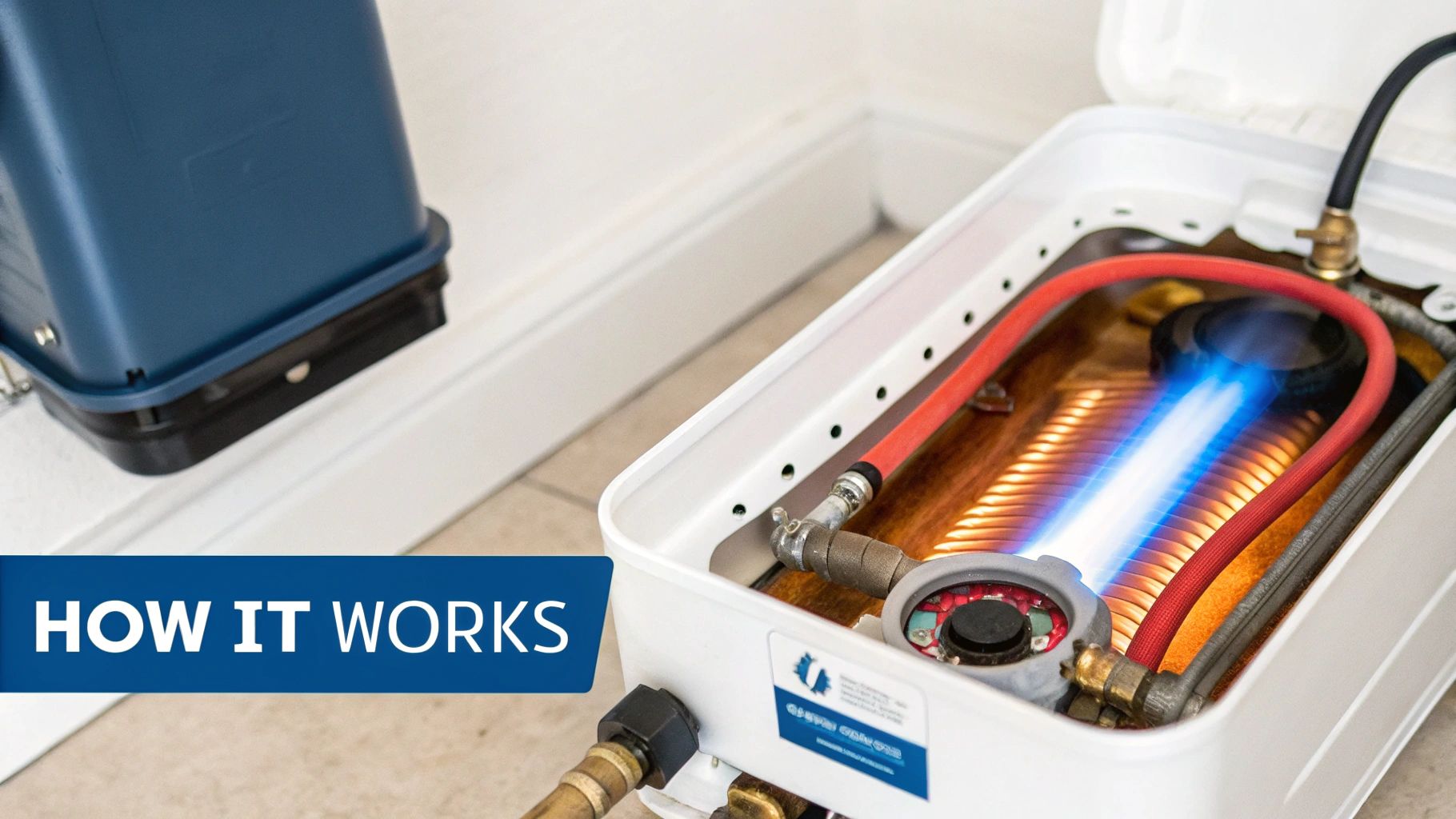
The moment you turn on a hot water tap in your kitchen or bathroom, a flow sensor inside the unit detects the movement of water. This is the trigger that instantly brings the system to life. There’s no wasted energy and no pilot light constantly burning—just a quick response to your direct demand for hot water.
That sensor sends a signal that activates a powerful heating element. Depending on the model, this will be either a high-efficiency gas burner or a series of robust electric coils. This rapid, direct heat transfer is the magic behind how a tankless water heater works.
The Journey from Cold to Hot
As cold water from your main supply line enters the unit, it snakes through a network of pipes inside the heat exchanger. The intense heat from the burner or electric element is transferred directly to the water passing through these pipes.
This whole process happens in just a few seconds. The water is heated to your desired temperature—typically set between 120°F and 140°F—and then immediately exits the unit, flowing straight to the open faucet.
When you turn the tap off, the flow sensor detects the change and shuts the heating elements down, putting the unit back into standby mode. Simple as that.
The key is direct heating. By warming water as it passes through, the system eliminates the need for storage, providing hot water that is both instantaneous and continuous.
Gas vs. Electric Models
While both types of tankless heaters get the same job done, they use different fuel sources and mechanics to get there. Understanding these differences is crucial for choosing the right fit for your home's infrastructure and your family's needs.
-
Gas-Fired Tankless Heaters: These units use either natural gas or propane to ignite a powerful burner that heats the water. They generally offer higher flow rates, making them a great choice for larger families in Central Minnesota with high hot water demands.
-
Electric Tankless Heaters: These models use high-wattage electric elements to heat the water. They are typically more compact and don't require venting, which gives you more flexibility with installation. Their popularity is growing, too; the global electric tankless segment was valued at $1.54 billion and is expected to expand. You can see more data in this tankless electric water heater market report.
Each type has specific installation requirements, from gas lines and proper ventilation for gas models to making sure your electrical panel has enough amperage for electric ones.
Weighing the Pros and Cons of Going Tankless
Making the switch to a tankless water heater is a big deal for any home, and just like any major upgrade, it comes with a set of trade-offs. You need to know both the good and the bad to pick a system you’ll be happy with for the next couple of decades. The appeal is definitely there, but it’s smart to look at the whole picture first.
On one hand, the benefits are pretty compelling. We're talking serious energy efficiency, hot water that literally never runs out, and an appliance that lasts a whole lot longer. But before you make the final call, it’s worth looking at the other side of the coin.
The Major Advantages of a Tankless System
The benefit everyone talks about is the potential for long-term savings. Because these units only heat water the moment you need it, they completely get rid of the standby energy loss that tank heaters are notorious for. That efficiency can lead to a noticeable drop in your monthly utility bills—a huge plus during our cold Minnesota winters.
Beyond just the savings, homeowners really love the convenience and durability they offer.
- Endless Hot Water: Since the system heats water on demand, you can run the dishwasher, do a load of laundry, and still jump in a hot shower without worrying about the water turning ice-cold.
- Extended Lifespan: A well-maintained tankless water heater can last for 20 years or more. That’s often double the lifespan you'd get from a typical tank model.
- Space Savings: These compact units mount right on the wall, freeing up an entire closet’s worth of floor space. Suddenly you have new options for storage in your utility area.
The combination of energy savings, a longer life, and a much smaller footprint makes a tankless water heater a smart, modern investment for a lot of families looking to upgrade their home's essential systems.
Understanding the Potential Drawbacks
Even with all those clear benefits, there are a few important things to think about. The biggest hurdle for many homeowners is the higher initial cost. The unit itself and the professional installation usually cost more upfront than a standard storage tank heater.
Think of that initial expense as a planned investment in future efficiency, but it's definitely a budget item you need to account for.
Another key factor is the system's output, which is measured in gallons per minute (GPM). If a unit isn't sized correctly for your family's needs, its flow rate can become a real headache. For example, a smaller unit might struggle to supply enough hot water for two showers and a dishwasher running all at once. This is why getting a professional to size it is absolutely essential to avoid frustration later.
If you want to dive deeper into the specifics, you can learn more about the differences between traditional and tankless water heaters in MN in our detailed comparison.
Finally, the installation itself can sometimes be a bit more complicated. Gas models need specific venting to the outside, and powerful electric models might require an upgrade to your home's electrical panel to handle the extra load. These are all things a licensed technician will check out to make sure your setup is safe and effective.
Weighing the Benefits and Drawbacks of Tankless Systems
Deciding if a tankless system is right for your home means looking at the pros and cons side-by-side. While the promise of endless hot water and lower energy bills is attractive, the upfront cost and installation requirements are real factors to consider. This table breaks it all down to help you see the complete picture.
| Consideration | Advantages (Pros) | Disadvantages (Cons) |
|---|---|---|
| Energy Use | Highly efficient; only heats water as needed, eliminating standby heat loss and reducing utility bills. | Can have a higher energy draw at the moment of use, sometimes requiring electrical or gas line upgrades. |
| Hot Water Supply | Provides a continuous, endless supply of hot water. No more running out mid-shower. | Limited flow rate (GPM); can struggle to supply multiple high-demand appliances at once if not sized properly. |
| Upfront Cost | Lower long-term operating costs and potential for energy rebates can offset the initial price over time. | Higher initial investment for both the unit and professional installation compared to tank heaters. |
| Appliance Lifespan | Lasts 20+ years with proper maintenance, often double the lifespan of a traditional tank. | Complex internal components can be more expensive to repair if a problem arises. |
| Physical Size | Compact and wall-mounted, saving valuable floor space in utility closets or basements. | Installation can be more involved, requiring new venting, gas lines, or electrical circuits. |
| Maintenance | Requires annual descaling, especially in areas with hard water, to maintain efficiency. | Maintenance is crucial; skipping it can lead to mineral buildup and reduced performance. |
Ultimately, the best choice depends on your family’s hot water habits, your budget, and your long-term goals. For many, the investment pays off handsomely in both convenience and savings.
Choosing the Right Size and Budget for Your Home
Picking the right tankless water heater isn't like grabbing something off the shelf at a big-box store. It's a calculated decision that has to match your home's unique needs. If you get it wrong, you’ll end up with a system that just can't keep up.
The single most important factor is the unit's flow rate, which is measured in gallons per minute (GPM). This number tells you exactly how much hot water the heater can pump out at any given moment. Getting this right means you can run a shower and the dishwasher at the same time without your hot water sputtering out.
Calculating Your Household's Demand
To figure out your ideal GPM, you need to do a little math on your peak hot water usage. It’s pretty straightforward—just add up the flow rates of all the fixtures you might realistically use at the same time.
Here are some common numbers to get you started:
- Standard Shower Head: Typically uses around 2.0 GPM.
- Kitchen or Bathroom Faucet: Uses about 1.0 to 1.5 GPM.
- Dishwasher: Consumes approximately 1.5 GPM.
- Washing Machine: Can use up to 2.0 GPM.
Let's say your family often has a shower running (2.0 GPM) while the dishwasher is on (1.5 GPM). To meet that demand without any issues, you'd need a tankless unit that can deliver at least 3.5 GPM. This simple calculation is the most critical step in sizing your new heater correctly.
The infographic below shows the key trade-offs you'll want to think about when budgeting for a new system. It's all about balancing that initial cost against long-term energy efficiency and lifespan.
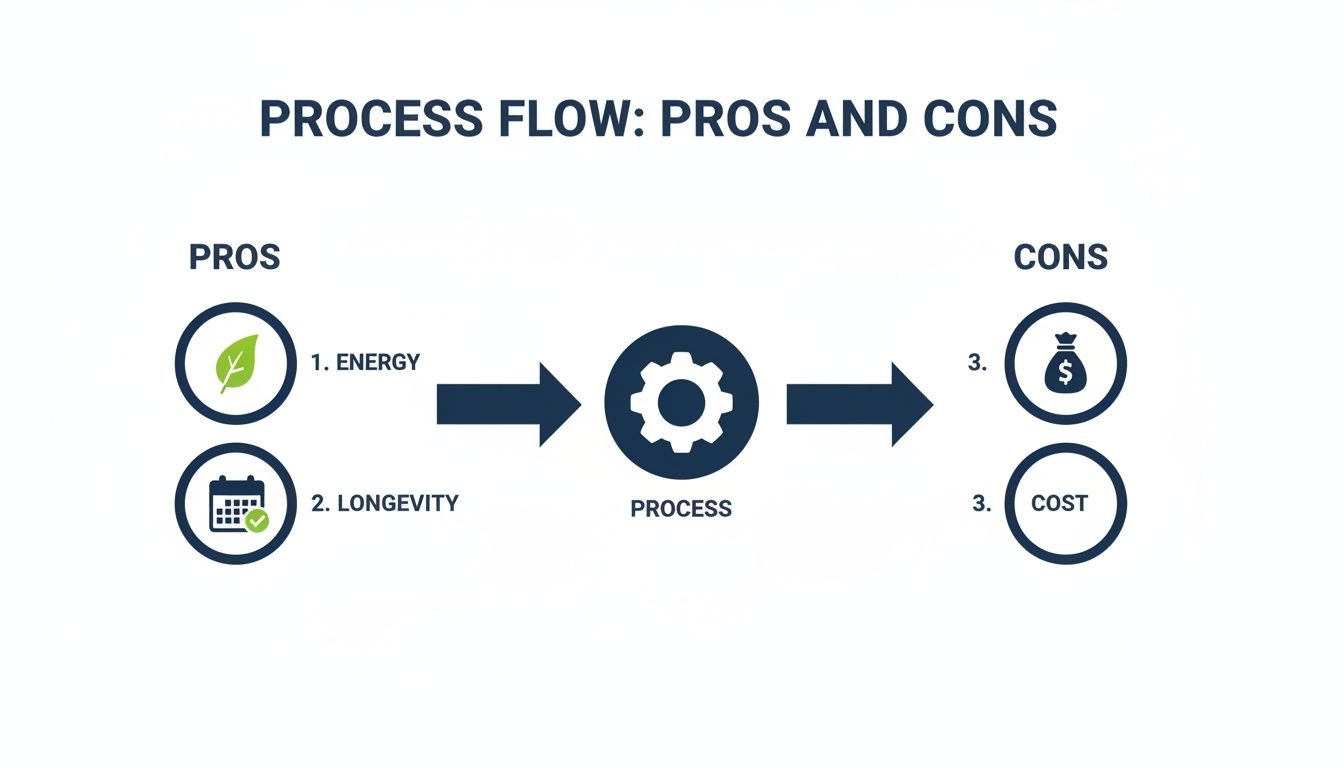
As you can see, the upfront investment is definitely higher. But the long-term perks—like lower energy bills and a much longer appliance lifespan—are a huge part of the overall value.
Accounting for Minnesota's Cold Climate
Flow rate isn't the whole story, especially here in Central Minnesota. We also have to think about temperature rise. This is the difference between the frigid temperature of our incoming groundwater and your target hot water temp (usually around 120°F).
In the dead of winter, our groundwater can be a chilly 35-40°F. That means your heater has to work its tail off to create an 80-degree temperature rise just to get you a hot shower.
A unit's advertised GPM is often based on a much smaller temperature rise. Always dig into the specs and check the performance ratings for colder climates. Otherwise, you might find your heater can't deliver the hot water you need when the temperatures really plummet.
Finally, you have to create a realistic budget. The total cost is more than just the price tag on the unit itself. You need to factor in professional installation—which is non-negotiable for safety and your warranty—and any potential plumbing or electrical upgrades needed to support the new system.
The water heater market is growing fast, with some projections showing it will hit $44,100.3 million by 2033. Investing in a quality installation from the get-go ensures you get the most value out of this important home upgrade. You can dig into the numbers yourself in the latest water heater market analysis.
Installation and Maintenance for Minnesota Winters
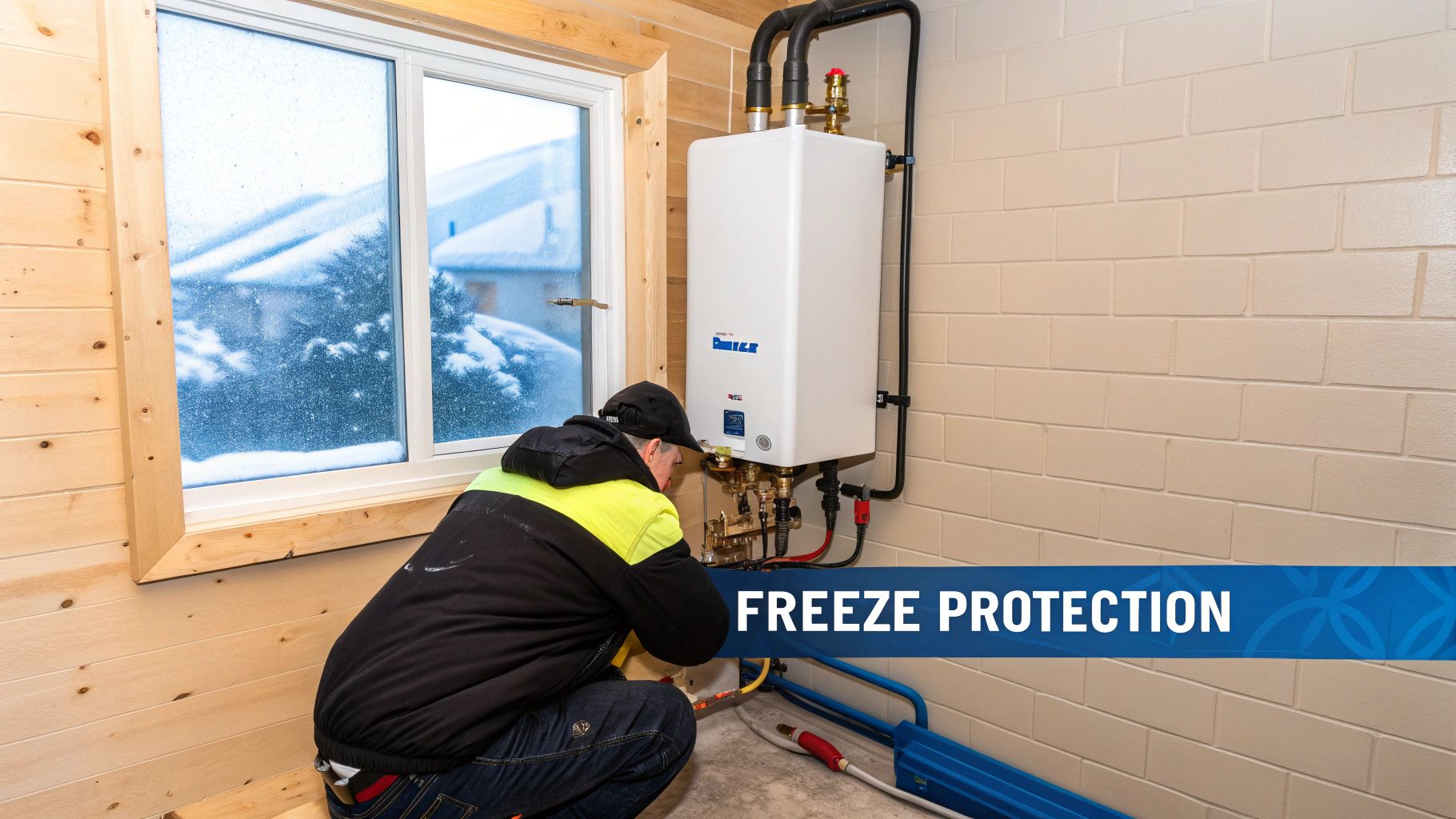
Owning a tankless water heater in a place like Central Minnesota comes with a unique set of rules. The biggest one? Professional installation is non-negotiable. Seriously, this isn't a weekend DIY project. It’s a complex job that directly impacts your home's safety and how well the system actually performs when you need it most.
Proper setup handles critical safety factors from day one. If you've got a gas model, that means getting the venting perfect to channel exhaust fumes like carbon monoxide safely outside. For those powerful electric units, it means a licensed electrician has to make sure your home's electrical panel can handle the high amperage without overloading circuits. Trying to cut corners here can create some serious hazards.
Protecting Your System from Frigid Temperatures
Our Minnesota winters ask a lot from our plumbing, and a tankless heater is no different. The extreme cold can be a real threat if your unit isn't ready for it.
This is exactly why choosing a model with built-in freeze protection is a must. These systems have little internal heaters that kick on automatically to keep the water inside from freezing and causing catastrophic damage. On top of that, insulating all the hot and cold water pipes connected to the unit is a crucial step to prevent them from bursting when the temperatures really plummet.
A professional installation ensures your unit is not only correctly sized and vented but also fortified against our region's specific climate challenges, guaranteeing reliable performance all winter long.
Essential Maintenance for Long-Term Performance
Once your tankless water heater is installed, regular maintenance is the key to protecting your investment and making sure it runs efficiently for its full 20+ year lifespan. The single most important task is getting it descaled every year.
Hard water, which is common around here, is loaded with minerals like calcium and magnesium. Over time, these minerals build up inside the heat exchanger and create a nasty layer of scale. This buildup forces the unit to work way harder to heat the water, which tanks its efficiency and can lead to an early breakdown.
A pro technician will perform a descaling service by flushing a special cleaning solution through the unit to dissolve all those mineral deposits. It's a simple annual task that keeps your system running like it’s brand new. To get the full picture of what a safe and reliable setup involves, you can learn more about professional tankless water heater installation from certified local experts.
So, after all that, is a tankless water heater actually the right move for your home? It really boils down to what you value more: upfront savings or long-term efficiency. We've covered what they are, how they work, and what they need to run properly. Now let’s put it all together so you can make a solid choice.
This kind of upgrade is a fantastic fit for certain situations. If you’re the type of homeowner who geeks out over cutting utility bills and hates the idea of paying to keep a big tank of water hot 24/7, then going tankless makes a ton of sense. It’s also a lifesaver for families who are tired of coordinating shower times or hitting that dreaded wall of cold water during busy mornings. The promise of endless hot water is a game-changer. And hey, if you're looking to free up some space in a crowded utility closet, that compact, wall-mounted design is a huge bonus.
When a Traditional Tank Might Be Better
But let’s be real—going tankless isn’t the perfect solution for everyone. If you’re working with a tight budget, the higher initial price tag for the unit and the professional installation can be a major hurdle.
A good old-fashioned storage tank heater is still a practical, more affordable choice upfront, especially for homes that would need expensive plumbing, gas line, or electrical panel upgrades to handle a tankless system.
Ultimately, the best choice comes down to your priorities. If you’re playing the long game and things like energy savings, never-ending hot water, and a 20+ year lifespan line up with your budget and lifestyle, a tankless water heater is an excellent investment. But if the upfront cost is your biggest worry, a modern, high-efficiency tank heater is still a reliable workhorse that will get the job done.
Common Questions We Get About Tankless Water Heaters
It's completely normal to have more questions, even after you've got the basics down. When you're thinking about a big upgrade like a tankless water heater, you want to be absolutely sure you have all the facts straight. Let's tackle some of the most common questions we hear from homeowners around here.
How Long Does a Tankless Water Heater Really Last?
A well-maintained tankless water heater can easily last 20 years or more, which is often double what you'd get from a traditional tank-style heater. The absolute key here is consistent, professional maintenance.
That means annual descaling to keep the mineral buildup from our local water from causing problems. It's that impressive lifespan that really makes them such a great long-term value.
Can a Tankless Water Heater Keep Up with My Family's Needs?
Absolutely, but with one big "if"—it has to be sized correctly for your home. One of the biggest myths out there is that tankless systems can't handle running the shower and the dishwasher at the same time. The truth is, a properly sized unit is specifically chosen based on your home's peak hot water demand, measured in gallons per minute (GPM).
A licensed technician will do the math to make sure you can run a hot shower, the dishwasher, and a load of laundry all at once without any frustrating temperature drops. Sizing is everything.
While the upfront cost is higher, the long-term savings on energy bills can be significant, especially during cold Minnesota winters. When you factor in the longer lifespan and the convenience of endless hot water, many find the investment pays for itself over time.
Are Tankless Heaters Worth the Higher Initial Cost?
For a lot of homeowners here in Central Minnesota, the answer is a definite yes. It's true, the upfront cost for the unit and professional installation is higher than a conventional tank heater. But what you're really doing is investing in long-term efficiency and convenience.
When you look at the whole picture, a few things make it a worthwhile investment for many:
- Energy Savings: Those lower monthly utility bills add up year after year, giving you a return on your investment.
- Longer Lifespan: You get to skip the cost and hassle of replacing a tank heater every 8-12 years.
- Endless Hot Water: The daily convenience of never running out of hot water is a major lifestyle improvement you can't really put a price on.
- Potential Rebates: Sometimes, you can find government or utility rebates to help offset the initial purchase price.
When you crunch the numbers on the total cost of ownership over two decades, going tankless often turns out to be the smarter financial move.
If you're ready to see if a tankless water heater is the right choice for your Central Minnesota home, the licensed experts at Neighborhood Plumbing, HVAC, and Electrical are here to help. Contact us today for a professional sizing consultation and a no-obligation quote. Learn more at https://4neighborhood.com.