

You hear that familiar click from the thermostat. It’s the sound that promises warmth is just moments away. But when that click is followed by… silence? Well, that’s when you know something’s up.
That clicking sound is actually good news. It means your thermostat is doing its job. It detected the temperature drop and sent the signal to your furnace to fire up. The problem isn’t the thermostat; it's that the furnace, for some reason, didn't get the message or couldn't act on it. The issue is almost always downstream, usually related to power, a safety feature, or airflow.
What That Click Really Means for Your Furnace
Think of it like flipping a light switch. The click is the switch itself, but if the bulb doesn’t turn on, you wouldn't blame the switch. You’d check the bulb, the wiring, or maybe the circuit breaker. It’s the same idea here. Your furnace's silence is a clue pointing to a problem further down the line.
The communication breakdown between the thermostat's call for heat and the furnace actually igniting usually comes down to just a few key areas. Knowing what they are gives you a clear roadmap for troubleshooting.
Common Culprits Behind a Silent Furnace
Before you start tearing things apart, let’s run through the usual suspects. More often than not, it's one of these simple issues.
- Power Supply Interruption: Your thermostat might run on batteries or low voltage, but the furnace needs its own dedicated high-voltage circuit. A tripped breaker is one of the most frequent—and thankfully, easiest—fixes.
- Safety Switch Activation: Modern furnaces are packed with safety sensors. If one of them detects a problem, like overheating from a severely clogged filter, it will intentionally shut the furnace down to prevent damage or a fire.
- Ignition System Failure: Parts like the ignitor or flame sensor are workhorses, but they don't last forever. When they fail, the burners can't light or, if they do, can't stay lit safely.
- Condensate Drain Clog: If you have a high-efficiency furnace, it produces condensation as a byproduct of heating. If that drain line gets backed up, a float switch will kill the power to prevent a messy and damaging water leak.
Key Takeaway: The thermostat's click is the starting pistol in a race. If the runner—your furnace—never leaves the starting block, you need to check the track for obstacles like a power issue or a safety lockout.
To help you get to the bottom of this faster, here’s a quick diagnostic table. It covers the most likely causes, their solutions, and whether it’s something you can handle yourself or if it’s time to call in a pro. For a more comprehensive look at all things heating and cooling, a detailed HVAC troubleshooting guide can be a great resource.
Quick Diagnosis Why Your Furnace Is Not Starting
Here's a quick rundown of the most common reasons a furnace won't start, what to do about it, and who should be doing it.
| Common Problem | Likely Solution | DIY or Call a Pro? |
|---|---|---|
| Tripped Circuit Breaker | Reset the breaker at the main electrical panel. | DIY |
| Clogged Air Filter | Replace the dirty furnace filter. | DIY |
| Furnace Power Switch Off | Locate and turn on the switch near the furnace. | DIY |
| Safety Switch Lockout | Identify and resolve the underlying issue (e.g., clogged drain line). | DIY/Pro |
| Faulty Ignitor or Flame Sensor | Clean or replace the faulty component. | Call a Pro |
| Gas Supply Issue | Check if the gas valve is open and other gas appliances work. | Call a Pro |
| Faulty Control Board | The furnace's "brain" needs professional diagnosis and replacement. | Call a Pro |
Running through these checks can often solve the problem without needing a service call. But if you’ve tried the DIY fixes and are still left in the cold, it’s best to stop and call a licensed technician. Components like flame sensors, ignitors, and control boards require a delicate touch and specialized tools to diagnose and replace safely.
Start with the Simplest Fix: Checking for Power Issues
When your furnace doesn't kick on even though you hear the thermostat click, it’s easy to jump to conclusions about a massive, expensive repair. But hold on. Before you panic, always start with the most common and simplest culprit: a power problem.
Your thermostat probably runs on its own batteries, which is why it can still click and send the signal to heat. Your furnace, however, is a different beast. It's a power-hungry appliance that needs a dedicated circuit in your home's electrical panel to do its job.
This flow chart gives you a good visual of the entire process, from the thermostat's signal all the way to the furnace's response, and shows all the little spots where a breakdown can happen.
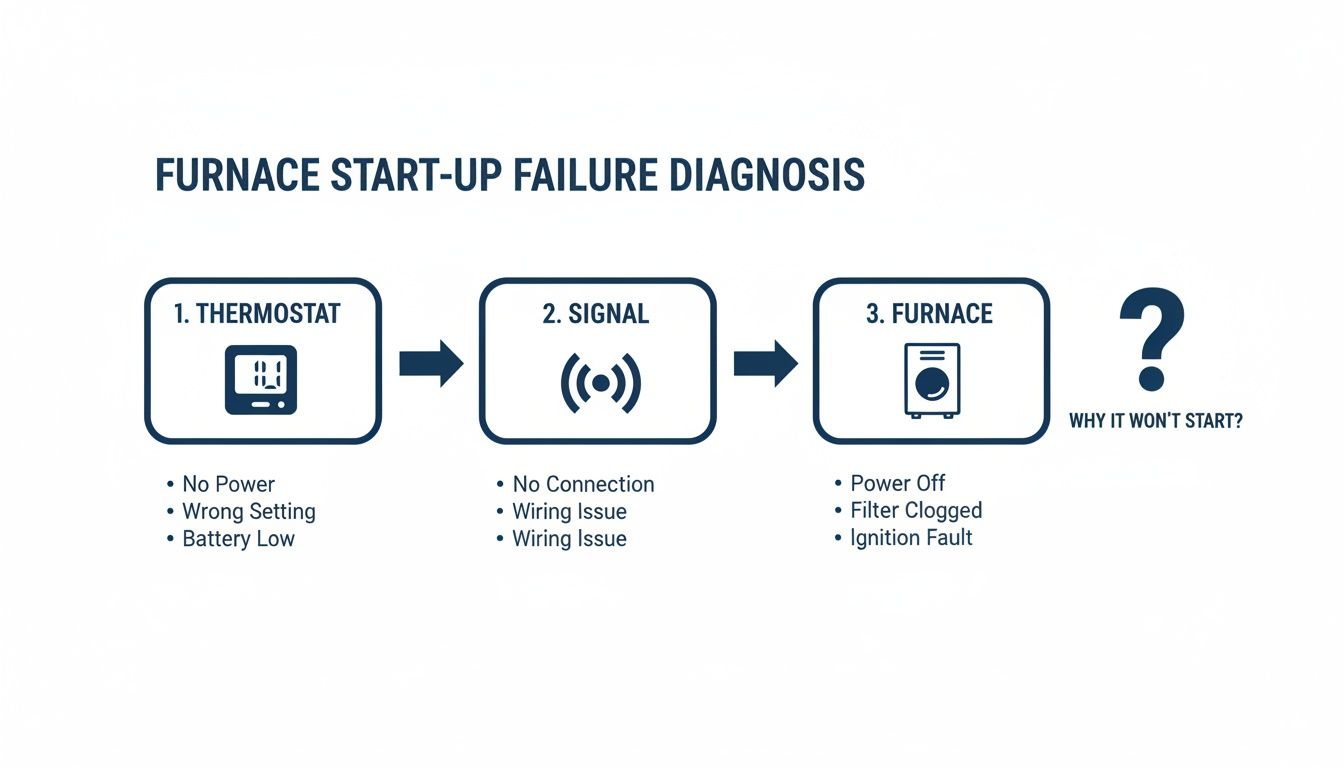
As you can see, if there's a disruption anywhere along that chain—especially with something as fundamental as the power supply—the whole heating cycle grinds to a halt. A quick trip to your breaker box is often all it takes to get things running again.
How to Safely Check Your Breaker Panel
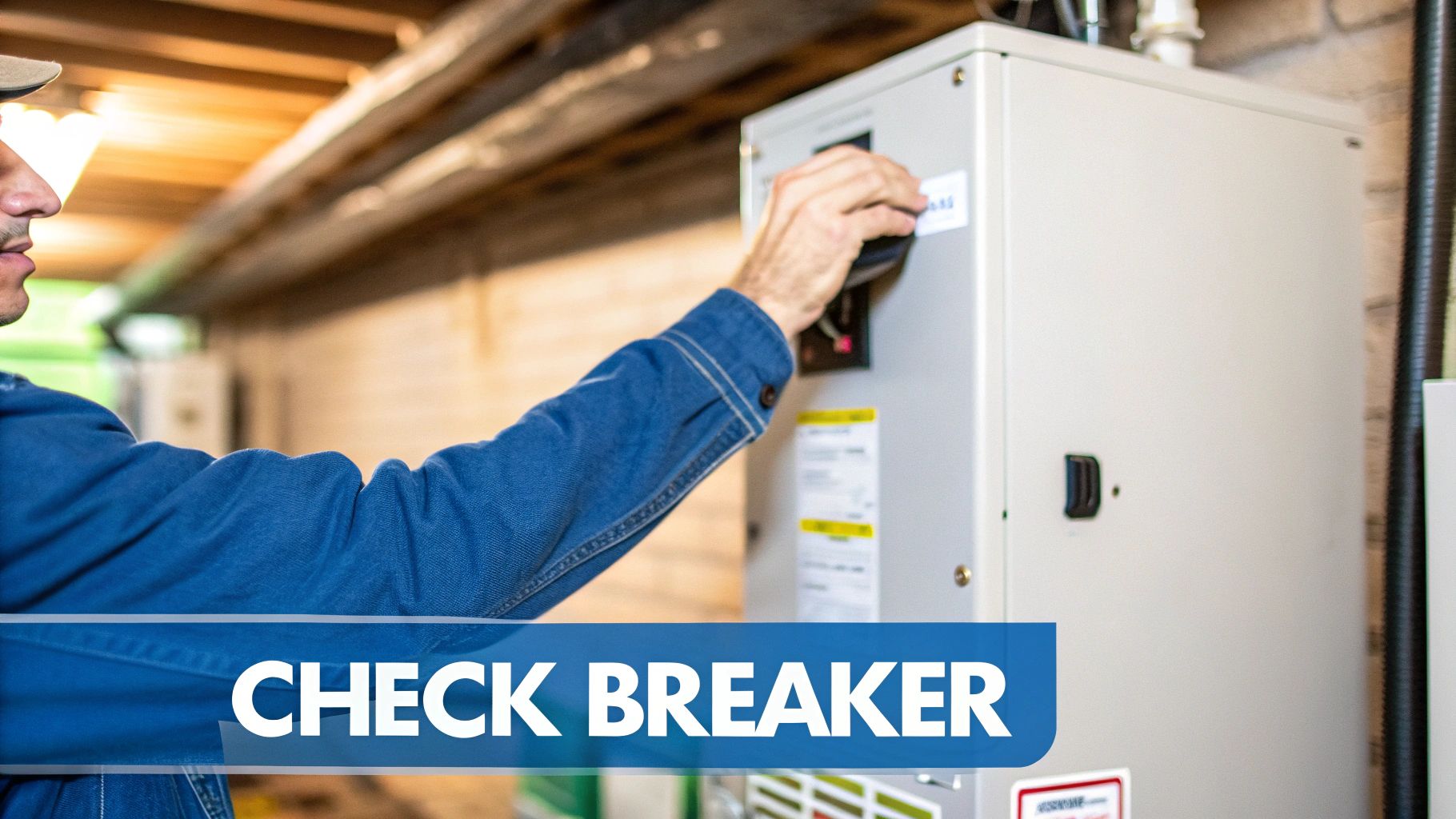
First thing's first: find your main electrical panel. It's usually tucked away in a utility room, basement, garage, or a closet. When you open the panel door, you’ll see neat rows of switches.
Your furnace breaker should be labeled—look for something like "Furnace," "HVAC," "Air Handler," or "FAU."
Scan the switches for one that's either in the "off" position or, more likely, stuck awkwardly in the middle. That's a tripped breaker. To reset it, you need to push the switch firmly all the way to the "off" position first, then flip it back to "on." You should feel a solid click.
Important Safety Note: If that breaker trips again right after you reset it, stop. Don't try to reset it a second time. This is a clear sign of a more serious electrical problem in the furnace or its wiring, and you need to call a licensed HVAC technician to investigate safely.
If your home is older and has a fuse box instead, you'll be looking for a fuse that's burnt, has a melted metal strip inside, or is discolored. Unscrew the bad fuse and replace it with a new one of exactly the same amperage. Using the wrong size is a serious fire hazard.
It's also worth understanding how a low battery can affect your furnace, but in this specific scenario, the main power to the furnace itself is our primary suspect.
Why Power Issues Are So Common in Minnesota
Little electrical glitches are one of the top reasons furnaces fail, especially in places with weather like ours. Picture this: you're in Blaine during a blizzard, the thermostat clicks, and… nothing. Silence.
Across the country, electrical problems like tripped breakers are responsible for up to 30% of these furnace no-start situations. Here in Central Minnesota, though, that number can easily jump to 35% thanks to power fluctuations from heavy snow weighing down the power lines. It's just a part of life here, and it's always the first thing a pro would check.
How a Clogged Air Filter Can Shut Down Your Furnace
It seems almost too simple to be the culprit, but a dirty air filter is one of the most common reasons a furnace suddenly gives up. This isn't just about air quality; it's a critical safety issue. When that filter gets choked with dust, pet dander, and other gunk, it essentially suffocates your furnace.
Your furnace needs a constant, massive flow of air to work the way it's supposed to. When that airflow gets blocked, heat starts building up inside a key part called the heat exchanger. To stop this component from overheating, cracking, and becoming a serious fire hazard, a safety device called the high-limit switch jumps into action. It does exactly what its name suggests: when it senses dangerously high temperatures, it trips and shuts the whole heating cycle down.
This is a classic case where your thermostat clicks but the furnace doesn't turn on—not because something is broken, but because a safety feature is doing its job perfectly, preventing a much bigger disaster.
The Overlooked Impact of Dirty Filters
Believe it or not, HVAC pros will tell you a dirty or clogged air filter is the number one reason for this problem. It accounts for up to 60-70% of all service calls where the thermostat clicks but the furnace stays silent. Here in Central Minnesota, we saw a 45% spike in calls for this exact issue during a recent cold snap.
It doesn't take long for a filter to cause trouble. In just 60-90 days, it can collect enough debris to slash airflow by over 50%. That’s more than enough to trigger the system’s safety switch and shut everything down. You can take a deeper look at why a dirty filter can cause no heat to really understand how important this one simple part is.
This problem pops up a lot faster for homeowners with certain conditions that clog filters in record time:
- Homes with pets: All that fur and dander is a filter’s worst enemy.
- Recent renovations: Drywall dust and construction debris can choke a brand-new filter in just a few days, not months.
- Older, dustier homes: Some houses just naturally have more dust, meaning you’ll need to be more diligent about filter changes.
Finding and Replacing Your Furnace Filter
First things first, you have to find the filter. It's usually tucked into a slot right on the furnace itself—look on the side, bottom, or top of the blower compartment. Sometimes, it’s located in the main return air duct right next to the furnace.
Once you’ve found it, slide the old filter out. The size will be printed right on the cardboard frame. Snap a picture of it or jot it down so you know exactly which replacement to buy.
When you're ready to put the new one in, look for the arrows on the frame. Make sure they point toward the furnace, following the direction the air flows.
A clean filter is the cheapest insurance you can buy for your furnace. Seriously. Set a recurring reminder on your phone to check it every month. It’s a simple habit that can save you from a frigid night and an expensive, totally avoidable service call. All it takes is a quick visual check to keep your system breathing easy.
Decoding Your Furnace's Safety Switches and Error Codes
So, you've confirmed the furnace has power and the filter is clean, but all you hear is a click from the thermostat followed by… silence. What gives? More often than not, this means one of your furnace's internal safety systems is doing its job and preventing it from running.
Modern furnaces are packed with sensors and switches designed to shut everything down at the first sign of trouble. They're basically simple on/off switches that react to things like overheating or a blocked vent. The click from your thermostat is the "go" command, but a safety device is hitting the brakes to protect your system and your home.
The Key Safety Players Inside Your Furnace
When your furnace won't fire up, the issue often comes down to one of three main safety switches. Each one keeps an eye on a critical part of the heating cycle.
- High-Limit Switch: This is the switch that often gets tripped by a clogged filter. Its job is to monitor the temperature inside the heat exchanger. If it gets dangerously hot, this switch shuts the furnace down immediately to prevent cracks and potential carbon monoxide leaks.
- Pressure Switch: This little guy makes sure the exhaust vent (the pipe that sends fumes outside) is clear. If it detects a blockage from something like a bird’s nest, snow, or ice, it won't let the furnace ignite. This is a crucial step to prevent toxic gases from backing up into your home.
- Flame Sensor: This is a small metal rod that sits right in the path of the burner flame. Its only purpose is to confirm that a flame actually lit after the gas valve opened. If it can't sense a flame within a few seconds, it tells the main control board to cut the gas supply to prevent a dangerous buildup of unburned gas. Learn more about where the flame sensor is on a furnace and its critical safety role.
Finding and Reading the Blinking LED Code
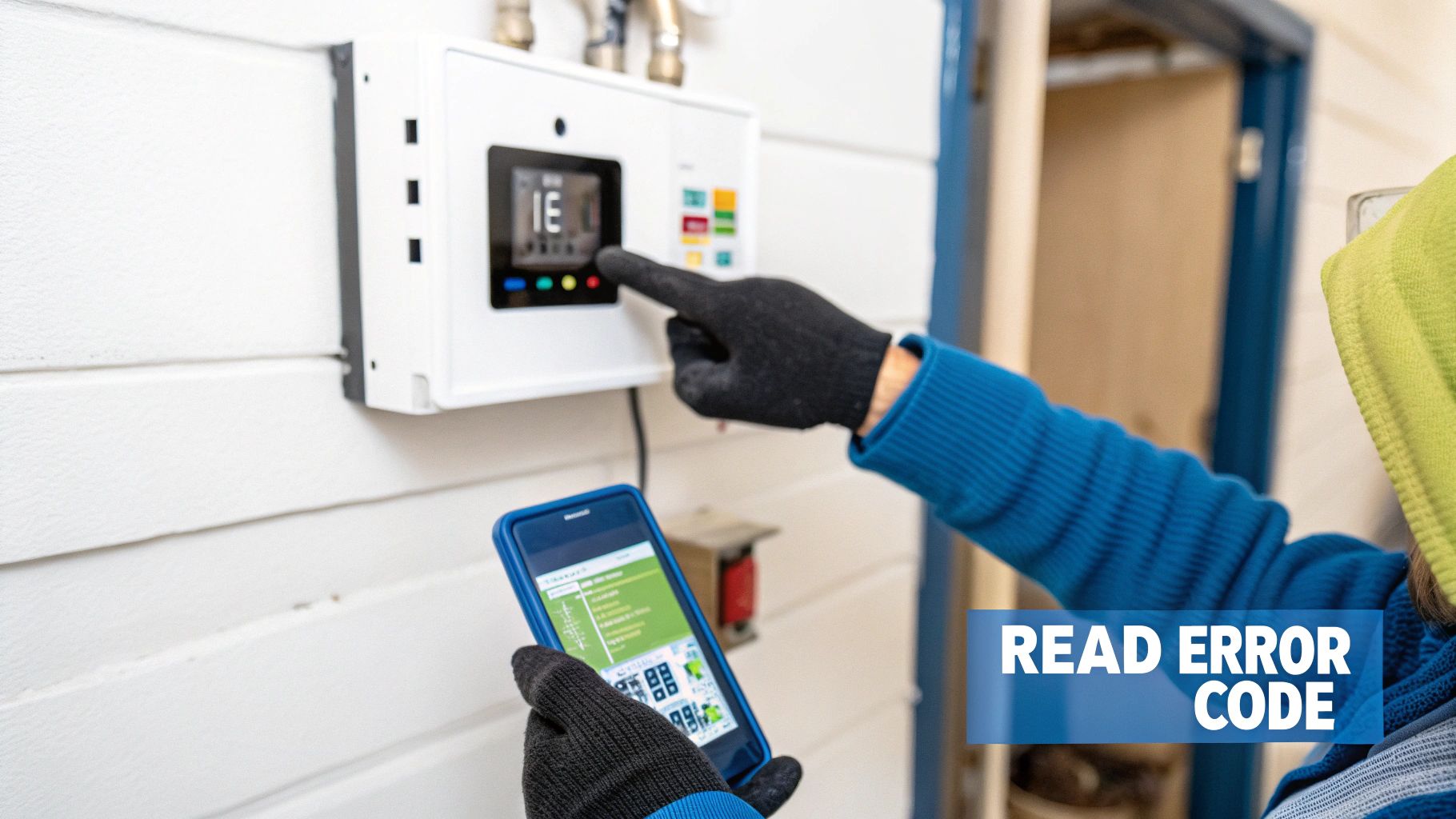
Your furnace actually has a built-in diagnostic tool that can tell you exactly which of these switches is causing the shutdown. It's a small LED light on the main control board that flashes in a specific pattern to signal an error code.
To find it, first, turn off the power switch to your furnace. Next, remove the main service panel, which is usually the top door. Look for a green circuit board with a bunch of wires—that's the control board. Once you restore power, the LED light should start blinking.
Pro Tip: Don't just count the blinks; watch the pattern. Is it three short flashes followed by a pause? Or two fast flashes and one slow one? The key to these codes is almost always printed on a sticker on the inside of the furnace panel you just removed.
This blinking light is your furnace's way of telling you what's wrong. By matching the blink pattern to the chart, you can pinpoint the exact component that's been tripped or has failed.
What Your Furnace's Blinking Light Is Telling You
Here's a quick guide to some of the most common furnace error codes. While every brand is a little different, these codes are pretty standard across the industry and can give you a great starting point for troubleshooting.
| Blink Code (Number of Flashes) | Common Meaning | Recommended Action |
|---|---|---|
| Steady On or Off | Normal operation or no power. | If off, check the power source. If steady on, no error is detected. |
| 1 Flash | System lockout due to multiple failed ignition attempts. | Often points to a dirty flame sensor or a gas supply issue. |
| 3 Flashes | Pressure switch fault. | Check for blockages in the intake or exhaust vents outside. |
| 4 Flashes | High-limit switch open. | This is a classic sign of overheating, usually from a clogged filter. |
Once you've identified the code, you've got some powerful information. For something like a pressure switch fault, you might be able to find and clear a blocked vent yourself. For other codes, you can give an HVAC technician the exact details, which saves them diagnostic time and ultimately saves you money.
Knowing When to Call an HVAC Professional
Being able to troubleshoot your own furnace is a great skill for any homeowner. It's empowering. But it's just as important to know where the DIY diagnostics should stop and where professional service needs to take over. Your safety and the furnace itself are the top priorities here. Pushing beyond your expertise can quickly turn a simple fix into a dangerous situation or a much, much more expensive repair down the road.
Once you’ve checked the breaker, put in a fresh filter, and made sure the thermostat isn't the culprit, your job as the troubleshooter is pretty much done. Trying to go deeper by messing with complex electrical parts or gas lines is a huge risk. Think of it as a clear boundary: if the fix involves opening up the furnace cabinet with tools, it's time to call a pro.
Red Flags That Demand an Immediate Phone Call
Some warning signs are non-negotiable. These aren't just suggestions; they are critical safety alerts that mean you should stop what you’re doing and get a licensed HVAC technician on the phone right away.
- You Smell Gas: If you get a whiff of that distinct rotten egg smell near your furnace, you have an emergency on your hands. Don't touch any electronics or even a light switch. Get everyone out of the house immediately and call your gas utility company from a safe distance outside.
- Loud Metallic Noises: Hearing intense banging, grinding, or screeching sounds points to a serious mechanical failure. This could be a problem with the blower motor or one of its components. Continuing to run the furnace could cause catastrophic damage. Shut it down.
- Visible Scorch Marks or Soot: Any black or brown stains around the furnace panels or vents is a sign of a dangerous combustion problem, sometimes called "flame rollout." This is a major fire and carbon monoxide hazard that needs a professional's eyes on it immediately.
- The Breaker Repeatedly Trips: Resetting a breaker one time is fine. If it trips again almost immediately, there's an underlying electrical short that poses a serious fire risk. Do not keep resetting it.
Professional technicians spend years training to safely handle high-voltage electricity and natural gas systems. They use specialized diagnostic tools like multimeters and combustion analyzers that homeowners just don't have. Their expertise ensures a repair is done correctly and safely the first time.
Why Professional Diagnosis Is Worth It
When your thermostat clicks but the furnace doesn't turn on, the issue could be a simple fix like a dirty flame sensor that takes minutes to clean. Or, it could be a failing control board—the expensive "brain" of your furnace. A pro can tell the difference almost instantly, saving you from guessing and replacing parts you don't actually need.
Trying to replace complex parts like ignitors, gas valves, or control boards yourself is not only dangerous but can also void your furnace's warranty. A licensed technician uses certified parts and stands by their work, which gives you peace of mind that the repair is solid. According to industry data, nearly 40% of major HVAC failures are preceded by smaller issues that were either ignored or improperly repaired.
Ultimately, knowing your limits is a key part of responsible homeownership. When you run into one of those red flags or just hit the end of your troubleshooting comfort zone, making that call protects your family, your home, and the investment you've made in your heating system.
Common Questions About Furnace Ignition Problems
Even after walking through the basic troubleshooting steps, it's totally normal to have a few questions left. The way your thermostat, furnace, and all its safety gadgets talk to each other can get complicated. Here are some straightforward answers to the questions we hear all the time from homeowners when their thermostat clicks but the furnace doesn't turn on.
These little insights should help connect the dots, giving you a clearer picture of what’s going on with your heating system.
Could a Bad Thermostat Still Be the Problem if It Clicks?
Yes, absolutely. This is a common point of confusion, and for good reason. That click you hear is a good sign—it means the thermostat's internal switch is trying to send the "turn on the heat" signal to the furnace. But that click doesn't guarantee the message is actually being delivered.
Think of it like a faulty light switch that clicks but the light just flickers or doesn't come on at all. The mechanical part is working, but the electrical connection is weak or broken. If you’ve already checked off the simple fixes like the breaker and the filter, the thermostat itself becomes a prime suspect. An HVAC tech can quickly test the voltage to see if a weak signal is the real culprit here.
Why Does My Furnace Ignite for a Few Seconds Then Shut Off?
This is the textbook symptom of a dirty or failing flame sensor. The furnace is doing its job and lighting the burners, but the flame sensor—a critical safety device—isn't detecting the flame.
Its entire job is to confirm that a flame is present when the gas is on. When it can't "see" the flame, it tells the main control board there's a problem, assuming that raw, unburnt gas is pouring into your system. As a safety measure, the board immediately cuts the gas supply. While cleaning a flame sensor is sometimes a DIY job, it's a very delicate part that's easy to damage if you don't know what you're doing.
This start-and-stop cycle isn't a sign of a massive furnace failure. It's actually a safety feature working perfectly. It just means a specific, small component needs attention. But ignoring it will definitely leave you without heat.
When your furnace is on the fritz, checking out a homeowner's guide to fast furnace repair service can offer more great tips for troubleshooting and help you decide when it's time to call in a pro.
What if I Smell Gas Near My Furnace?
Stop what you are doing. This is an emergency. If you smell that distinct "rotten egg" or sulfur-like odor, do not touch any light switches, unplug anything, or even use your phone inside the house.
Follow these steps immediately:
- Evacuate Everyone: Get all people and pets out of the home right away.
- Call from a Safe Distance: Once you are safely outside and a good distance from the house, call your gas company's emergency line.
- Wait for the All-Clear: Do not go back inside for any reason until the utility company has given you the official all-clear.
Once the gas company has made the area safe, your next call should be to an HVAC professional for emergency furnace service.
How Can I Prevent This From Happening Again?
The single best thing you can do is schedule annual professional maintenance. A yearly tune-up, ideally in the fall right before you really need your heat, is the best proactive care you can give your system.
During the service, a technician will clean and test key parts like the flame sensor, inspect all the safety switches, tighten up electrical connections, and make sure the whole system is running efficiently and safely. This is how you catch small problems before they leave you shivering on a cold winter night.
When you need a reliable expert to figure out why your thermostat clicks but your furnace stays silent, you can trust the licensed technicians at Neighborhood Plumbing, HVAC, and Electrical. We offer 24/7 emergency service to get your heat back on fast. Visit us at https://4neighborhood.com to schedule your appointment.