

Waking up to a silent furnace on a frigid Central Minnesota morning is a homeowner's worst nightmare. Oil furnace problems often boil down to simple issues—an empty fuel tank, a tripped circuit breaker, or even just a clogged filter. Knowing what to check first is your best defense against the biting cold.
Your First Steps When the Heat Goes Out
That sudden silence from the basement can trigger instant panic, especially when the temperature is plummeting in St. Cloud or Sauk Rapids. But before you assume the worst (and start bracing for a huge repair bill), it's important to know that a lot of furnace failures have surprisingly simple fixes. Think of this guide as your calm, practical first responder, walking you through the signs of trouble and what they actually mean.
I like to think of an oil furnace as a hardworking, but sometimes grumpy, employee. It usually does its job quietly in the background, but strange noises or a sudden shutdown are its way of telling you something’s wrong. Ignoring those signals is like slapping tape over your car's check engine light; a minor issue can quickly spiral into a major, expensive breakdown.
What You Will Learn in This Guide
My goal here is to give you the confidence to troubleshoot your heating system safely. We'll lay out a clear roadmap that covers everything from figuring out what's wrong to making smart financial decisions.
Here’s a quick look at what we’ll cover:
- Decoding the Warning Signs: You'll learn what those specific sounds, smells, and behaviors mean, from soot buildup to ignition failures.
- Safe DIY Troubleshooting: I'll show you the simple checks you can do yourself—like resetting the burner or checking the thermostat—before you even think about picking up the phone.
- Understanding Repair Costs: Get a realistic feel for what common repairs cost right here in Central Minnesota, so you can budget without any nasty surprises.
- Repair vs. Replace: We'll walk through a simple framework to help you decide when it’s time to stop patching things up and invest in a new, more efficient system.
By the end of this guide, you’ll have a much clearer picture of the most common oil furnace problems and feel ready to take the right steps to keep your home warm and safe all winter.
Decoding The Signs of Oil Furnace Trouble
Your oil furnace is a lot like a dependable old car. Most of the time, it just works, humming along in the background without a fuss. But when something’s wrong, it starts sending signals. Just like you wouldn't ignore a strange rattle in your car, you shouldn't ignore odd sounds or smells from your furnace—especially when a Minnesota blizzard is on its way. Learning to pick up on these warning signs is the first step in preventing major oil furnace problems.
This decision tree is a great starting point. It walks you through the first few checks when your furnace acts up, helping you figure out if you've got a quick fix on your hands or if it's time to call in a pro.
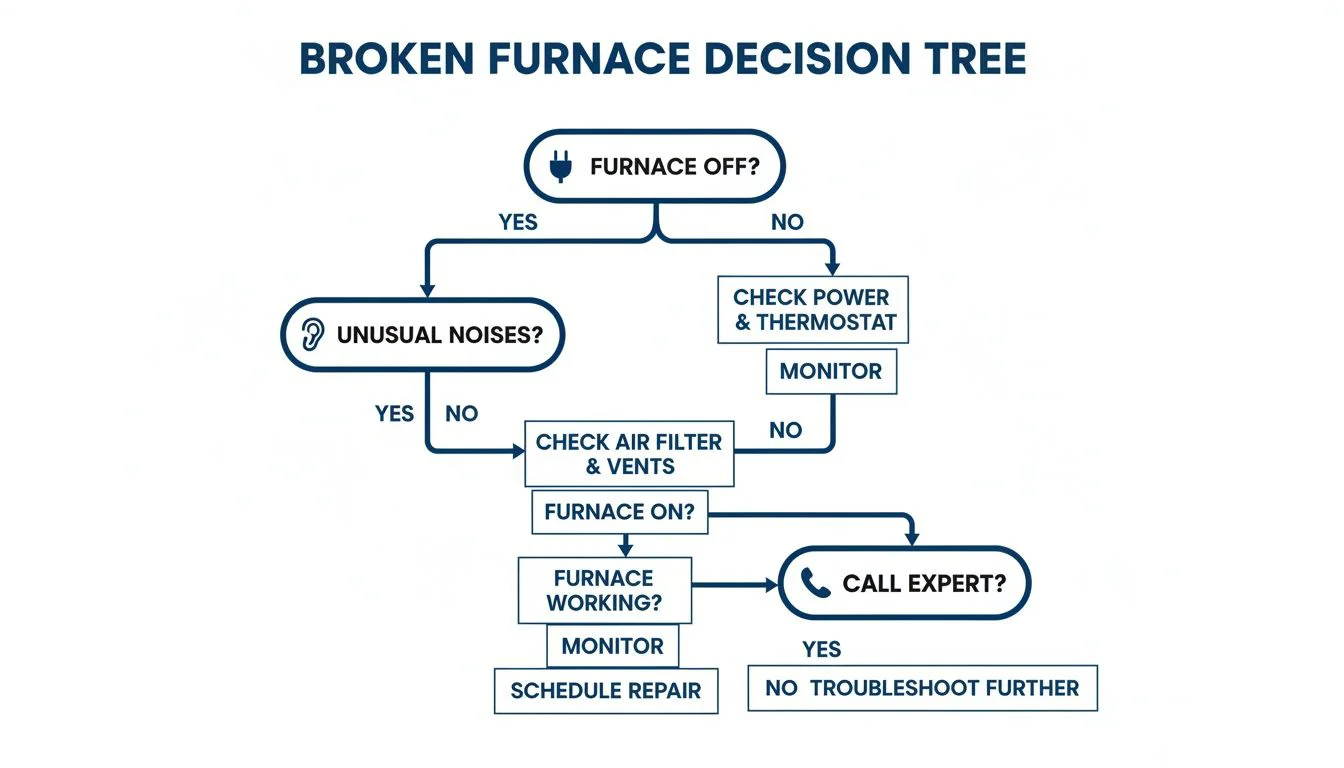
The main idea here is to be systematic. Check the power, listen for strange noises, and see what kind of air is coming out of the vents. This simple process can quickly narrow down what’s going wrong. Let's dig into what these specific signals really mean.
To make it even easier, here’s a quick-reference table. Use it to match your furnace's symptoms with the most likely cause and see if it's something you can check yourself or if it's a job for a professional.
Quick Guide to Oil Furnace Symptoms and Causes
| Symptom You Notice | Most Likely Problem | DIY Check or Professional Needed? |
|---|---|---|
| Furnace runs, then stops, then repeats | Short cycling (clogged filter, bad thermostat) | DIY check first, then professional |
| Loud Banging or Booming on Startup | Delayed ignition (oil buildup) | Professional Needed (Immediately) |
| Scraping or Screeching Sounds | Blower wheel or motor bearing issue | Professional Needed |
| Rattling and Vibrating Noises | Loose panel or failing motor | DIY check first, then professional |
| Seeing Black Soot or Smelling Oil | Improper combustion, clogged burner | Professional Needed |
| Furnace Runs, But Air is Cold | Fuel delivery or ignition system failure | DIY check for fuel, then professional |
This table gives you a snapshot, but understanding the why behind each problem will help you know exactly what you're dealing with.
Your Furnace Keeps Shutting Off Unexpectedly
One of the most common complaints we hear is about a furnace that cycles on and off too frequently. This is called short cycling. It kicks on for a few minutes, shuts down before your house is warm, and then does it all over again. It’s not just annoying; it’s also incredibly inefficient and will drive up your fuel costs fast.
Imagine trying to boil a pot of water by turning the stove on for 30 seconds, then off, then on again. It would take forever and waste a ton of energy. That’s what your furnace is doing.
This constant starting and stopping also puts a lot of wear and tear on important parts like the blower motor and ignition system. Usually, the culprits are pretty simple:
- A Clogged Air Filter: This is the number one cause. A dirty filter essentially suffocates your furnace, restricting airflow until the system overheats and shuts itself down as a safety measure.
- A Malfunctioning Thermostat: If your thermostat is on the fritz or in a bad spot (like in direct sunlight), it might get false readings and tell the furnace to shut off too soon.
- An Overheated Blower Motor: A lack of lubrication or a buildup of dirt can make the motor work way too hard, causing it to overheat and trip the safety switch.
Strange Banging or Scraping Noises
A healthy furnace should operate with a consistent, low hum. Any sudden, loud, or weird noises are a clear cry for help. Think of these sounds as specific alerts, each pointing to a different mechanical problem.
A loud bang or boom right when the furnace kicks on is a serious warning. This usually points to delayed ignition—oil is pooling in the combustion chamber before it finally lights, causing a mini-explosion. This can damage your heat exchanger, which is a critical and expensive part to fix.
Here’s what other noises might be telling you:
- Scraping or Screeching: That high-pitched metal-on-metal sound often points to the blower wheel. It could be loose, broken, or hitting its housing. It could also mean the motor bearings are shot and need immediate attention.
- Rattling or Vibrating: This could be something as simple as a loose access panel that needs to be tightened. But it can also signal a more serious issue with the burner or a failing motor.
- Whistling or High-Pitched Squealing: This usually means your system is struggling to breathe. It points to airflow problems, often caused by clogged filters or blocked ductwork.
Seeing Soot or Smelling Oil
Your oil furnace is designed to burn fuel cleanly and efficiently. If you start seeing black soot building up around the unit or notice a persistent smell of heating oil, something is wrong with the combustion process. It's like a candle with a wick that's too long—it smokes and creates soot instead of clean light.
This is more than just a mess; it's a safety and efficiency problem. An improper burn wastes fuel and can release harmful byproducts into your home. The usual suspects are a clogged burner nozzle, a dirty filter, or even a cracked heat exchanger. For a deeper dive into heating system issues, you can check out some comprehensive guides on furnace problems from other industry experts.
In the harsh winters of Central Minnesota—especially in areas like St. Cloud, Sauk Rapids, and Blaine—these "minor" issues can quickly turn into critical failures. The 2026 Minneapolis Furnace Reliability Report found that furnaces over 12 years old are 2.6 times more likely to fail during a sub-zero cold snap. That data, pulled from our region, shows that up to 37% of residential furnaces are at a higher risk when the temperature plummets.
The Furnace Runs But Produces No Heat
There are few things more frustrating than hearing your furnace kick on but feeling cold air blowing from the vents. This common problem means the fan is working, but the fire is out. The system isn't successfully igniting the oil to create heat.
The issue is almost always tied to the fuel delivery or ignition system. Think of it like a clogged fuel line in a car—the engine will turn over, but it can't get the gas it needs to actually start.
Several parts could be to blame:
- Clogged Oil Filter or Nozzle: Sludge and dirt from the bottom of your oil tank can easily block the filter or the burner nozzle, stopping fuel from ever reaching the combustion chamber.
- Ignition System Failure: The igniter or electrodes are responsible for the spark that lights the oil. If they've failed, there's nothing to start the fire.
- Fuel Pump Issues: A bad fuel pump can't draw oil from the tank and send it to the burner, leaving your furnace with nothing to burn.
Getting familiar with these different symptoms and what they mean is key. You can read more about the various causes of furnace repairs to get a better handle on keeping your whole heating system in good shape.
Simple Troubleshooting Steps You Can Try First
When your oil furnace suddenly goes quiet on a freezing Minnesota night, it's easy to jump straight to panic. But before you grab the phone for an emergency repair, take a breath. A lot of common oil furnace problems are things you can safely check and fix yourself, which could save you a service call and get the heat back on in minutes.
Think of it as a quick pre-flight check for your heating system. We're just going to rule out the simple stuff first before assuming there's a major mechanical failure.
Start With The Obvious: Thermostat And Power
It sounds almost too simple, but you'd be surprised how often the "problem" is just a setting. Your thermostat is the brain of the operation. If it's not telling the furnace to turn on, nothing is going to happen.
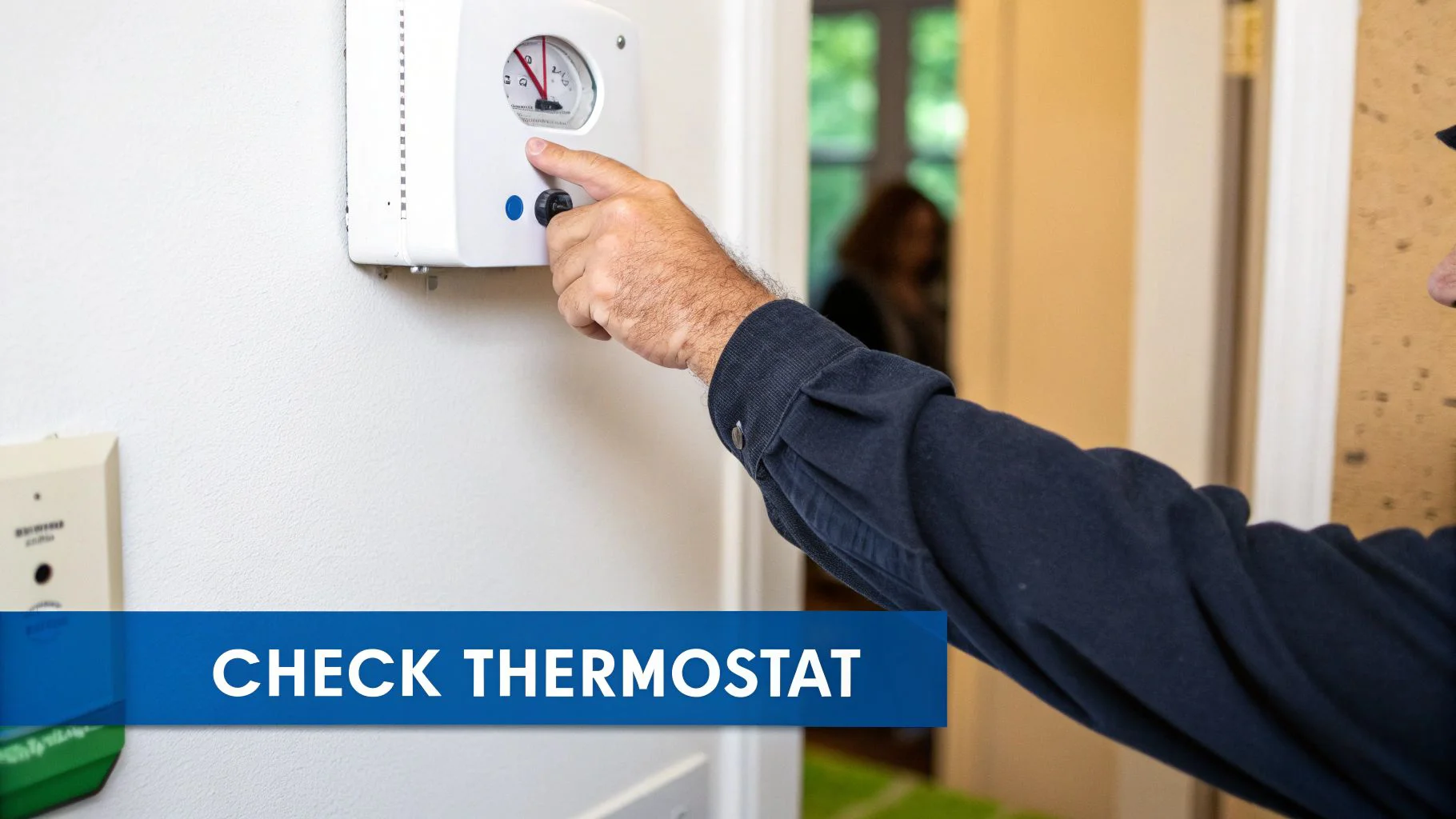
- Check the Thermostat Settings: First, make sure the thermostat is actually set to "HEAT". Then, crank the temperature setting at least five degrees higher than the current room temperature. If you have a digital thermostat, dead batteries could be the culprit, so pop the cover off and check those too.
- Inspect the Emergency Shut-Off Switch: Every oil furnace has an emergency power switch. It usually looks like a regular light switch but has a red faceplate. You'll often find it at the top of the basement stairs or right near the furnace. It's incredibly easy for this to get flipped off by accident. Make sure it's in the "ON" position.
- Verify the Circuit Breaker: Walk over to your home's main electrical panel and find the breaker for your furnace. If it's tripped (usually sitting in the middle or "OFF" position), flip it firmly back to "ON." If it trips again right away, do not reset it again. That's a sign of a bigger electrical problem that needs a pro.
Check Your Fuel Supply
This is another one that's easy to overlook when you're cold and stressed. An oil furnace can't make heat without oil. If the tank is empty, the whole system will shut down.
It's important to know that just refilling an empty tank might not solve the problem. When an oil tank runs dry, the fuel line can suck up air and sludge from the bottom. This gunk clogs the filter and fuel lines, creating an air pocket. A technician often has to "bleed" the lines to get the furnace to restart.
Take a look at the gauge on your oil tank. If it's on empty or close to it, you've probably found the issue. Go ahead and schedule a delivery, but just be aware that you might still need a service call to get things running again after the truck leaves.
How To Safely Use The Reset Button
Your oil burner has a big red reset button, usually on the motor. Its job is to restart the ignition process if the burner fails to light on the first attempt—a situation we call a "lockout." Think of it like rebooting a computer that's frozen; sometimes, that's all it takes. If your furnace isn't running, you can try pressing this button ONCE.
CRITICAL SAFETY WARNING: Press the reset button only one time.
If you press it and the furnace roars to life and stays on, great. You're all set. But if it runs for a minute and then shuts off again, or if nothing happens at all, do not press it again. Hitting the reset button over and over pumps unburnt oil into the combustion chamber. This creates a very dangerous situation that can lead to a "puffback"—a small explosion of oil vapor when the system finally does ignite.
If a single reset doesn't do the trick, it's a clear signal that there's a deeper problem, like a clogged nozzle, a dirty flame sensor, or a bad igniter. Those aren't DIY fixes. When a furnace won't start, it's a puzzle, and you can learn more about the pieces in our guide on how to troubleshoot a furnace that won't start.
The Real Cost of Oil Furnace Repairs and Neglect
When your oil furnace goes out, the first thing you feel is the cold. But the second, more stressful feeling is the worry about what it's going to cost to fix. Getting a handle on the financial side of furnace problems helps you make smarter decisions, especially when you're weighing a small repair now against a massive emergency bill later.
Ignoring a little problem with your furnace is a lot like ignoring a small leak in your roof. At first, it's just a drip you can ignore, but before you know it, you've got major water damage on your hands. The same thing happens with your heating system; a predictable, affordable fix today can save you from a catastrophic—and expensive—failure on the coldest night of the year.
Breaking Down Common Repair Costs
The price to fix an oil furnace can be all over the map. It really depends on what part failed, how old your system is, and how quickly you need it done. A simple nozzle or filter replacement is on the lower end of the scale, but if you're dealing with a bad motor or complex electrical issue, it's going to be a bigger investment.
Here's a ballpark of what you might expect for some common repairs here in Central Minnesota:
- Annual Tune-Up & Cleaning: $150 – $300. Okay, this isn't a "repair," but it's the single best thing you can do to avoid those bigger bills down the road.
- Nozzle Replacement: $100 – $250. This is a common wear-and-tear part that messes with how efficiently your furnace burns oil.
- Thermocouple or Flame Sensor: $125 – $300. This is a critical safety part that tells the furnace a flame is actually present. They tend to fail with age.
- Ignitor or Transformer Replacement: $250 – $500. If this goes, your furnace won't be able to start the combustion process at all.
- Blower Motor Repair or Replacement: $500 – $1,500+. This is one of the heavy hitters. The blower motor is a major component, and replacing it is a significant job.
Keep in mind, these are estimates for a scheduled service call. The real financial trap is waiting until your furnace completely dies during a winter storm.
The High Price of an Emergency Call
When your heat gives out during a blizzard, you're not just paying for a part and the labor to install it. You're paying for urgency. Emergency service calls almost always come with a premium fee, and that's before the technician even opens their toolbox.
It gets even tougher during peak winter demand. An emergency fix for a basic oil combustion chamber could run you $100 to $175, but that's just the start. If a major part like a blower motor or heat exchanger fails, the total can easily skyrocket into the thousands, especially during a deep Minnesota freeze. Federal data shows that repair costs can jump 20-50% in an emergency, thanks to higher labor rates and the rush to get parts. You can dig deeper into furnace efficiency and costs over at the U.S. Department of Energy.
Neglecting your furnace is a financial gamble where the odds are stacked against you. An annual tune-up, costing around $200, can catch a failing part that might otherwise cost you over $1,000 in an emergency repair during the coldest week of the year.
That massive cost difference is exactly why proactive maintenance isn't just another expense—it's an investment. By scheduling regular service, you stay in control of the timing and the cost, turning a potential crisis into a manageable task on your terms.
Deciding Between Repairing or Replacing Your Furnace
Sooner or later, every homeowner with an aging furnace faces the big question: should I pay for another repair, or is it finally time to replace the whole unit? It’s a major decision, pitting a significant upfront investment against the risk of more breakdowns and rising fuel costs.
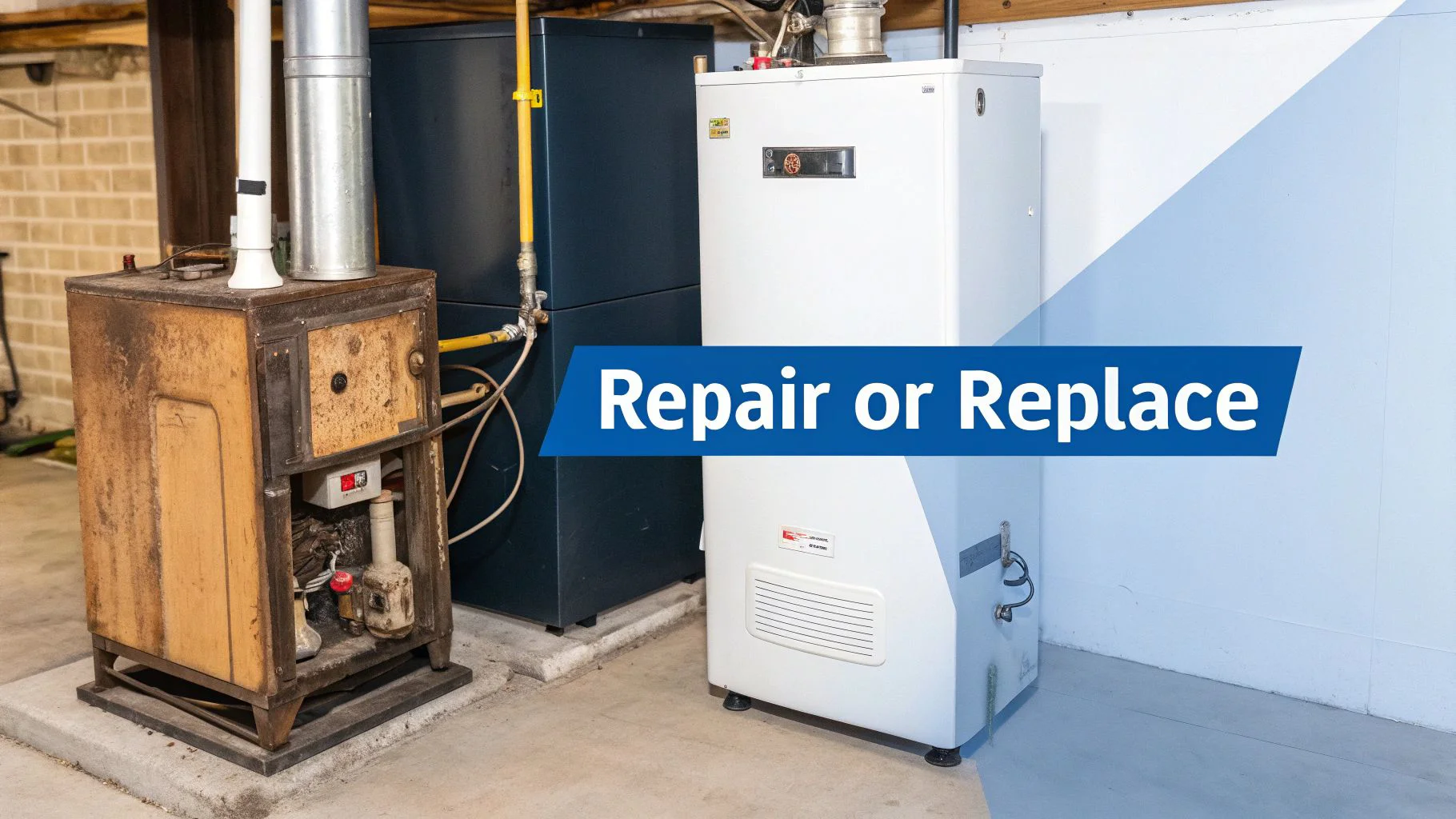
Thinking about this is a lot like deciding whether to fix an old car. A cheap repair might get you back on the road today, but if you’re constantly in the shop and your gas mileage is terrible, you know a new car is the smarter move in the long run. The same logic applies to your furnace.
Applying the 50 Percent Rule
A great guideline to start with is the 50 percent rule. It’s a simple but effective formula HVAC pros use to help homeowners make a clear-headed decision.
The rule is straightforward: If the cost of a repair is 50% or more of the cost of a brand-new furnace, replacement is almost always the more financially sound option.
Let's say you're quoted $2,500 for a new blower motor and heat exchanger. If a completely new, high-efficiency oil furnace costs around $5,000 to install, you’ve hit that 50% mark. Pouring that much money into an old, breakdown-prone system just doesn't make financial sense.
Key Factors to Consider
Beyond the cost of a single repair, a few other factors should weigh heavily in your decision. Your furnace’s age, its recent repair history, and your monthly energy bills all tell a story.
- Age of the Furnace: How old is your unit? Oil furnaces typically last 15 to 20 years. With diligent maintenance, some can push to 25 years, but that's not always the case. Here in Central Minnesota, where brutal winters in areas like Mora and Forest Lake test heating systems relentlessly, that lifespan can shorten without proper care.
- Frequency of Repairs: Is this your first service call in years, or does it feel like you and your HVAC technician are on a first-name basis? If you're scheduling repairs every season, those costs add up fast. A furnace that constantly needs attention is sending a clear signal that major parts are wearing out.
- Rising Energy Bills: Have you noticed your oil consumption creeping up, even when your thermostat settings stay the same? An older furnace loses its efficiency over time. A 20-year-old unit might have an AFUE (Annual Fuel Utilization Efficiency) rating of 60-70%, meaning 30-40 cents of every dollar you spend on fuel is just wasted. A new high-efficiency model, in contrast, can operate at over 95% efficiency, which makes a huge difference on your bills.
The Long-Term Benefits of Replacement
While the price tag for a new furnace can seem daunting, it's an investment in your home's comfort, safety, and value. A new system brings peace of mind, knowing you won't be waking up to a frigid house during the next polar vortex.
Modern furnaces are also much quieter and safer, with advanced features that older models just don't have. When you factor in the long-term energy savings and avoiding future repair bills, the initial cost becomes a lot more manageable. Our guide on furnace repair versus replacement offers more details to help you weigh your options.
Finding a Local Pro You Can Trust for Your Furnace
Dealing with oil furnace problems can feel like a lot, but just by reading this, you’ve armed yourself with the knowledge you need to take control. From figuring out what that strange clanking noise is to handling a few simple fixes yourself, you're no longer in the dark. The biggest takeaway? Being proactive will save you a ton of stress, prevent those miserably cold nights, and help you avoid a budget-busting emergency repair bill.
The first step is always spotting the early warning signs. The second, and arguably the most important, is knowing where to draw the line between a quick DIY job and a problem that needs a licensed technician. Your safety, and the life of your furnace, really depends on getting that call right.
Why a Trusted Technician Makes All the Difference
When you’re staring down a serious furnace issue, you need more than just a quick fix—you need a reliable local partner you can count on. Working with a professional team gives you a kind of peace of mind that a random repair person just can't offer.
Here’s what you get when you work with a real pro:
- 24/7 Emergency Help: Furnaces don't care about business hours, especially during a brutal Minnesota winter. A local expert is always on call, ready to roll when you need them most.
- Licensed and Trained Techs: Proper training means the job gets done right the first time, following all the strict safety codes and the manufacturer’s own guidelines. No guesswork involved.
- Upfront, Honest Pricing: You should never have to wonder what a repair is going to cost you. We believe in transparent, job-based pricing so there are absolutely no surprises on the final bill.
When problems pop up that are clearly beyond a simple reset or filter change, it's so important to have reliable home service pros on your side, like local plumbing experts, who can properly diagnose what’s going on.
Your heating system is the heart of your home during our harsh winters. Investing in its health isn't just an expense—it's an essential part of keeping your family safe and warm.
Don’t wait for your furnace to completely break down before giving it some attention. Scheduling a professional tune-up or a safety inspection is easily the most affordable step you can take for a worry-free season. Give our team a call today, and let's make sure your system is ready for whatever winter decides to throw at us.
Got Questions About Your Oil Furnace? We've Got Answers.
Even after you've done a little troubleshooting, it's normal to have a few more questions rattling around. Getting the right information can make all the difference when it comes to keeping your Central Minnesota home safe and warm. Here are the answers to some of the most common questions we get from homeowners just like you.
Why Does My House Smell Like Oil When The Furnace Runs?
A faint whiff of oil right after you've had it serviced or changed the filter is pretty normal and should disappear quickly. But if you're dealing with a strong, persistent oil smell that's making its way through your house, that's a serious red flag.
That heavy odor could be pointing to a few dangerous problems:
- An oil leak somewhere in the system—from the tank, the fuel lines, or the pump itself.
- Bad combustion, which means the oil isn't burning off completely like it should.
- A cracked heat exchanger, which is a major safety issue. This could let exhaust fumes, including deadly carbon monoxide, leak directly into your home.
If that oil smell is strong and won't go away, shut your system off immediately with the emergency switch. Then, call a licensed HVAC technician. That's a potential hazard you don't want to mess with.
How Often Should I Get My Oil Furnace Serviced?
Our advice? Get your oil furnace professionally cleaned, inspected, and tuned up once a year, without fail. The best time to do this is in the early fall, right before the cold weather sets in and you really start to depend on it.
Think of it like a yearly check-up for your furnace. This single preventative step is the most effective way to boost its efficiency, catch little problems before they turn into major breakdowns, and make sure everything is running safely for your family.
Is A Loud Bang At Startup Normal?
While furnaces make some noise when they kick on, a loud BANG or BOOM right at startup is definitely not normal. That sound is a classic sign of something called delayed ignition.
Here's what's happening: oil sprays into the combustion chamber, but for some reason, it doesn't light up right away. When it finally does ignite, all that extra oil vapor goes up at once, creating a small, contained explosion. This is a violent event that can seriously damage critical parts like your heat exchanger. If you hear that noise, get it inspected by a pro as soon as you can.
Can I Switch From Heating Oil To Natural Gas?
Absolutely. Converting from oil to natural gas is a popular option for many homeowners, as long as there are natural gas lines available on your street. It’s a bit more involved than just changing fuels, though. You'll need to replace the furnace itself and likely have new gas lines installed to connect your home to the main supply.
The upfront cost can be significant, but natural gas is typically cheaper and burns cleaner than heating oil. Over the long haul, making the switch can lead to real savings on your energy bills and lessen your home's environmental footprint.
Don't let oil furnace problems leave you shivering. If you're running into any of these issues or just want to get your annual tune-up on the calendar, the licensed technicians at Neighborhood Plumbing, HVAC, and Electrical are ready to help. Contact us today to make sure your home stays warm and safe all winter long.


