

That high-pitched squeak coming from your furnace isn't just an annoyance—it's your heating system trying to tell you something's wrong. Most of the time, the culprit is either a worn-out belt on an older furnace or failing bearings in a more modern direct-drive blower. Whatever the cause, ignoring that sound is a gamble that can lead to a complete system breakdown, usually on the coldest night of the year.
Why Your Furnace Blower Motor Is Squeaking
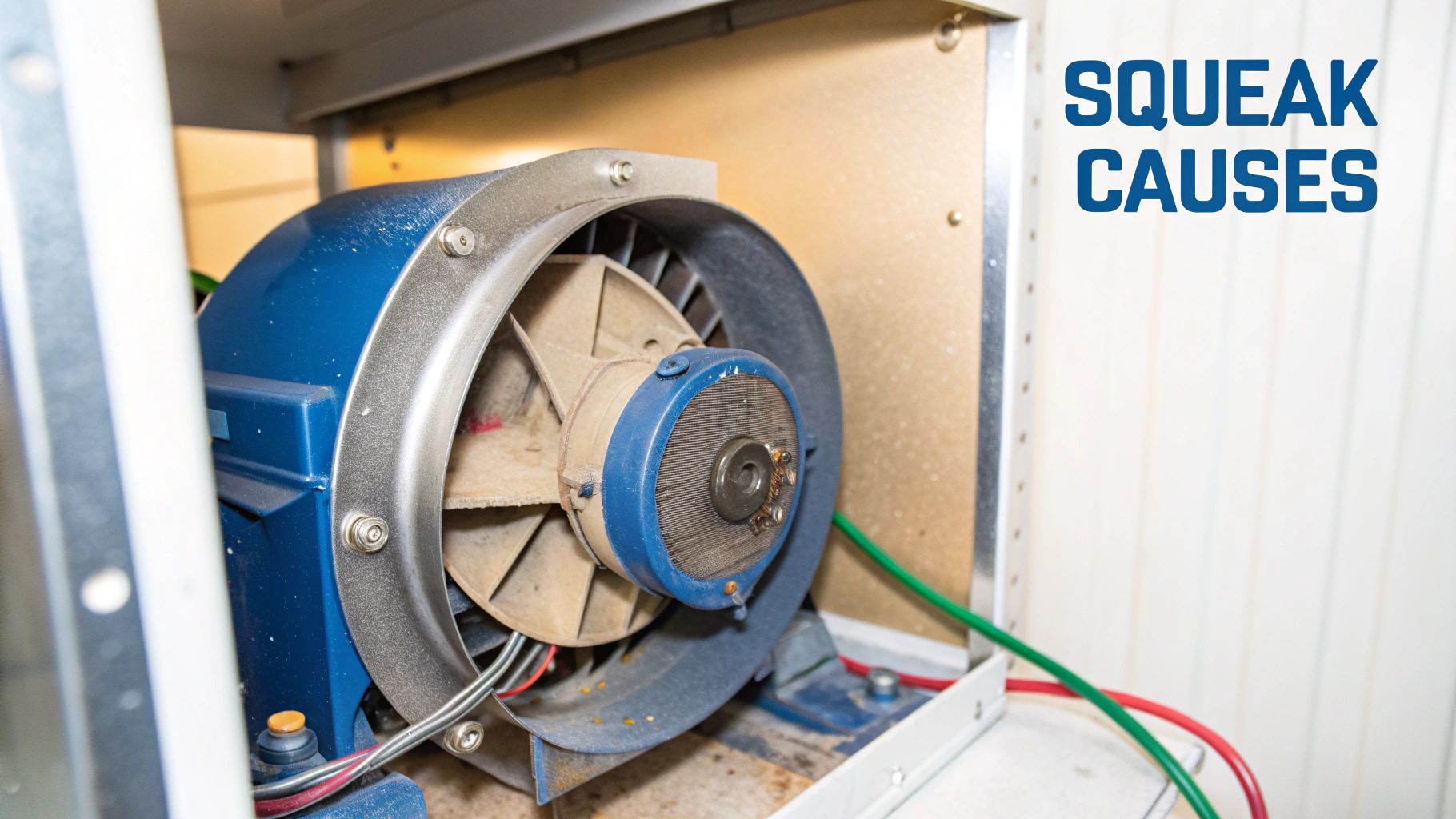
When a squeal starts echoing through your vents, it's a clear signal that something inside the blower assembly is creating friction or strain. Think of it as a symptom of a deeper issue. Pinpointing where that sound is coming from is the first real step to getting your quiet, efficient home back. Most of these problems can be avoided with regular furnace maintenance, but once the noise starts, you have to act.
As parts wear down or get thrown out of alignment, they create vibrations that come out as that awful high-pitched noise. Letting it go can quickly turn a small, fixable problem into a much bigger, more expensive repair.
Common Culprits Behind the Noise
Furnaces generally have one of two types of blower systems, and each has its own classic weak spots that lead to squeaking.
- Belt-Drive Blowers: If you have an older furnace, it likely uses a rubber belt to spin the fan, much like the fan belt in a car. Over the years, that belt can dry out, start to crack, or lose its tension, creating a very distinct squealing sound.
- Direct-Drive Blowers: Newer furnaces usually have the fan mounted right on the motor's shaft. When you hear a squeak from one of these, it's almost always the motor bearings. They've lost their lubrication and are grinding away.
A squeaky motor is an inefficient one. Here in Central Minnesota, where your furnace is the hardest-working appliance all winter, that inefficiency really hurts. Furnaces in cold climates can be responsible for around 50% of a home's energy use, and a squealing motor with bad bearings can drive that up by another 25% because of all the extra friction. You can learn more about how a failing motor impacts your whole system in our guide to the common causes of furnace repairs.
A failing blower motor doesn't just make noise; it struggles to move air. This strain can lead to overheating, poor airflow throughout your home, and ultimately, a complete system shutdown.
Fixing the problem quickly doesn't just bring back the peace and quiet. It saves you from a no-heat emergency and lowers your monthly utility bills.
Your Pre-Repair Safety Checklist
Before you even think about popping the panel off your furnace, let's talk safety. You're about to work on a machine that juggles high-voltage electricity and, in many homes, natural gas. Trust me, rushing into a DIY repair without taking the right precautions is a recipe for disaster. This isn't just about avoiding a nasty shock; it's about giving the equipment the respect it deserves, just like a pro would.
Working safely is all about creating a controlled environment. The absolute goal here is to completely cut the furnace off from its power sources, making sure there is zero chance it can kick on while your hands are inside. This first step is completely non-negotiable.
Powering Down Your Furnace Completely
First things first: you have to kill all the electricity going to the furnace. There are usually two places you need to hit to make sure the system is truly dead.
- Find the Circuit Breaker: Head over to your home's main electrical panel. Look for the breaker labeled "Furnace," "HVAC," or maybe "Air Handler," and flip that switch to the OFF position. This is your main cutoff.
- Flip the Local Disconnect Switch: Now, look for a power switch located on or very close to the furnace unit itself. This might look like a regular light switch in a gray box or a small box with a pull-out handle. Turn this off, too. This gives you a critical second layer of safety.
It's really important to understand what a disconnect switch is and why it's crucial for isolating the power right at the unit before you start poking around. Never, ever assume the system is off just because the thermostat isn't calling for heat.
Pro Tip: After you've flipped the breaker and the local switch, go back to your thermostat and try to turn the heat on. If nothing happens—no clicks, no hums, just silence—you've successfully cut the power. This little check takes ten seconds and can prevent a serious accident.
Gathering Your Tools and Safety Gear
Getting all your gear together before you start is a huge time-saver. It keeps you from having to stop mid-job to rummage through the garage for the right socket. It also means you’ll have your safety gear right where you need it. I like to lay everything out on a towel in a well-lit spot near the furnace.
Before you start, make sure you have these essentials ready to go. Having the right tools on hand not only makes the job easier but also much safer.
Essential Tools and Safety Gear Checklist
| Tool/Gear | Purpose | Where to Find |
|---|---|---|
| Socket/Wrench Set | For loosening motor mount bolts and access panels. | Hardware Store, Garage |
| Screwdrivers | Phillips-head and flat-head for various screws. | Hardware Store, Garage |
| Flashlight or Headlamp | Furnace cabinets are dark; good light is essential. | Hardware Store, Home |
| Shop Vacuum | Cleaning dust and debris from the blower compartment. | Hardware Store, Garage |
| Smartphone | Taking photos of wiring and component placement. | Your Pocket |
| Insulated Gloves | Protects hands from sharp metal edges. | Hardware Store |
| Safety Glasses | Shields eyes from flying dust and debris. | Hardware Store |
This checklist covers the basics for a safe and successful repair. Don't be tempted to skip the gloves or glasses—they're your first line of defense.
And don't forget your most underrated tool: your smartphone! Snap a few pictures of the wiring, the belt's position, and how the motor is mounted before you take anything apart. Those photos will be your best friend when it's time to put everything back together.
For your own protection, please don't skip the personal protective equipment (PPE). A good pair of insulated gloves protects you from sharp sheet metal edges, and safety glasses are a must for keeping dust and debris out of your eyes.
Of course, the best repair is the one you never have to do. If you want to learn how maintenance can prevent a furnace repair in the first place, it's worth a read. A little bit of prevention goes a long way.
Diagnosing the Squeak to Find the Real Problem
That high-pitched squeak is your furnace's cry for help, but before you can offer the right solution, you need to play detective. The sound is just a symptom, and throwing parts at the problem without a proper diagnosis is a surefire way to waste time and money. The real trick is figuring out what's actually causing the noise.
Your investigation should always start with the simplest and most common culprit, which is often hiding in plain sight.
Start with an Airflow Check
Before you even think about touching the mechanical parts, the very first place to look is your air filter. A severely clogged filter can literally starve the system for air, forcing the blower motor to strain way beyond its limits. This intense effort can produce a high-pitched whistling or squealing sound as the fan desperately tries to pull air through a choked-off filter.
This isn't just a theory; HVAC pros see it all the time. In fact, dirty or clogged air filters are behind a staggering 60% of blower motor strains that lead to squeaks. In climates like Central Minnesota where furnaces run constantly, this is a huge issue. A clogged filter can force the blower to work 20-30% harder, generating that annoying noise and putting excessive stress on the motor's bearings and other moving parts. You can find more details on how airflow affects furnace health in a report on loud furnace noises.
This simple diagnostic infographic breaks down the essential safety steps before you open any furnace panels to investigate further.
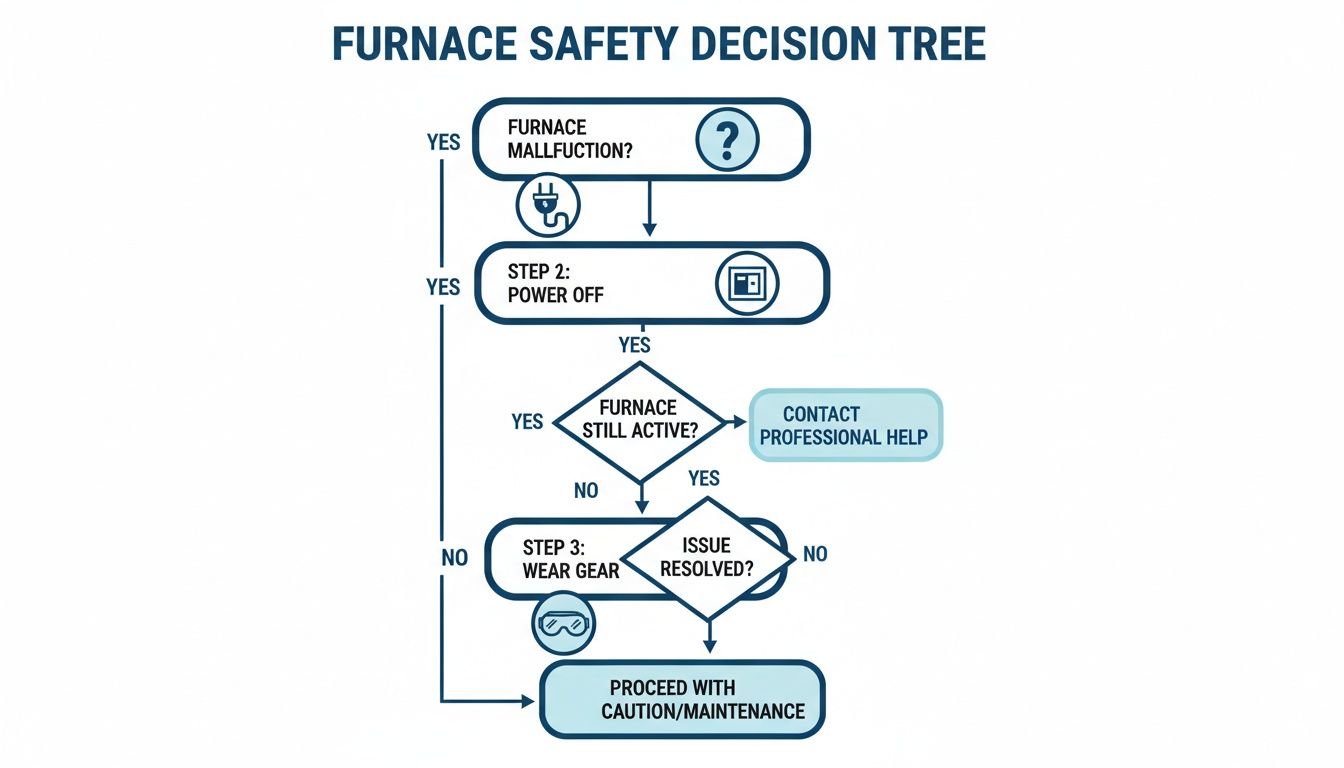
As the guide shows, powering down the system—at both the switch and the breaker—and wearing the right safety gear is a non-negotiable first step for any DIY furnace work.
If a fresh air filter doesn't quiet things down, it's time to dig a little deeper into the blower assembly itself. What you do next depends on whether you have an older belt-drive system or a more modern direct-drive furnace.
Inspecting a Belt-Drive System
If your furnace is an older model, there's a good chance it uses a belt to connect the motor to the blower fan, kind of like the fan belt in a car. This belt is a very common source of squealing. With the power completely off, open the blower compartment access panel and get your flashlight in there to examine the belt.
Look for these tell-tale signs of a failing belt:
- Cracks and Fraying: Look for any signs of cracking, glazing (a shiny, hardened surface), or fraying along the edges. A worn-out belt can't grip the pulleys properly and will slip, creating that loud squeal.
- Improper Tension: Gently press on the middle of the belt. It should have about ½ to ¾ of an inch of "give." If it’s too loose, it will slip and squeak. If it’s too tight, it will put immense strain on the motor and blower bearings, causing them to squeal and fail prematurely.
If the belt looks shot, replacement is the only real fix. If it’s just loose, you may be able to adjust the tension by loosening the motor mount bolts, sliding the motor slightly, and then retightening everything.
Listening to a Direct-Drive Motor
Most modern furnaces use a direct-drive motor, where the blower wheel (the "squirrel cage") is mounted directly onto the motor's shaft. No belt means one less thing to check. But in this case, the squeaking almost always points to one thing: failing motor bearings.
Over years of service, the factory-sealed lubrication inside the motor’s bearings dries up or gets contaminated with dust. When that happens, the metal-on-metal friction creates a persistent, high-pitched squeal or, in worse cases, a grinding noise.
Field Tip: To confirm bad bearings, and with the power still off, try to spin the blower wheel by hand. Does it spin freely and silently for a few rotations? Or do you feel resistance, hear a faint grinding, or feel a slight wobble? Any resistance or noise is a dead giveaway that the bearings are shot.
Unfortunately, the bearings inside a direct-drive motor are not a simple DIY replacement. They are pressed into the motor housing and require special tools to get out. For most homeowners, a squeak from a direct-drive motor means the entire motor assembly will need to be replaced.
By carefully working through these diagnostic steps—from the filter to the belt or bearings—you can move beyond just hearing the noise. You’ll be able to confidently pinpoint the root cause, which is the most critical step toward getting the right fix and bringing quiet, reliable heat back to your home.
Actionable Fixes for Common Blower Motor Noises
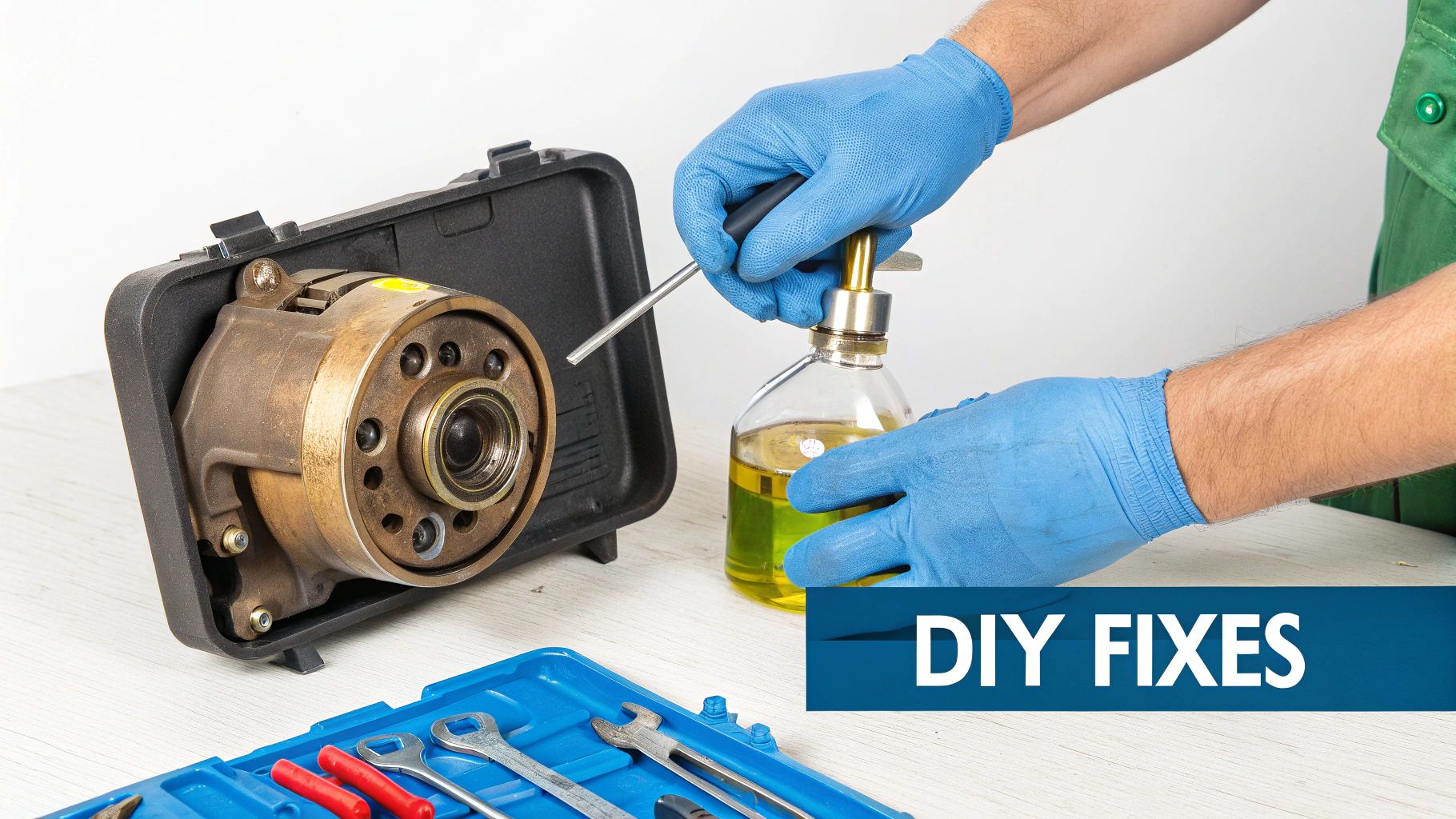
Alright, you’ve done the diagnostic work and have a good hunch about what’s causing that racket. Now it’s time to get your hands dirty and actually fix it. We're moving from detective work to direct action.
Let's walk through the most common fixes that can silence that squeak for good. Just remember, what you do next depends entirely on whether you're working with an older belt-drive furnace or a more modern direct-drive model.
Lubricating an Older Motor
If your furnace has an older motor with oil ports, you might be in luck. A little lubrication is often all it takes to quiet things down, as these motors were built to be serviced regularly.
But before you grab any old can of oil, stop. This is the most critical part. Using something like WD-40 is a huge mistake—it's a solvent, not a long-term lubricant, and will just make things worse.
You need a non-detergent electric motor oil, usually labeled SAE 20. It's specifically made for the high-heat, continuous-use environment of a motor. You can find it at just about any hardware or auto parts store.
With the right oil in hand, here’s what to do:
- Find the oil ports. They’re small, spring-loaded caps or plugs on the motor housing, usually near where the shaft comes out. There should be one on each end.
- Wipe the area clean before opening them. You don't want any dust or grit getting inside.
- Add just two to three drops of oil into each port. Seriously, that's it. Over-oiling is a real problem; excess oil attracts dust and turns into a sticky mess.
- Once you're done, give the blower wheel a few spins by hand to work the oil into the bearings.
Often, this simple step will stop the squeak immediately. If the noise continues, the bearings might be too worn out for oil to make a difference.
Adjusting or Replacing a Blower Belt
Got a belt-drive system? That high-pitched squeal is a classic symptom of a belt that's too loose, too tight, or just plain old. If the belt looks cracked, glazed, or frayed, don't bother adjusting it—just replace it.
To adjust the tension, you’ll need to physically move the motor. Look for the motor mount, which is the cradle it sits in, held by a few bolts.
- Loosen the mounting bolts just enough so the motor can slide. Don't take them all the way out.
- Slide the motor to adjust the tension. You're aiming for about ½ to ¾ of an inch of play when you push down on the middle of the belt. Too tight strains the bearings, and too loose will slip and squeal.
- Tighten the bolts back up securely once you've found that sweet spot, and double-check the tension.
If you’re swapping in a new belt, just loosen the motor, slip the old one off, put the new one on the pulleys, and then set the tension.
A properly tensioned belt does more than just stop the noise. It ensures the motor's power is efficiently transferred to the blower, which improves your system's performance and helps it last longer.
The Challenge of Direct-Drive Motor Bearings
If you have a modern direct-drive motor and the bearings are shot, you've hit a fork in the road. This is where most DIY repairs should stop. While it might seem logical to just replace the bearings, it’s a job for a pro with specialized equipment.
The bearings in these motors are press-fitted into the housing. Trying to knock them out without a hydraulic press and proper bearing pullers will almost certainly destroy the motor housing or bend the shaft. It's a quick way to turn a repair job into a full motor replacement.
HVAC technicians will tell you that blower motor issues account for a huge chunk of furnace breakdowns—around 35% in the U.S. In colder climates where furnaces run for over 2,000 hours a season, bearing failure is especially common. And with about 80% of new furnaces since 2010 using direct-drive motors, pros are seeing more squeals from dried-out factory grease than ever before. You can find more insights about blower motor issues from HVAC experts online.
DIY Fixes vs. Professional Repair Scenarios
Knowing your limits is just as important as knowing how to do the job. Sometimes, you need to put the tools down and pick up the phone. This table should help you decide whether to press on or call for backup.
| Symptom/Problem | Recommended Action | Estimated DIY Cost/Time | When to Call a Professional |
|---|---|---|---|
| Squeak from older motor | Lubricate oil ports | $10 for oil / 30 mins | If oiling doesn't help or the motor feels excessively hot. |
| Loose or worn belt | Adjust tension or replace belt | $15-$30 for belt / 1 hour | If you can't access the motor mount or are unsure about tension. |
| Grinding in direct-drive motor | Do not attempt DIY repair | N/A | Immediately. This signals critical bearing failure. |
| Persistent squeak after fixes | Call for a professional diagnostic | N/A | When the easy fixes don't work, it's time for an expert opinion. |
By focusing on these specific fixes, you can confidently tackle the most common causes of blower motor squeaks. Whether it’s a quick oiling or a simple belt adjustment, you can often save yourself a service call. But knowing when to stop is the mark of a smart DIYer.
When to Put Down the Tools and Call a Pro
There’s a huge sense of accomplishment in fixing something yourself, but the smartest DIYers know their limits. Sure, many squeaky furnace blower fixes are totally doable, but some sounds and symptoms are your furnace’s way of telling you it's time to call in a licensed HVAC technician. Trying to push through these red flags can turn a simple service call into a seriously expensive repair.
Think of it this way: a squeak is a whisper, but a grinding or scraping noise is a scream for help. If you hear a harsh, metallic sound, that's a critical warning. It almost always means severe bearing failure or that the blower wheel has come loose and is chewing up its own housing. Letting the furnace run like this can destroy the entire blower assembly.
Red Flags That Demand a Professional
Some symptoms go way beyond a simple squeak and point to complex—and potentially dangerous—electrical problems. If you see, smell, or hear any of the following, your only move should be to call a pro.
- Any Kind of Burning Smell: A sharp, electrical burning odor is a major hazard. This usually means the motor is overheating and about to burn out, which is a significant fire risk. Shut the furnace down at the breaker immediately.
- The Motor Hums But Won't Start: Hear a humming or buzzing sound but the fan blades aren't moving? This could be a bad capacitor or a completely seized motor. A capacitor holds a high-voltage charge, and swapping one out safely requires specific training.
- The Squeak Just Won’t Quit: You’ve oiled the ports, you've replaced the belt, and you've double-checked the tension, but that nagging squeak is still there. This tells you the problem is deeper than basic maintenance, most likely worn-out bearings that need to be professionally replaced.
Ignoring these signs is a gamble with your home's safety and your wallet. A failing motor can not only burn itself out but also send a power surge that damages the furnace’s main control board—a repair that can easily cost over a thousand dollars.
Why Calling a Pro Is the Smartest Move
Deciding to call a technician isn’t admitting defeat; it’s making a smart call to protect your investment and your family. A professional has the diagnostic tools to pinpoint the real problem, from checking motor amperage to safely testing capacitors. They can tell if a motor is truly on its last legs or if an underlying electrical issue is just making it seem that way.
A pro will also get the right OEM (Original Equipment Manufacturer) parts for your specific furnace model, which means the repair will actually last. They know how to handle high-voltage connections and complex components without risk. If you’re dealing with a furnace problem that’s more than a simple squeak, getting an expert is the right move. You can learn more about what goes into professional furnace repair services and why they are often the safest and most effective solution.
Got Questions About That Squeaky Furnace Blower? We've Got Answers.
Even after you've poked around a bit, it's totally normal to have some questions. Tackling a squeaky furnace blower can feel like a big job, but knowing the costs, risks, and right way to do things helps you make a smart call. Here are some straightforward answers to the questions we hear most from homeowners trying to silence that racket.
We've pulled these insights from years of being out in the field, so you're getting practical, no-fluff information.
How Much Is This Going to Cost Me?
Honestly, the cost to fix that squeak is all over the map—it really depends on what’s causing it. If you're lucky, it's a simple DIY fix like a clogged air filter, which will only set you back $20 to $50. That’s an easy win.
Got an older, belt-driven furnace? If the belt is the problem, the part itself is usually under $30. But if you call in a pro to do the swap, you're looking at a service call between $150 and $300 once you factor in labor. For the bigger stuff, like a completely shot motor that needs replacing, the total cost can climb anywhere from $800 to $1,500. That price tag depends a lot on your specific furnace model, the kind of motor it needs (a basic single-speed or a fancier variable-speed), and what technicians charge in our area.
Key Takeaway: Before you agree to any major work, always get a written quote from a licensed HVAC technician. It saves you from sticker shock and makes sure you know exactly what you're paying for.
Can I Just Spray Some WD-40 in There?
Please don't. This is hands-down one of the most common and damaging mistakes a homeowner can make. WD-40 is a solvent, not a true lubricant.
When you spray it on motor bearings, it dissolves the thick grease that's packed in there for a reason. It strips away the very thing the motor needs to run smoothly. The squeak might go away for a day, but it will come back with a vengeance, and you'll have set your motor on a fast track to failure.
If your motor has actual lubrication ports, you need to use a special, high-temperature electric motor oil. Look for a product specifically labeled as SAE 20 non-detergent oil. Using anything else is a surefire way to cause permanent damage.
How Long Should a Blower Motor Last, Anyway?
A furnace blower motor that's been properly looked after should last you a good 15 to 20 years, which is pretty much the expected lifespan of the furnace itself. But that "well-maintained" part is doing a lot of work in that sentence.
To get that kind of longevity, a few things are non-negotiable:
- Change Your Filter Religiously: This is the single most important thing you can do. Swapping the filter every 1-3 months stops dust from choking the motor and making it work harder than it has to.
- Keep an Eye on Belt Tension: On older units, a belt that’s too tight or too loose puts a ton of stress on the motor's bearings.
- Get Annual Tune-Ups: Having a pro look at it once a year can catch little problems with wiring, capacitors, or bearings before they turn into big, expensive failures.
Skip these simple tasks, and you could easily cut the motor's life in half, leaving you with a cold house and a hefty, unexpected repair bill.
Is a Squeaky Blower Motor Dangerous?
While the noise itself won't hurt you, it's a warning sign of a problem that absolutely could become dangerous if you ignore it. A failing motor struggling with friction or an electrical issue can overheat, and in a worst-case scenario, that poses a fire hazard.
The much more likely risk, though, is having the motor give up the ghost on the coldest night of the year. That leaves you with no heat, putting your home at risk for frozen pipes and making for a seriously uncomfortable and unsafe situation. Plus, the poor airflow that often comes with a squeaky motor can tank your home's indoor air quality. It's always best to tackle the noise right away to keep your heating system safe and reliable.
When a DIY fix just won't cut it, you can trust the licensed professionals at Neighborhood Plumbing, HVAC, and Electrical to bring back the peace and quiet. We provide expert furnace repair and maintenance all over Central Minnesota to keep your home warm and safe through the winter. Schedule your service with us today!


