

When you notice a weak flame in your furnace, it’s a clear sign your heating system needs a look-over. It often points to simple things like a dirty flame sensor or restricted airflow, but ignoring it can lead to a full-blown furnace shutdown. That’s the last thing anyone wants during a Central Minnesota winter.
What a Weak Furnace Flame Really Means for Your Home
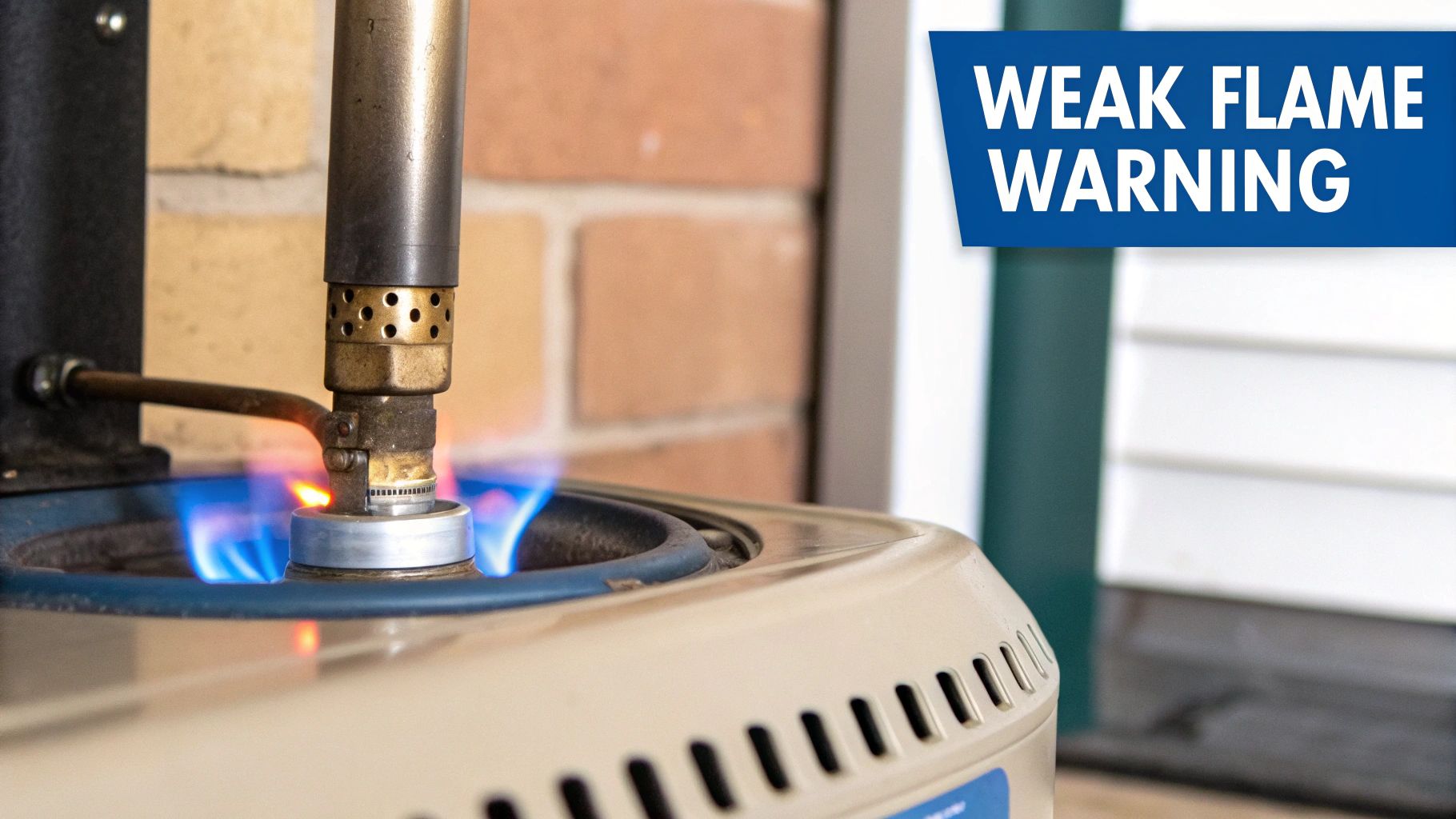
It can be unsettling to peek into your furnace's observation window and see a lazy, small, or yellow-tinged flame instead of a strong, blue one. That little flame is the heart of your heating system, and its health is directly tied to your home's comfort and safety.
A healthy flame should be a steady, vibrant blue with just a hint of yellow at the tips. A weak flame, on the other hand, is a symptom. It’s a clue, telling a story about your furnace's condition and pointing to potential issues with its fuel, air supply, or ignition system.
Unpacking the Common Causes
A weak flame rarely has just one cause. It’s almost always the result of an imbalance in that delicate mix of gas and oxygen needed for clean combustion. For a homeowner, this can be anything from a simple maintenance reminder to a warning sign of a more serious problem.
Some of the most frequent culprits I see on service calls include:
- Dirty Flame Sensor: This is hands-down the most common issue. Soot builds up on the sensor rod, preventing it from detecting the flame. As a safety measure, the system then shuts off the gas supply.
- Clogged Burners: Debris, rust, or soot can easily obstruct the burner jets. This restricts the flow of gas, leading to a much smaller, weaker flame.
- Inadequate Air Supply: A clogged furnace filter or a blocked intake vent can literally starve the fire of the oxygen it needs to burn hot and strong.
- Low Gas Pressure: Sometimes, the problem lies with the gas valve or even the utility supply line, reducing the amount of fuel that reaches the burners.
To help you connect the dots, here’s a quick table that matches what you might be seeing with its most likely cause.
Quick Guide to Weak Flame Symptoms and Causes
| Symptom | Common Cause | Potential DIY Fix | When to Call a Pro |
|---|---|---|---|
| Flame ignites, then shuts off quickly | Dirty Flame Sensor | Cleaning the sensor rod | If cleaning doesn't work |
| Small, wavering, or uneven flames | Clogged Burner Orifices | Gently cleaning the burners | If flames are still uneven or yellow |
| Lazy yellow flame (not blue) | Lack of Oxygen | Replacing the furnace filter | If the flame stays yellow |
| All flames are weak and small | Low Gas Pressure | None – this is not a DIY fix | Immediately |
This table should give you a good starting point. If a simple fix doesn't solve the problem, or if you're ever in doubt, it's always safest to call a professional.
Why It Matters in Central Minnesota
During a frigid Minnesota winter, a reliable furnace isn't a luxury—it’s an absolute necessity. A weak flame is often the first warning sign before a total system failure, which is the last thing you want when the temperature drops below zero.
From my experience on service calls, over 60% of "no-heat" complaints during the coldest months trace back to a weak flame signal. And of those, a contaminated flame sensor is the culprit in 70-80% of cases, especially in homes built before 2010.
Key Takeaway: A weak or yellow flame can also signal incomplete combustion, which creates a serious risk of carbon monoxide production. If you see a persistent yellow flame, it needs immediate professional attention. You can learn more by reading our guide on whether a furnace can leak carbon monoxide.
Essential Safety Steps Before You Begin Troubleshooting
Before you even think about popping the front panel off your furnace, we need to talk about safety. I can't stress this enough. Anytime you work on a furnace, you're dealing with two things that don't mix well: high-voltage electricity and flammable natural gas. There is zero room for error here.
Following the right safety protocol isn't just a suggestion—it's the non-negotiable first move our own technicians make on every single service call in Central Minnesota. Let's walk through it.
The most important thing you can do is completely cut the furnace off from its power and fuel. This creates a safe bubble to work in and stops the furnace from suddenly trying to kick on while your hands are in there.
Disconnecting Power and Gas
First up, kill the electrical power. And I don't just mean flipping that little light switch often mounted near the furnace. To be absolutely safe, you need to head over to your home's main electrical panel.
- Find the Breaker: Look for the circuit breaker that controls your furnace. It should be clearly labeled "Furnace," "FAU" (which stands for Forced Air Unit), or "HVAC."
- Switch It Off: Flip that breaker all the way to the "OFF" position. Some of our techs even put a piece of tape over it as a physical reminder not to touch it.
Next, you'll shut off the gas supply.
- Locate the Gas Valve: Follow the gas pipe that leads into your furnace. You'll find a shut-off valve with a handle, which is usually painted a bright red or yellow.
- Turn to Close: When the handle is parallel with the pipe, the gas is flowing. You need to turn it a quarter-turn (90 degrees) so it's perpendicular to the pipe. That completely stops the flow of gas.
A critical safety reminder from our team: If you ever smell gas, stop what you're doing. Don't touch any electrical switches, and don't try to shut anything off. Leave your home immediately and call your gas utility company from a safe distance outside.
Finally, get your workspace ready. Furnace closets and basements are usually pretty dark, so make sure the area is well-lit with a good flashlight or a work lamp. Having some decent ventilation helps, too. Taking a few minutes to follow these simple but vital steps is the most important part of figuring out any weak flame issue.
How to Visually Inspect Your Furnace Flame and Burners
Once you've safely cut the power and gas, it's time to play detective. Your furnace’s flame is like a little window into its overall health—the color, size, and steadiness tell a story. A quick visual check is often all it takes to start figuring out the root cause of a furnace weak flame.
Most modern furnaces have a small sight glass or porthole on the front panel, which lets you watch the burners fire up safely. Before you flip the power back on to see that happen, take a minute to look at the burner assembly itself. With the main panel off and a flashlight in hand, you can spot a lot.
What to Look for Before Ignition
With the power and gas still off, point your flashlight into the burner chamber. You're searching for subtle signs of trouble that can lead to ignition problems or a weak, lazy flame.
- Soot or Black Residue: Any black, dusty buildup on or around the burners is a major red flag. This points to incomplete combustion, meaning the fuel isn't burning as cleanly as it should.
- Rust or Corrosion: Flakes of rust on the burners are bad news. They can clog the tiny orifices where the gas comes out, which is a classic cause of small, uneven, or sputtering flames.
- Debris: You’d be surprised what can get in there. Cobwebs, dust, or even insects can block the burners, especially if the furnace has been sitting idle all summer.
These initial clues can point you straight toward the problem. A layer of soot, for instance, is a strong indicator of an airflow issue that needs to be addressed right away. Speaking of soot, our guide on where to find the flame sensor on a furnace might come in handy, since that part is right near the burners and often gets gunked up, too.
Pro Tip: When you do watch the ignition cycle, listen closely. A healthy furnace should ignite with a gentle "whoosh." If you hear a loud bang or booming sound—known as delayed ignition—it often means gas is building up before it lights. That’s a dangerous situation that needs immediate attention from a pro.
Reading the Flame’s Color and Shape
After your preliminary check, you can restore the power and gas to observe the flame in action. But first, get familiar with the crucial safety steps outlined below. If you notice any of the immediate danger signs, you need to act fast.
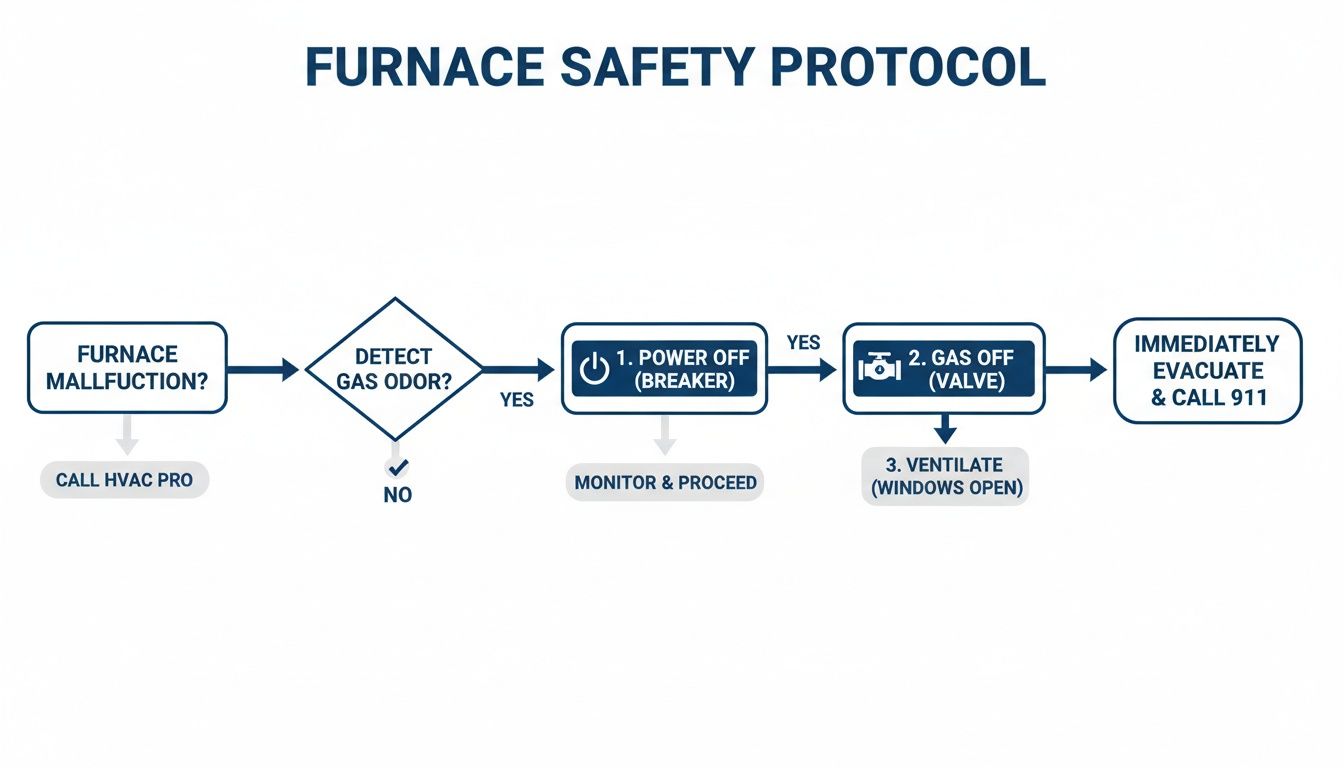
As the flowchart shows, your top priority is always to shut off the power and gas supply, then ventilate the area if you smell gas.
A healthy flame is strong and consistently blue, maybe with just a tiny flicker of yellow or orange at the very tip. That nice blue color tells you the gas-to-air mixture is just right and the combustion is efficient and complete.
A problematic flame, however, will look very different:
- A lazy, yellow flame is the most common sign of trouble. This means there's not enough oxygen in the mix, which could be caused by dirty burners or something as simple as a clogged air filter.
- Wavering or dancing flames can suggest a draft problem or, more seriously, an issue with the heat exchanger.
- Small, weak, or fluttering flames often point directly to low gas pressure or clogged burner orifices.
Paying attention to these visual cues is the first real step in diagnosing why you have a furnace weak flame and what to do about it.
Common DIY Fixes for a Weak Furnace Flame
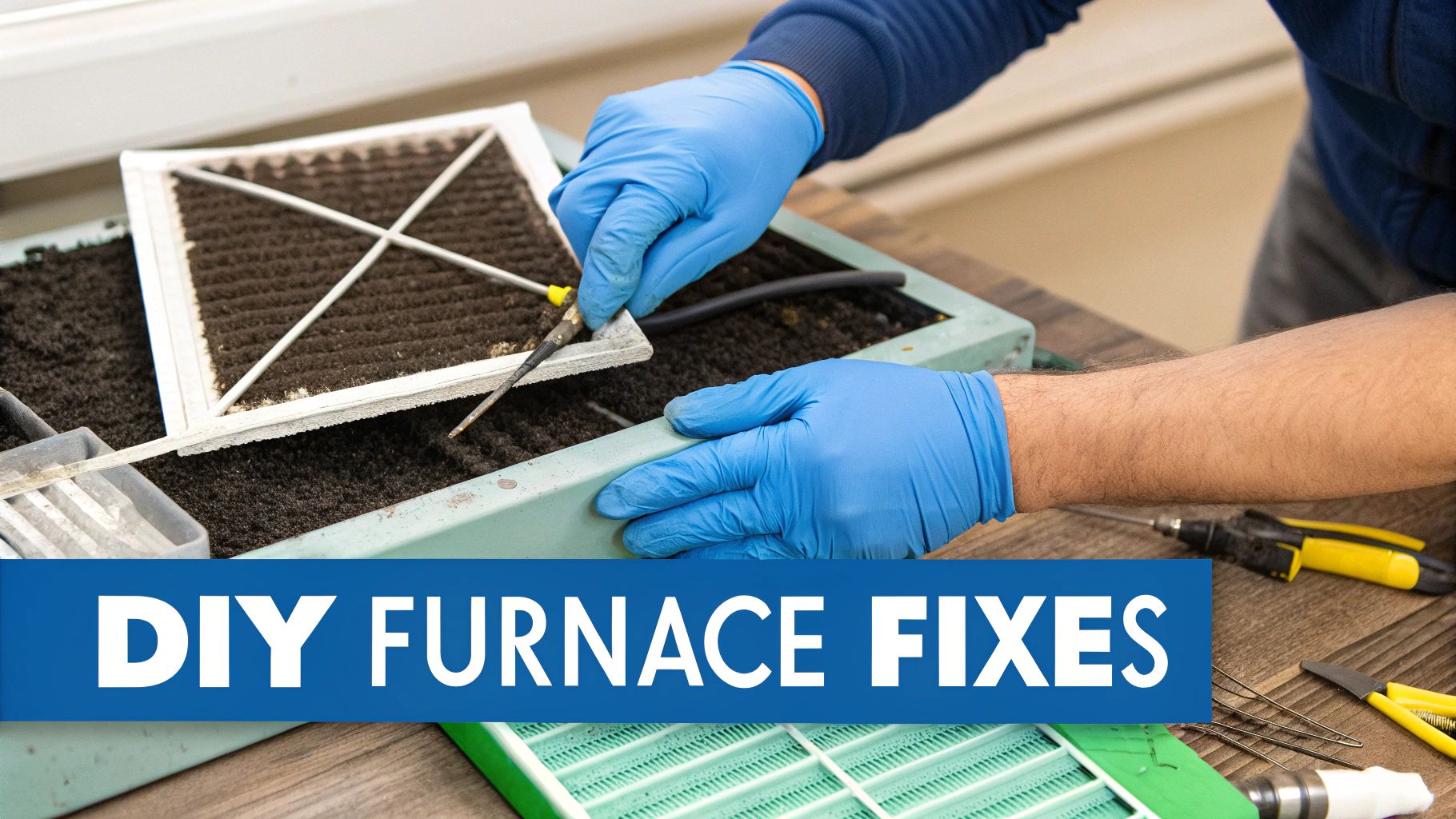
After seeing the signs of a furnace weak flame, it’s easy to feel a bit intimidated. But here's the good news: many of the most common causes are simple maintenance issues you can safely handle yourself with just a few basic tools and a little patience. Before you pick up the phone for a service call, working through these fixes can often get your furnace back up and running.
These DIY steps focus on the usual suspects—the ones that don’t involve touching gas lines or complex wiring. Just remember to always put safety first. Make sure the power and gas to the furnace are completely shut off before you open any panels.
Clean the Flame Sensor
The flame sensor is a small, thin metal rod that sits right in the path of the flame. Its only job is to confirm a fire is present when the gas valve opens. Over time, it gets coated in a nearly invisible layer of carbon buildup, which acts like an insulator and stops it from sensing the flame correctly.
This is arguably the #1 cause of a furnace that kicks on for a few seconds, then shuts right back down. Cleaning it is a simple fix that's surprisingly effective.
First, you'll need to locate the sensor. It’s usually held in place by a single screw near the burner assembly, with a single wire attached to its base. Carefully unscrew it and gently pull it out of its bracket, being careful not to bend the rod or damage the ceramic part.
To clean it, just use a piece of fine-grade steel wool or even a crisp dollar bill to lightly polish the metal rod. You're not trying to sand it down, just scrub off that carbon residue. You’ll want to avoid sandpaper, as it can create tiny grooves that actually attract more buildup later on.
Once it's clean, carefully put the sensor back, secure the screw, and reattach the wire. Then you can restore power and gas to test it out. If a dirty sensor was the culprit, your furnace should now ignite and stay running.
Replace Your Clogged Furnace Filter
A furnace needs to breathe. It pulls in air from your home, heats it, and sends it back out. But if the air filter is packed with dust, pet hair, and other gunk, the system can't get enough oxygen for proper combustion. This airflow starvation is a classic cause of a weak, lazy, and often yellow flame.
Airflow issues are responsible for a huge number of service calls. A severely clogged filter can reduce efficiency by up to 15% and put a ton of strain on your furnace's blower motor, leading to much more expensive repairs down the road.
Checking your filter should be a monthly habit during a Minnesota heating season. Just hold it up to a light—if you can't see the light through it, it's long past time for a change. This is a five-minute fix that costs next to nothing but has a massive impact on your furnace's health and flame strength. If you find your weak flame is also causing an ignition lockout, learning how to fix an ignition lockout on your furnace can give you some more context.
Check Exterior Vents for Blockages
Your furnace has two critical pipes that lead outside: an intake vent to pull in fresh air for combustion and an exhaust vent to safely get rid of the flue gases. Here in Central Minnesota, these vents are prime targets for blockages.
- Heavy snowfall can easily bury them.
- Ice can form over the openings on frigid days.
- Leaves, nests from critters, or even a stray plastic bag can obstruct airflow.
Take a quick walk around your house and find these pipes. You want to make sure there is at least two feet of clear space around them in every direction. Gently clear away any snow, ice, or debris you find. If a weak flame is causing your pilot light to keep going out, you might find more specific steps in a guide on how to fix a pilot light that keeps going out on your furnace. This simple outdoor check ensures your furnace isn't struggling for air before it even gets started.
When to Put the Tools Down and Call a Pro
Knowing your limits is a huge part of smart homeownership, especially when you’re dealing with something that burns natural gas inside your house. While cleaning a flame sensor or swapping out a filter can be a satisfying DIY win, there's a hard line where safety takes over. Pushing past that line can lead to some seriously dangerous situations, void your warranty, or turn a small problem into a wallet-emptying one.
Recognizing the red flags that scream "this is not a simple fix" is key. If you've gone through the basic checks and that furnace weak flame is still flickering, it’s time to call it a day. Trust me, continuing to poke around a system you don't fully understand is a gamble you don't want to take.
Immediate Red Flags That Demand a Professional
Some symptoms aren't just little hints; they're giant, waving red flags. If you see, hear, or smell any of these, your one and only next step should be to pick up the phone and call a licensed HVAC technician in Central Minnesota. Do not keep running the furnace.
- You Smell Gas: This is the big one. That "rotten egg" smell is a dead giveaway of a potential gas leak. Don't touch light switches, don't use your phone inside—just get everyone out of the house immediately. Once you're a safe distance away, call your gas company.
- A Stubborn Yellow Flame: If the flame stays yellow or orange even after you’ve cleaned things up and put in a fresh filter, you’ve got a serious combustion problem. This is a classic sign that your furnace could be producing carbon monoxide.
- Loud Banging or Booming: A loud whoomp or bang when the furnace kicks on is called delayed ignition. It means too much gas is building up before it lights, which puts a ton of stress on your heat exchanger and is a major safety hazard.
- Your Carbon Monoxide Detector Goes Off: This isn't a drill. A blaring CO detector is a life-or-death alarm. Evacuate your home right away and call 911 from outside.
These are non-negotiable emergencies that require the diagnostic tools and experience of a trained professional.
When Your Best DIY Efforts Just Aren't Enough
Beyond the scary stuff, there are times when it’s simply time to tag in an expert because your own efforts aren't cutting it. If you've cleaned the sensor, changed the filter, and made sure all the vents are clear, but the flame is still weak or the furnace keeps shutting off, a deeper issue is lurking.
A professional technician has the tools and training to safely diagnose complex problems homeowners should never touch. Things like a faulty gas valve, a failing control board, or incorrect gas pressure require specialized knowledge to fix correctly.
Trying to adjust a gas valve yourself or messing with the furnace's control board is a recipe for disaster. An improperly set valve can cause gas leaks or severe combustion problems. One wrong move with the electronics can fry the entire system.
It's always safer—and usually cheaper in the long run—to let a licensed, insured expert handle the intricate stuff and make sure your furnace is running both safely and efficiently.
Preventing Future Furnace Problems With Regular Maintenance
Let's be honest, the best way to handle a furnace weak flame is to make sure it never happens in the first place. Being proactive is always cheaper and a whole lot less stressful than dealing with a no-heat emergency during a Central Minnesota cold snap.
An annual professional tune-up is the single best thing you can do for your furnace's health. This isn't just a quick once-over. A good technician performs a deep dive into your system to catch small issues before they snowball into big, expensive headaches.
During a real service call, a pro will meticulously clean crucial parts like the burners and the flame sensor, check and adjust the gas pressure, and inspect the heat exchanger for any dangerous cracks or wear. This routine checkup does more than just sidestep breakdowns; it ensures your furnace runs at peak efficiency, which you'll notice on your energy bills.
To keep your furnace humming along and avoid repeat issues like a weak flame, a consistent maintenance schedule is key. For a complete guide, check out this ultimate HVAC preventative maintenance checklist for some great pro tips.
At the end of the day, scheduling that yearly service is about buying peace of mind. It’s knowing your furnace is safe, reliable, and ready to handle whatever winter throws at it.
Furnace Flame Questions Answered
When you've got a problem with your furnace flame, a lot of questions pop into your head. It's natural to wonder about safety, costs, and what you should (and shouldn't) try to fix yourself. Here are some of the most common questions we get from homeowners right here in Central Minnesota.
How Much Does It Cost to Fix a Weak Furnace Flame?
Honestly, it all comes down to what's causing the problem. The final bill can vary quite a bit.
A simple DIY fix, like swapping out a dirty air filter, is only going to cost you $15-$30 for the new filter. If the issue is a dirty flame sensor that just needs a good cleaning, you're likely looking at a service call fee between $100 and $200.
Things get more expensive for bigger problems. If a gas valve or control board has failed, that repair could run anywhere from $300 to over $800. The most serious issue is a cracked heat exchanger—that’s a critical safety component, and replacing it is a major job that can easily cost over $1,500. Any good technician will give you a clear, upfront price before they start any work.
Is a Yellow Furnace Flame an Emergency?
Yes, a steady yellow flame is a big deal and you need to act fast. A yellow flame is a classic sign of incomplete combustion, which means your furnace could be pumping dangerous carbon monoxide (CO) into your home.
Immediate Action Required: If you see a persistent yellow flame, turn the furnace off right away. Don't mess around with it. Make sure your carbon monoxide detectors are working and call a licensed HVAC professional for an emergency inspection.
Can I Clean My Furnace Burners Myself?
We strongly recommend leaving this job to the pros. Cleaning furnace burners involves taking apart gas components, and that's just not something you want to DIY.
If you don't reassemble everything perfectly, you could easily cause a gas leak or create new combustion problems. It's an unnecessary risk for your home and family. This is the kind of task that's best handled by a qualified technician during a routine tune-up.
If you're dealing with any of these furnace issues and need a diagnosis you can trust, the team at Neighborhood Plumbing, HVAC, and Electrical is here to help. Our licensed technicians provide safe, reliable furnace repairs all across Central Minnesota. Schedule your service today.