

It’s a sound every Central Minnesota homeowner dreads: the sudden, deafening silence in the middle of a cold night. One moment, the familiar hum of the furnace is a comforting blanket of warmth; the next, it’s gone. A growing chill and a wave of panic set in as your mind races through worst-case scenarios, from sky-high repair bills to the very real danger of frozen pipes.
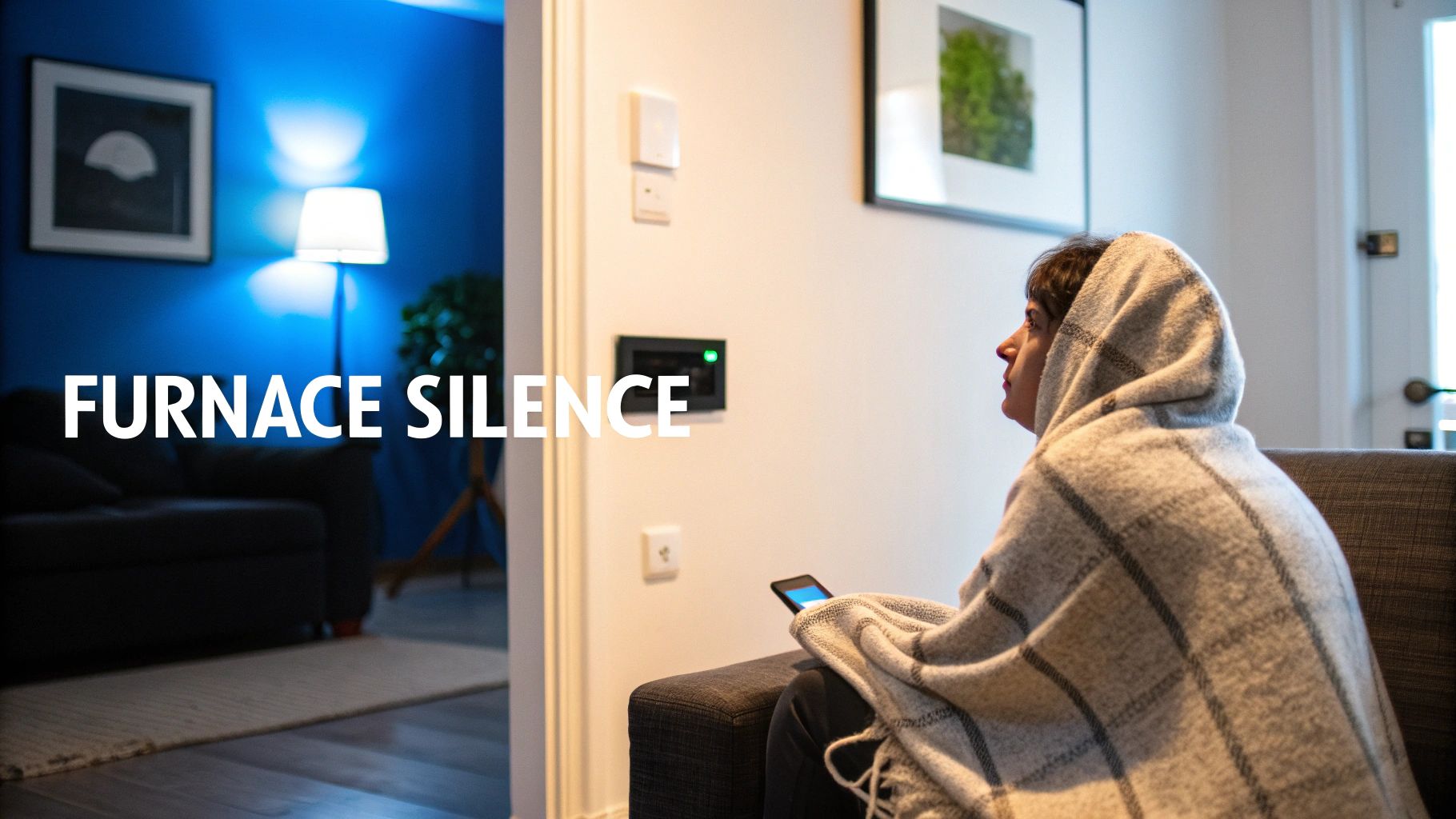
Before you assume the worst, take a deep breath. A furnace that quits after dark doesn't always signal a catastrophic failure. More often than not, the cause is surprisingly simple—something you can safely identify and maybe even fix yourself in minutes. This guide is your practical roadmap to figuring out what’s wrong and getting the heat back on.
Your Initial Roadmap Out of the Cold
We'll start with the basics—the quick checks that solve a huge number of nighttime furnace outages. These aren't complicated technical tasks; they're straightforward inspections anyone can perform. Think of it as a process of elimination that could save you from an unnecessary emergency call.
Here’s what we’ll walk through:
- Immediate Safety Checks: How to quickly verify your thermostat, circuit breaker, and furnace power switch.
- Simple DIY Diagnostics: Identifying common issues like a clogged filter or a blocked vent that you can address safely.
- Recognizing Red Flags: Knowing when to stop troubleshooting and call for professional 24/7 help immediately.
This nightmare scenario is unfortunately common, especially during the coldest months when furnaces are under the most strain. This peaks during our harshest winters; U.S. Fire Administration data shows residential heating fires, often linked to furnace malfunctions, hit their highest point in January. Malfunctions in confined fuel burners or boilers were responsible for 45% of these heating fires, many occurring when systems are under a heavy nighttime load. You can learn more about these heating fire statistics.
Key Takeaway: Don't panic. A silent furnace is a problem, but it’s often a solvable one. By methodically checking a few key areas, you can quickly determine if it's a simple fix or if you need to call in the experts.
This guide provides a clear path forward, helping you regain control and warmth. Whether it’s a five-minute fix or a situation requiring professional intervention, you'll know exactly what to do when your furnace stops working at night. We're here to help you navigate the cold and get your heat back on as safely and quickly as possible.
Quick Nighttime Furnace Failure Checklist
When you're shivering in the dark, you need answers fast. Before diving into complex diagnostics, run through this quick checklist. These three common culprits account for a surprising number of furnace failures and can often be fixed in just a few minutes, getting your heat back on without a service call.
| Symptom | Potential Cause | Quick Check |
|---|---|---|
| Furnace won't turn on at all; no sounds or lights. | Power issue | Check the circuit breaker and the furnace power switch. |
| The furnace fan runs, but it only blows cool air. | Thermostat miscommunication | Ensure the thermostat is set to "HEAT," the fan is on "AUTO," and the temperature is set higher than the room's current temp. |
| The furnace cycles on and off quickly or overheats. | Restricted airflow | Inspect the air filter. A severely clogged filter can choke the system. |
Going through these simple steps first helps you rule out the easy stuff. If these checks don't solve the problem, you’ll know it’s time to move on to the next level of troubleshooting.
It’s a feeling every Minnesotan dreads: the furnace cuts out, and the house starts getting cold. Fast. Before you assume the worst and picture a massive repair bill, take a deep breath. A surprising number of furnace problems are actually pretty simple to solve.
We're going to walk through the first 15 minutes of troubleshooting, just like a pro would. These are the most common culprits, and you won't need any special tools or technical skills to check them out.
Start With the Thermostat
The thermostat is your furnace's command center. If it isn't sending the right signals, your furnace won't get the message to fire up, no matter how chilly it gets. It’s always the first place to look.
First, check the obvious stuff that’s easy to overlook. Make sure the system is switched to HEAT mode—it's surprisingly easy to accidentally bump it to "Cool" or "Off." Next, look at the temperature setting. It has to be set higher than the current room temperature, otherwise, it has no reason to turn on.
Pro Tip: Try cranking the thermostat up by five degrees. This sends a strong, undeniable signal to the furnace and can sometimes override a minor communication glitch. If you hear it kick on, you’ve likely found the issue.
Got a digital thermostat with a blank screen? The batteries are probably dead. Most models have a small cover that pops right off for an easy swap. You'd be amazed how many late-night service calls are solved by a couple of fresh AA batteries.
Check the Power Supply
Like any big appliance, your furnace needs electricity to run. If the power gets cut, the whole system will shut down instantly. There are two main spots to check for a power issue.
First, head to your home's main electrical panel (usually in the basement, garage, or a utility closet). Find the circuit breaker labeled "Furnace," "HVAC," or something similar. If the switch is in the middle or flipped to "Off," it's tripped. To reset it, push it all the way to the "Off" position, then flip it back to "On."
If a breaker trips again right away, that points to a bigger electrical issue that needs a professional. But a one-off trip can happen from a random power surge.
Next, look for the furnace's own power switch. It usually looks just like a regular light switch and is mounted on or near the furnace unit itself. People often mistake it for a light and flip it off by accident. Make sure this switch is in the ON position. It’s a simple thing, but it’s a very common reason for a furnace to seem completely dead.
The Impact of a Dirty Filter
It might not seem like a big deal, but a badly clogged air filter is one of the top reasons a furnace will shut itself down. When the filter is packed solid with dust, it chokes off the airflow, making the furnace work way too hard to push warm air through your home.
This extra strain can cause the furnace's heat exchanger to get dangerously hot. As a safety feature, a sensor called the limit switch will shut the whole system off to prevent damage or a fire. You can learn more about how a dirty furnace filter can cause a no-heat situation in our detailed guide.
If you’ve noticed your furnace running for a few minutes before shutting off completely, a clogged filter is a prime suspect. Pulling it out to check is one of the most important steps you can take.
Diagnosing Common Furnace Problems You Can Safely Address
Alright, so the thermostat and breaker checks didn't do the trick. Don't panic. Now it's time to take a closer, but still safe, look at the furnace itself. A surprising number of issues that knock out your heat in the middle of a Minnesota night are things you can spot—and sometimes even fix—on your own.
Let’s walk through the most common culprits. Think of this as a quick "Furnace First Aid" before you decide to make that 2:00 AM call for help.
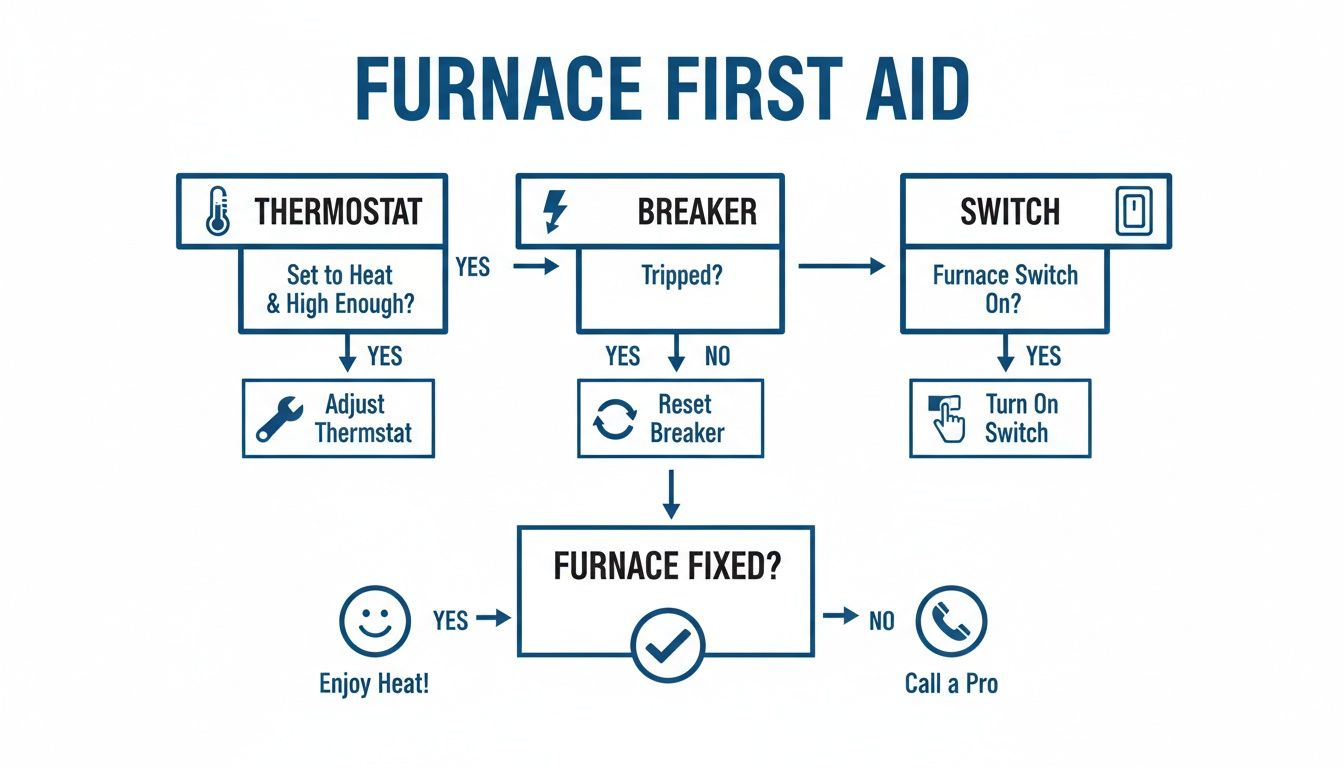
This simple path—thermostat, breaker, furnace switch—knocks out the easiest and most frequent problems first. Following it saves you a ton of time and stress.
The Clogged Air Filter Dilemma
This is, without a doubt, the #1 reason a furnace gives up. A severely clogged air filter is like trying to breathe through a pillow; the system simply suffocates. When airflow gets choked off, the heat exchanger can't get rid of heat fast enough and starts to dangerously overheat.
Thankfully, your furnace has a built-in safety feature called a high-limit switch. It senses the overheating and shuts the whole system down to prevent serious damage or even a fire.
How to Check Your Filter:
- First, kill the power to your furnace using the switch right on or next to the unit.
- Find the filter compartment. It's usually a slot located between the big return air duct and the furnace blower.
- Slide the old filter out and just hold it up to a light. If you can't see the light through it, it’s way past due for a change.
A dirty filter is a problem that sneaks up on you. What’s worse is that a shocking number of HVAC systems are already running with hidden issues that a clogged filter will push over the edge. Research shows that over 90% of residential HVAC systems have undetected faults that make a sudden breakdown far more likely, especially when the furnace is working its hardest on a frigid night.
Inspecting the Pilot Light or Ignition System
Your furnace's age determines how it actually creates heat. Older models rely on a standing pilot light, while newer ones use an electronic ignition.
For Older Furnaces: The Pilot Light
A pilot light is a small, constant flame that lights the main burners whenever the thermostat calls for heat. If that tiny flame goes out, your furnace won't start.
Peer through the small viewing window on the front of your furnace—you should see a little blue flame. If it’s not there, the pilot is out. The instructions for relighting it are usually printed right on a sticker on the furnace panel. Follow them exactly. If you smell gas at any point, stop what you're doing. Don't try to relight it. Turn off the gas supply and call a professional immediately.
For Modern Furnaces: The Flame Sensor
Modern furnaces use an electronic ignitor and a flame sensor. This sensor is just a thin metal rod that sits in the path of the burner flame. Its only job is to confirm that the burners lit successfully. The problem is, over time, this rod gets coated with carbon buildup.
When the sensor gets dirty, it can't "see" the flame, even if it's burning perfectly. The furnace's brain (the control board) thinks there was a failure to ignite and shuts off the gas as a safety precaution. This is a very common fix, but cleaning it involves turning off power and gas and carefully removing the part, which might be more than you're comfortable with.
The key is recognizing the symptom: the furnace clicks on, the burners roar to life for a few seconds, and then everything just shuts down.
Pro Tip: A classic sign of a dirty flame sensor is hearing the furnace try to start, ignite for just a moment, and then go silent. It might repeat this cycle a few times before giving up completely. That's your furnace telling you it can't confirm a flame.
Check Your Outdoor Vents
If you have a high-efficiency furnace, you'll see two white PVC pipes running out of your house, usually near the foundation. One is an intake pipe for combustion air, and the other is for exhaust. Here in Central Minnesota, these pipes are prime targets for blockages.
Heavy snowfall can easily bury them in a drift. Ice, slush, leaves, or even an animal's nest can also clog them up. If either pipe is blocked, a pressure switch will prevent the furnace from running to stop dangerous exhaust gases like carbon monoxide from building up inside.
Grab a flashlight and do a quick walk around your house. Make sure both pipes are completely clear. Gently brush away any snow or debris you find. Once the airway is clear, the furnace will often reset and fire up on its own.
For a deeper dive into these steps, you can check out our guide on what to do when your furnace won't start.
DIY Fix vs. Professional Call
It can be tough to know when a problem is a simple fix versus a sign of something more serious. This table should help you decide whether to keep troubleshooting or pick up the phone for emergency service.
| Issue | DIY Action | When to Call Neighborhood HVAC |
|---|---|---|
| Furnace Won't Turn On | Check the thermostat, breaker, and furnace power switch. | If all power sources are on but the unit is still dead. |
| Clogged Air Filter | Turn off power and replace the filter with a new one. | If the furnace still won't start after replacing the filter. |
| Pilot Light Is Out | Follow the manufacturer's instructions on the furnace panel to relight it. | If you smell gas or the pilot light won't stay lit. |
| Strange Noises | Note the type of sound (banging, squealing, grinding). Turn the unit off. | Immediately. These sounds often point to serious mechanical failures. |
| Blocked Vents | Gently clear snow, ice, or debris from the intake and exhaust pipes outside. | If the vents are clear but the furnace still shows an error code. |
| Furnace Cycles On and Off | Check for a dirty filter or blocked vents. | If basic checks don't solve it; this could be a faulty flame sensor or limit switch. |
Ultimately, your safety and comfort are what matter most. If you've run through these checks and are still without heat, or if you're just not comfortable digging into the furnace yourself, that's what we're here for.
Red Flags That Signal an Emergency Service Call
Look, while many furnace issues are simple annoyances, some are flat-out emergencies that need a pro, right now. Your safety comes first. You have to know the difference between a minor hiccup and a serious hazard, especially when it’s the middle of the night and you’re tempted to just keep fiddling with it.
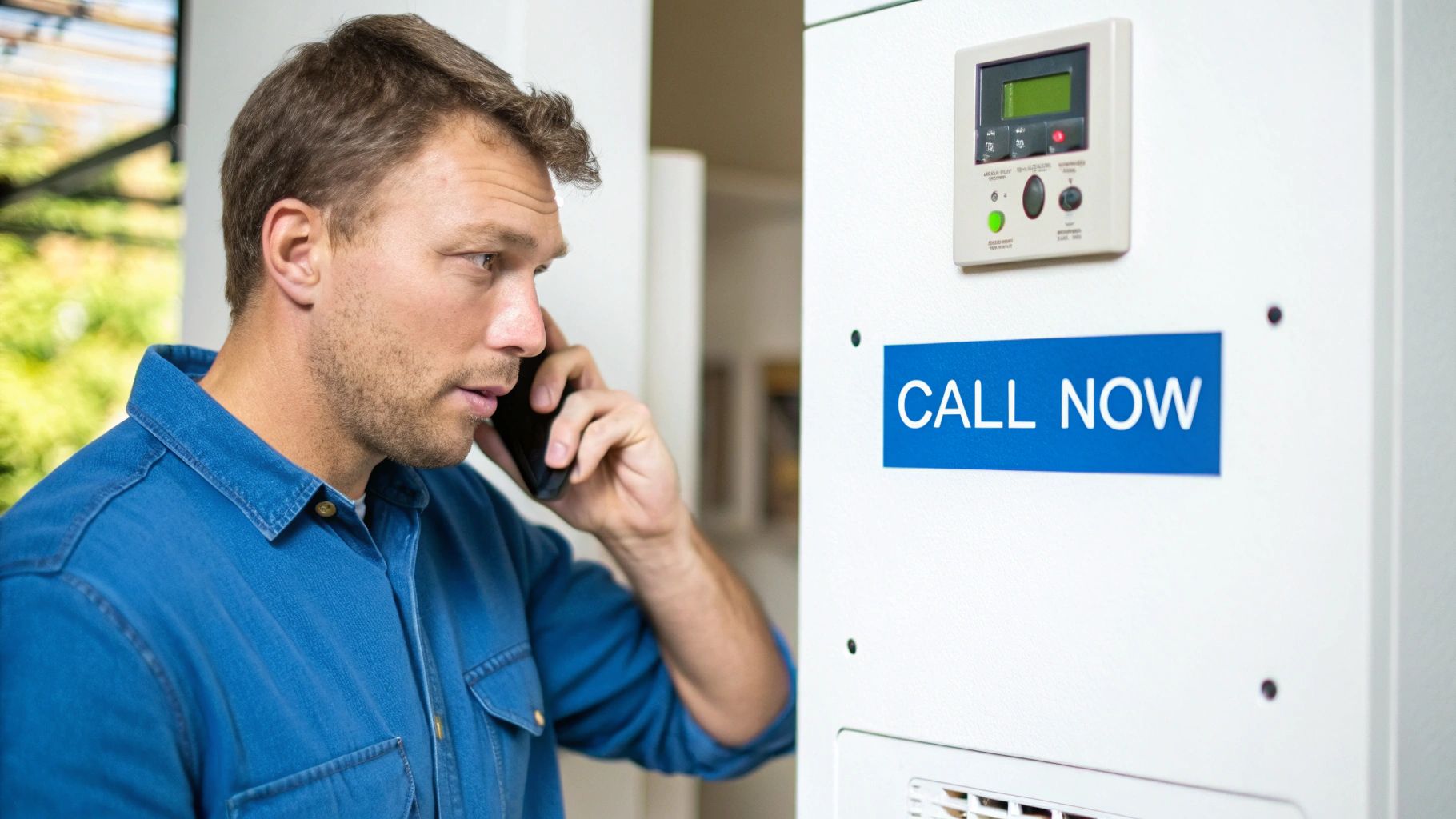
If you notice any of the following red flags, stop all your DIY troubleshooting immediately. Don't try to reset the breaker one more time. Your next and only step should be to call for 24/7 emergency service.
The Unmistakable Smell of Gas
This is the big one. If you smell natural gas—that classic rotten egg or sulfur smell—you might have a gas leak. This is not a situation for guesswork.
Here's your immediate action plan:
- Do not touch anything electrical. Don't flip lights on or off, don't unplug things, and don't even use your phone inside the house.
- Extinguish any open flames, like candles, right away.
- Get everyone out of the house immediately.
- From a safe distance outside, call your gas company's emergency line, then call a 24/7 HVAC professional.
A gas leak is a serious fire and explosion risk. Technicians have specialized gear to find and safely fix the source of the leak.
Alarming Sounds from the Furnace
Your furnace should just be a consistent, low hum. Any sudden, loud, or strange noises are a cry for help from a failing part. These sounds are not normal and will only get worse if you ignore them.
- Loud Banging or Booming: This usually means you have a delayed ignition problem. Gas is building up before it finally ignites, causing a small explosion. This puts a ton of stress on your heat exchanger.
- High-Pitched Squealing or Whining: This almost always points to an issue with the blower motor, probably from a bad belt or worn-out motor bearings. If that motor seizes, your heat is gone for good.
- Scraping or Grinding Metal Sounds: This is an urgent one. It often means the blower wheel has broken loose from the motor shaft or a bearing has completely failed. Shut the system off immediately to prevent catastrophic damage.
Key Insight: Ignoring strange furnace noises is like driving your car with the oil light flashing. The problem won't fix itself, and running it will likely turn a simple repair into a full system replacement.
Water Pooling Around the Unit
Yes, high-efficiency furnaces create some condensation, but a significant puddle of water around the base is a major problem. This could be a cracked condensate pan, a severely clogged drain line, or some other internal leak.
All that moisture can cause serious water damage to your floors. Worse, it can short out electrical components inside the furnace, creating a real safety hazard.
Signs of Carbon Monoxide
Any hint of danger is a red flag, and that absolutely includes the potential for carbon monoxide poisoning. A malfunctioning furnace, especially one with a cracked heat exchanger, can be a direct cause of this invisible, odorless gas leaking into your home.
Pay close attention to these warning signs:
- Your carbon monoxide detectors are going off.
- The burner flame is yellow or flickering instead of a steady, solid blue.
- You see black streaks of soot around the furnace.
- Family members are getting unexplained headaches, dizziness, or flu-like symptoms that seem to get better when they leave the house.
If you suspect a carbon monoxide issue, get everyone out of the house and into fresh air immediately, then call 911. You can learn more about how a furnace can leak carbon monoxide in our detailed article. Don't ever take chances with your family's health.
How to Prevent the Next Midnight Breakdown
Let's be honest, the best way to deal with a furnace quitting at 2 AM is to make sure it never happens in the first place. Shifting from reactive panic to proactive care is the single most effective way to guarantee your home stays warm through even the most brutal Central Minnesota nights. This isn’t about becoming a furnace expert; it’s about a few simple habits and one critical annual appointment.
Think of your furnace like your car. You wouldn't drive it for years without an oil change and then expect it to run flawlessly on a long road trip in the middle of a blizzard. Your furnace works just as hard, and ignoring it is a gamble that rarely pays off when the temperatures drop.
The Power of an Annual Professional Tune-Up
If you do only one thing, make it this: schedule a professional furnace tune-up every single year, preferably in the fall before you really need the heat. This is far more than just a quick look-over. A skilled technician dives deep, performing a detailed inspection and cleaning that catches small issues before they snowball into a midnight emergency.
During a proper tune-up, a technician will:
- Clean and Inspect Burners: Dirty burners are inefficient and can lead to delayed ignition—that startling "boom" sound you sometimes hear when it kicks on.
- Test Safety Controls: They'll make sure critical safety features, like the high-limit switch that prevents your furnace from overheating, are working perfectly.
- Check Electrical Connections: Over time, wires can loosen or corrode, causing your system to fail intermittently or shut down completely. A tech will tighten and clean all those connections.
- Inspect the Heat Exchanger: This is a non-negotiable safety check. They'll look for any cracks or rust that could leak deadly carbon monoxide into your home.
A professional tune-up is basically a diagnostic health check for your heating system. It spots worn-out parts like ignitors or blower motor capacitors—the exact components most likely to fail under the intense strain of a sub-zero night—letting you replace them on your schedule, not in a panic.
Your Year-Round Homeowner Maintenance Checklist
Beyond that crucial annual visit, a few simple tasks on your end can make a massive difference in your furnace's reliability. These are high-impact habits any homeowner can—and should—adopt.
Change Your Air Filter Religiously
This is the big one. A clogged air filter is the #1 cause of furnace failure, hands down. It chokes off airflow, forcing the entire system to work harder, which leads to overheating and shutdowns.
- 1-2 inch filters: Check them every month and replace them at least every 90 days.
- 4-5 inch filters: Check them every few months and plan on replacing them every 6-12 months.
Seriously, set a recurring reminder on your phone right now. It’s a five-minute job that prevents the most common reason for a furnace to quit in the middle of the night.
Keep the Furnace Area Clear
Your furnace needs to breathe. The area around it should be completely clear of boxes, laundry baskets, cleaning supplies, or anything else. Storing clutter nearby isn't just an airflow problem; it's a serious fire hazard. Make sure you maintain at least three feet of clearance on all sides. This also gives technicians safe and easy access when they need it.
Test Your Carbon Monoxide Detectors
Since a malfunctioning furnace is a primary source of carbon monoxide leaks, you need to know your detectors are working. Test them monthly, and get in the habit of replacing the batteries at the same time you do your smoke detectors.
Understanding Your Furnace's Lifespan
Even a perfectly maintained furnace won't last forever. Age is a huge factor in nighttime breakdowns, as older parts simply wear out. It's a surprising fact, but furnaces in about one in five U.S. homes are over 20 years old, priming them for failure when winter demand surges.
Gas furnaces have a median lifetime of around 23 years, but many are pushed far beyond that, especially in cold climates where the constant use just accelerates wear and tear. You can check out the data on appliance lifespans to see how your system stacks up. Good maintenance is key to preventing future problems, and you can get more perspective from an insurer's guide to annual boiler service and claims prevention. Ultimately, proactive care is your best defense against waking up to a cold, silent house.
Answering Your Urgent Questions About a Furnace Failure at Night
When your furnace quits in the middle of a cold Minnesota night, your mind probably starts racing with questions. The cold is one thing, but the uncertainty is another. Let's tackle some of the most common worries homeowners have when they're suddenly left without heat.
How Cold Is Too Cold to Wait Until Morning?
Honestly, in a Central Minnesota winter, you shouldn't wait if your indoor temperature is heading below 55°F. This is especially critical if you have young children, elderly family members, or pets, as they're much more sensitive to the cold.
But the biggest danger isn't just the chill—it's your pipes. Once the temperature inside your home gets close to freezing, any pipes running through exterior walls or unheated spaces like a basement are at risk of freezing solid. A burst pipe can cause thousands of dollars in water damage, turning a furnace issue into a full-blown catastrophe. If your home is losing heat fast, making that emergency call is the smart move.
Is It Safe to Use Space Heaters Temporarily?
Yes, a modern electric space heater can be a lifesaver, but only if you're extremely careful. Think of it as a temporary bridge to keep one room livable while you wait for the technician.
If you use one, follow these rules without exception:
- Plug it directly into a wall outlet. Never, ever use an extension cord or a power strip. They can easily overheat and become a serious fire hazard.
- Create a three-foot safety bubble. Keep the heater at least three feet away from anything that could catch fire—blankets, curtains, furniture, you name it.
- Never leave it running unattended. That means turning it off when you leave the room or go to sleep.
Critical Safety Warning: Do not, under any circumstances, use a gas oven or stovetop to heat your home. It's an incredibly dangerous gamble that creates a massive risk of fire and deadly carbon monoxide poisoning.
What Does an Emergency Furnace Repair Cost?
There's no getting around it: an emergency, after-hours service call will cost more than a standard daytime appointment. You're paying for the technician's immediate availability, and that comes with a higher dispatch fee.
The final repair cost really depends on what's broken. A simple fix, like swapping out a bad flame sensor or a faulty ignitor, will be on the lower end. But if a major part has failed—say, the blower motor or the main control board—the cost will be significantly higher. Any trustworthy HVAC company will diagnose the problem first and give you clear, upfront pricing before they start any work, so you won't have any surprises.
Why Does My Furnace Keep Turning On and Off?
That's a classic symptom called "short cycling," and it's a huge red flag that your furnace is struggling. It's trying to work, but something is forcing it to shut down prematurely.
The very first thing you should check is your air filter. If it's completely clogged with dust and debris, it's suffocating your furnace. The system overheats from the lack of airflow and shuts down to protect itself. Once it cools off, it tries again, and the cycle repeats.
If a clean filter doesn't solve it, you might be looking at a thermostat issue, an oversized furnace for your home's needs, or a malfunctioning safety sensor. Continuous short cycling puts a ton of wear and tear on your furnace's components and is a surefire way to cause a much bigger, more expensive breakdown.
When you're dealing with a no-heat emergency in the dead of a Minnesota winter, you need a team you can count on to show up fast and get it right. The licensed technicians at Neighborhood Plumbing, HVAC, and Electrical are on call 24/7 to bring back your heat and your peace of mind. For fast, reliable emergency furnace service, visit us online to book your appointment.