

It's a feeling every Minnesotan dreads on a cold night—the furnace kicks on with a familiar hum, but that comforting wave of warm air never shows up. When your heating system suddenly gives up, a small but critical part called the furnace gas valve is often the culprit. A faulty gas valve means no fuel, no flame, and definitely no warmth for your home.
What a Furnace Gas Valve Does for Your Home
Think of the gas valve as the gatekeeper for your furnace's fuel supply. It’s a precision part that gets the signal from your thermostat, opens up just enough to let the right amount of natural gas flow to the burners, and then snaps shut when your home is warm enough.
This simple open-and-close job is vital for both your comfort and your safety. A valve that's working correctly ensures you're not wasting fuel and, more importantly, prevents dangerous gas leaks. But after opening and closing millions of times, this mechanical part can wear out, get stuck, or have an electrical failure, usually when you need the heat the most.
The Role of the Gas Valve in Furnace Operation
Understanding the gas valve's role helps make it clear why a failure causes such an immediate headache. It’s a key player in your furnace’s startup sequence, and if it messes up, the whole system just stops in its tracks.
The symptoms can sometimes look like other furnace problems, which is why getting the diagnosis right is so important. For instance, if your furnace flame ignites but then goes out almost immediately, it might be due to an inconsistent flow of gas. You can read more about that specific issue in our guide on why a furnace flame starts and then stops.
A faulty gas valve is more common than you might think. It’s the reason behind roughly 15-20% of all furnace breakdowns that service technicians see every year.
Here in areas like St. Cloud and Sauk Rapids, we often see a big jump in these repair calls every fall. A lot of them are tied to gas flow problems caused by valves that have gotten corroded or stuck over the summer. It just goes to show how often this one little component can be the root of a no-heat emergency. This guide will walk you through what’s happening and what you need to do to get it fixed safely.
How the Gas Valve Works and Why It Fails
To really get what's going on with a furnace gas valve repair, you first have to understand what the part actually does. Think of it as a gatekeeper for your furnace's fuel. When your thermostat decides it's chilly and calls for heat, an electrical signal zips over to the gas valve. This tells it to open up and let a very specific, controlled amount of natural gas flow to the burners.
Once your house hits that perfect temperature, the thermostat sends another signal telling the valve to snap shut. Immediately. This stops the flow of gas, keeping everything safe. This open-and-close cycle happens thousands upon thousands of times every single winter. After millions of these cycles, this hardworking little part can just plain wear out.
The Anatomy of a Breakdown
When a gas valve fails, it's almost never a sudden, out-of-the-blue event. It’s usually a slow decline, the result of gradual wear and tear on its internal moving parts. A few common culprits are behind most of the failures we see.
These problems typically fall into a few main categories, all of which stop your furnace from doing its one job: heating your home.
This chart breaks down how a gas valve problem fits into the bigger picture of why a furnace stops working.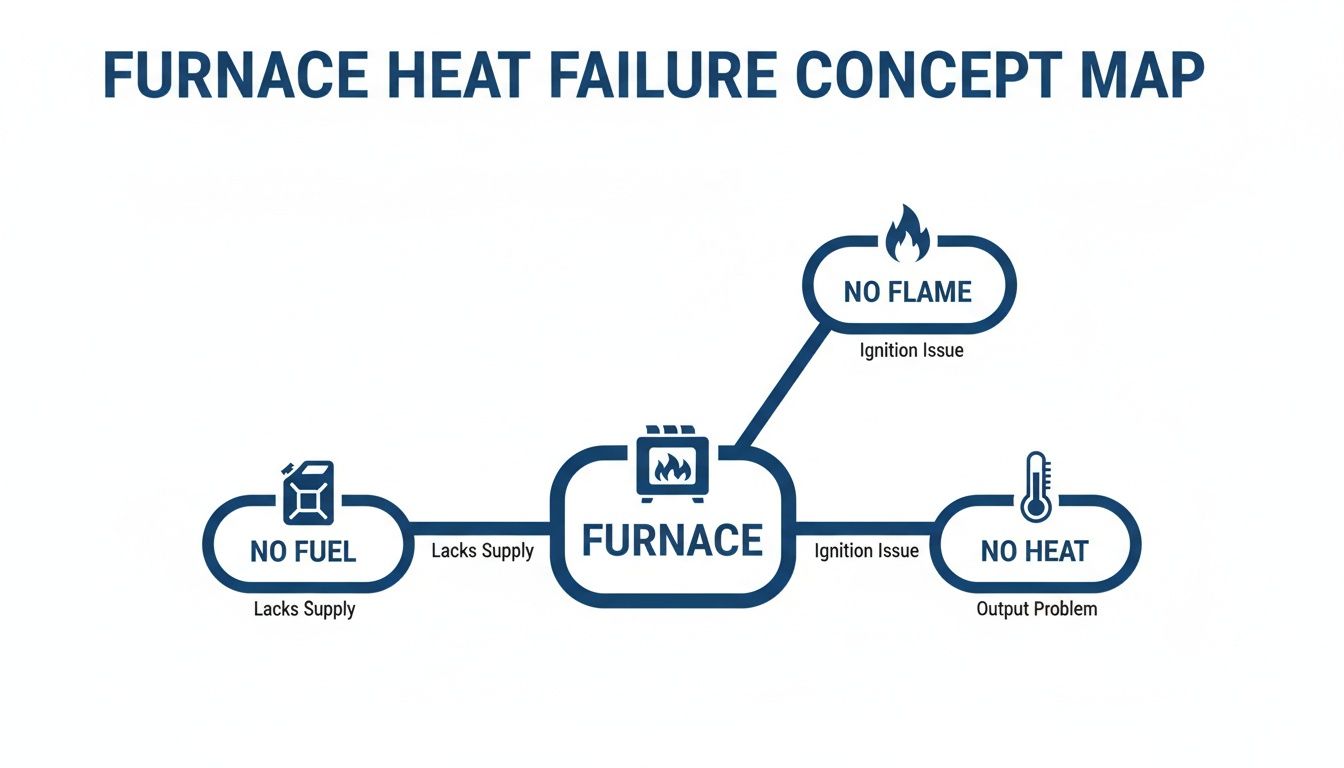
As you can see, a "no fuel" situation is a primary reason for furnace failure, and that often points directly back to a malfunctioning gas valve.
Here are the most common reasons a gas valve gives up the ghost:
- Electrical Problems: The valve uses tiny electromagnets, called solenoids, to open and close. If these burn out or the wiring gets old and frayed, the valve can get stuck open or, more often, stuck closed.
- Mechanical Wear: Inside the valve, there are springs and diaphragms that control the gas flow. Over time, they can weaken, get brittle, or even break, which leads to the valve not working right—or not working at all.
- Contamination and Debris: It might sound strange, but tiny particles of dirt, dust, or pipe sediment can get into the gas line. If they find their way into the valve, they can clog up the delicate internal passages and prevent it from opening or closing all the way.
Minnesota Winters Add Extra Strain
Living here in Central Minnesota puts a whole different level of stress on our equipment. Our winters are no joke. When temperatures dive to -20°F or even lower, gas valves have to work through two to three times more thermal stress than they would in a milder climate.
According to stats from the U.S. Department of Energy, this brutal cold leads to a 22% higher failure rate for these parts. It just accelerates the wear and tear that eventually leads to needing a professional furnace gas valve repair. If you want to dive deeper into the market factors affecting these parts, you can check out this comprehensive industry report.
A key takeaway is that a furnace gas valve isn't just a simple on/off switch. It’s a precision instrument that must deliver the exact amount of fuel needed for safe combustion.
When that precision gets messed up by age, gunk, or electrical faults, both your furnace's performance and your family's safety are on the line. Knowing these potential failure points is the first step in understanding why getting a professional diagnosis is so critical to getting your heat back on safely.
Recognizing the Symptoms of a Failing Gas Valve
Is your furnace trying to tell you something's wrong? A bad gas valve usually doesn't fail quietly. It tends to send out warning signs long before it gives up completely, and learning to spot them can save you from a total breakdown during a frigid Minnesota winter. Think of your furnace's weird behavior as its way of asking for help.
One of the most obvious clues is a furnace that sounds like it’s trying to start but never quite gets there. You’ll hear that familiar click from the igniter doing its job, but you never get a flame at the burners. More often than not, this means the gas valve isn't opening to let the fuel through, leaving your system stuck in a frustrating loop.
Unhealthy Flames and Strange Noises
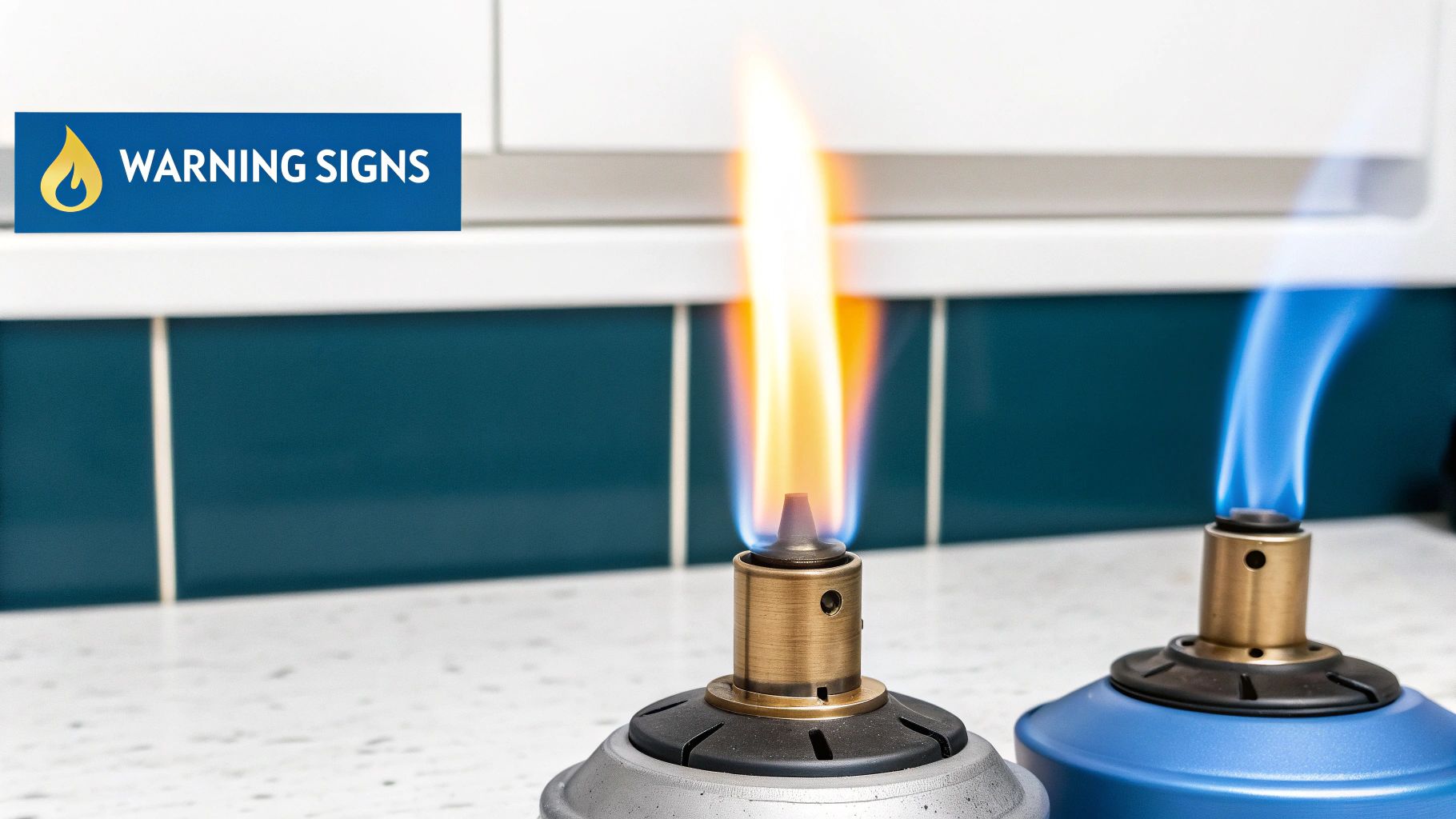
Even if your furnace does manage to light, the flames themselves can tell you a lot. Healthy flames are steady and blue. If you peek inside and see weak, flickering, or yellow-orange flames, that’s a major red flag. This usually points to a bad fuel-to-air mix, which can happen if the valve isn't opening all the way or is gunked up with debris.
Another alarming sign is a loud "whump" or booming sound right when the furnace kicks on. This happens when there's a delay in gas reaching the burners. The valve might be sticking, letting gas build up in the combustion chamber before it finally ignites with a mini-explosion. That delayed ignition puts a ton of unnecessary stress on your whole system.
If you have an older furnace, keep an eye on your pilot light. A pilot that keeps going out or won't stay lit is a classic symptom of a bad thermocouple, but it can also point directly to an inconsistent gas supply from a failing valve.
To help you connect the dots, here’s a quick rundown of what you might see or hear when a gas valve is on its way out.
Gas Valve Failure Symptoms and Potential Causes
| Symptom | What You See or Hear | Potential Gas Valve Issue |
|---|---|---|
| Furnace Won't Ignite | Igniter glows or clicks, but burners never light up. | The valve's solenoid has failed and isn't opening. |
| Delayed Ignition | A loud "whump" or bang when the furnace finally lights. | The valve is sticking, causing gas to build up before ignition. |
| Weak or Yellow Flames | Burner flames are flickering, small, or orange/yellow instead of blue. | The valve isn't opening fully or is clogged, restricting gas flow. |
| Pilot Light Issues | The pilot light on an older furnace won't stay lit. | The valve is providing an inconsistent or weak gas supply. |
| Intermittent Heat | The furnace works correctly sometimes but fails at other times. | The valve has an electrical fault or is starting to stick randomly. |
| No Heat at All | The system runs, but only cold air comes out of the vents. | The valve is completely stuck closed, preventing any gas flow. |
These are the most common signs that point to trouble with your gas valve. Catching them early is the first and most important step toward a proper furnace gas valve repair, ensuring your heat stays on and your home stays safe.
Safe Troubleshooting Steps for Homeowners
When your furnace decides to quit on a cold Minnesota night, it’s easy to jump to the worst conclusion, like a major furnace gas valve repair. But before you pick up the phone, there are a few simple and perfectly safe checks you can do yourself. Often, the culprit is something much less dramatic.
These first steps don't involve touching the gas valve or any of the scary stuff. They’re all about ruling out the common, simple fixes first.
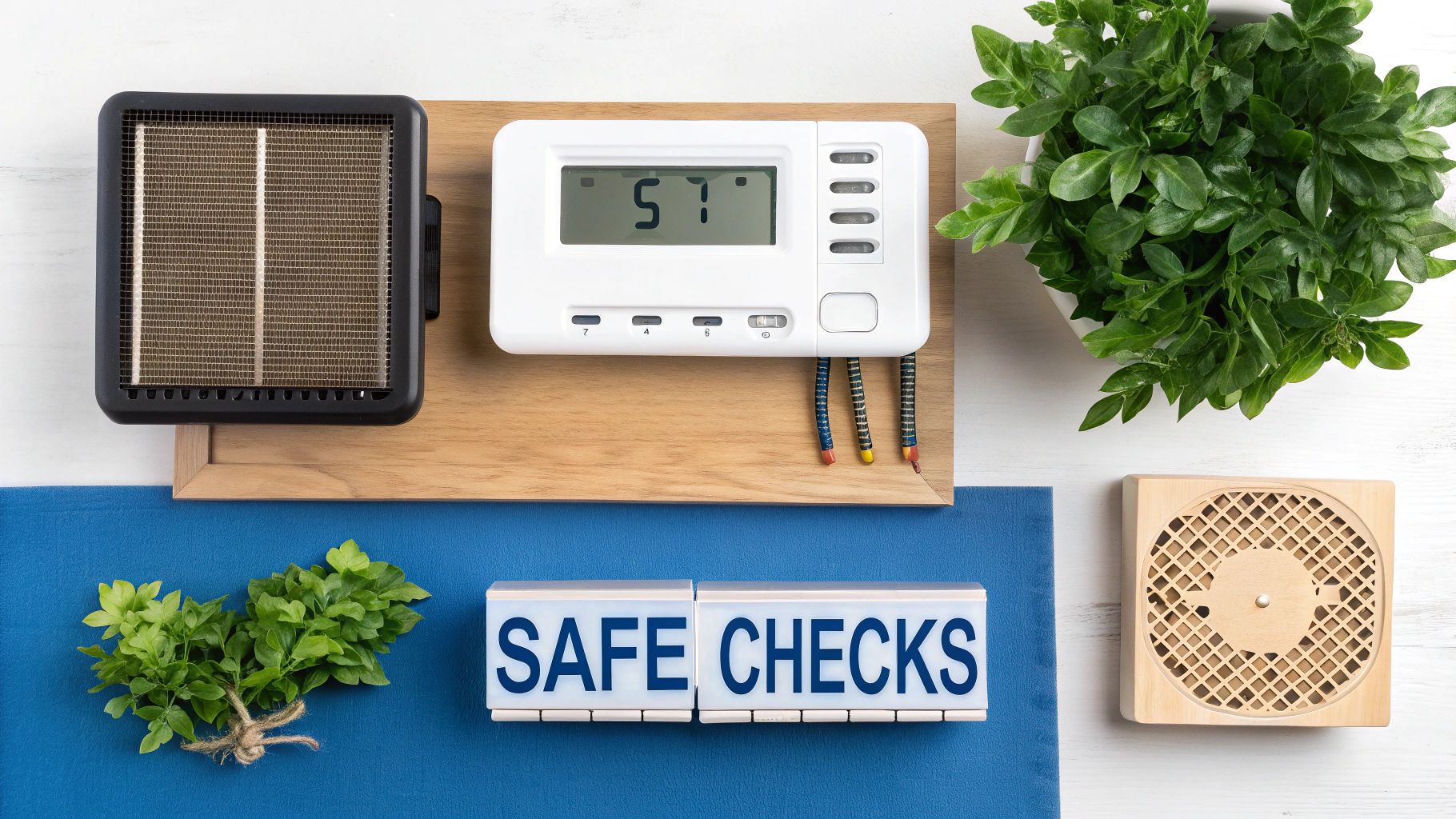
First things first, take a walk over to your thermostat. Is it actually set to "Heat"? And is the temperature cranked up a few degrees higher than the current room temperature? You'd be surprised how many of our service calls end right there with a quick adjustment. It happens to the best of us!
Next up, let's talk power. Your furnace is a big appliance, and it needs electricity to run. Most have a power switch that looks just like a light switch located on or near the unit. Make sure that's flipped to the "On" position. From there, head to your main electrical panel and check if the furnace's circuit breaker has been tripped.
Basic Furnace Checks You Can Do Yourself
If the thermostat is set correctly and the power is on, the next logical stop is your air filter. When a filter gets completely clogged with dust and gunk, it chokes off the airflow. This can cause the furnace to overheat and shut itself down as a safety measure, which can definitely look like a much bigger problem.
Here’s a quick rundown of the safe checks you can perform:
- Check Your Thermostat: Make sure it’s on "Heat" and the temperature is set higher than what the room is currently reading.
- Inspect the Air Filter: Pull the filter out. If you can't see light through it or it’s caked in a gray blanket of dust, it's time for a new one.
- Look at the Circuit Breaker: Find the breaker for your furnace in the main panel and make sure it’s firmly in the "On" position.
- Try a Simple Reset: Find that power switch by the furnace, turn it off, wait a full minute, and then flip it back on. Sometimes, all the internal computer needs is a quick reboot.
If you’ve gone through these steps and your heat still isn’t kicking on, we have a more in-depth guide that might help. Check out our post on how to troubleshoot a furnace that won't start.
Critical Safety Warning
If you smell natural gas at any point—it’s often compared to the smell of rotten eggs—stop everything. Do not flip any switches (lights or otherwise), don't use your phone, and don't unplug anything. Just leave your home right away. Once you're a safe distance away, call your utility company, and then call a professional HVAC technician like us.
Why Gas Valve Repair Is a Job for Professionals
The DIY spirit runs deep here in Central Minnesota, but there are some jobs where you just have to call in the pros. When it comes to a furnace gas valve repair, this isn't a friendly suggestion—it's a hard-and-fast rule for safety. Messing around with any part connected to your home's gas line is a huge risk without the right training and equipment.
A small mistake can lead to big problems. One wrong move could cause a natural gas leak, putting your home at immediate risk of a fire or explosion. It could also lead to incomplete combustion, which produces carbon monoxide—a deadly, odorless gas that can quietly fill your house.
The Tools and Codes You Can't Ignore
Professional technicians show up with specialized tools that you just won't find in a typical homeowner's toolbox. A key piece of equipment is a manometer, which is used to measure and set the exact gas pressure flowing from the valve to the burners. Too little pressure and your furnace won't heat efficiently; too much can seriously damage the furnace and create a major safety hazard.
Beyond the tools, there are strict local building codes that govern any work on gas appliances. A repair done by an unlicensed person can easily violate these codes, which could create a headache during a future home inspection. On top of that, it will almost certainly void your furnace's manufacturer warranty, leaving you on the hook for the full cost of any future breakdowns.
In the U.S., where 48% of homes rely on gas furnaces, valve malfunctions contribute to 18% of the 4 million annual breakdowns. This costs homeowners a staggering $2.5 billion each year. Professional repairs are essential to address these issues safely and effectively, preventing the high costs and dangers of improper handling. Discover more insights about these market trends on gminsights.com.
Safety and Liability Risks of DIY Repair
Trying to fix a furnace gas valve yourself also opens you up to some serious liability. If a mistake leads to property damage or, even worse, an injury, your homeowner's insurance could refuse to cover the claim because the work wasn't done by a licensed professional. That reason alone is enough to convince most people to trust a certified expert.
Professional furnace repair is a regulated part of the broader HVAC industry for a reason: public safety. Technicians go through extensive training and certification to understand the complex mechanics and safety protocols needed to work with gas lines. When you hire a professional from Neighborhood Plumbing, HVAC, and Electrical, you’re not just paying for a part—you’re investing in the peace of mind that comes from knowing the job was done right.
Your Furnace Gas Valve Questions Answered
When your furnace is on the fritz, a lot of questions start running through your head. How much is this going to cost? How long will it take? What’s the right next step? We get it. Here are the most common questions Central Minnesota homeowners ask us about furnace gas valve repairs, answered straight up.
How Much Does Furnace Gas Valve Repair Cost?
For a professional furnace gas valve repair or replacement here in our area, you can generally expect the cost to be somewhere between $300 and $750. The final price really depends on the model of your furnace, what kind of valve it needs, and how tricky the installation is.
At Neighborhood, we’re big believers in transparent, up-front pricing. Before our technicians touch a single tool, they’ll walk you through a detailed quote. You approve the full cost first, so there are absolutely no surprise fees later on. Want to know more about what goes into a service call price? Check out our guide on emergency furnace repair costs in MN.
Should I Repair or Replace My Furnace Gas Valve?
This is a great question, and the answer usually comes down to the age of your furnace and the specific problem with the valve. If you've got a newer furnace and the valve just has a minor electrical fault, a repair is probably the most sensible and wallet-friendly choice. It gets the heat back on without a major investment.
On the other hand, if your furnace is pushing 15 years or older, or if the valve has a serious mechanical failure, replacement is almost always the better long-term solution. A brand-new valve gives you peace of mind, ensuring your system is safe and reliable for years. Our technicians will always lay out both options clearly to help you make the best decision for your home.
A well-maintained furnace gas valve can last 15 to 20 years, which is often the entire lifespan of the furnace itself. The single best thing you can do to get that full service life is to keep up with regular maintenance.
How Can I Prevent Gas Valve Failure?
Honestly, being proactive is the secret to avoiding most furnace headaches, including gas valve problems. Your best defense is a simple annual furnace tune-up.
During that service, a certified technician will:
- Clean Critical Components: They'll clear out the dust and debris that can easily clog up the valve and cause it to stick.
- Inspect for Wear: They'll look for any early signs of corrosion or mechanical wear before it has a chance to cause a full-blown breakdown.
- Test Gas Pressure: They'll make sure the valve is operating within the safe and efficient parameters set by the manufacturer.
This one yearly check-up can spot potential issues long before they leave you in the cold on a frigid winter night, saving you a ton of stress and unexpected repair bills.
If you're noticing any of the signs of a failing gas valve, don't wait for it to get worse. The licensed and insured technicians at Neighborhood Plumbing, HVAC, and Electrical are ready to help 24/7. Contact us today to schedule your expert diagnosis and get your heat back on.