


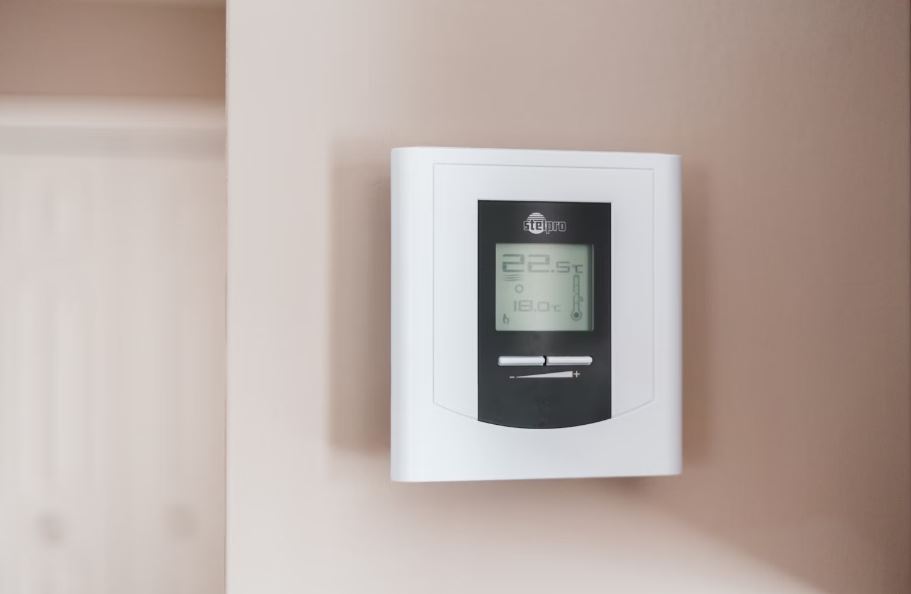
If your home’s heating or cooling just doesn’t feel quite right, your thermostat could be to blame.
Yes, thermostats can go bad. It’s not the first thing people usually suspect, but it happens more often than you’d think.
They might look simple, but thermostats are the brain of your HVAC system. And when the brain starts acting up, the whole system can get out of whack.
In this post, we’ll show you how to spot a thermostat that’s gone bad, what signs to look for, and what you can do before jumping to replace it.
Yes, Thermostats Can Go Bad
Like any piece of equipment, thermostats don’t last forever.
Mechanical ones use little coils and switches inside, which wear out after years of use. Digital and smart thermostats are basically small computers, so they’re prone to things like electrical glitches, dead batteries, and software issues.
Most thermostats last somewhere between 7 to 12 years.
After that, it’s pretty common to start noticing hiccups.
Think about it – this little gadget is working 24/7, telling your HVAC system what to do every single day of the year. It’s no surprise it eventually needs some attention.
Also Read: Why Is My AC Squealing?
7 Signs Your Thermostat Might Be Failing
If your thermostat is going bad, it won’t always just stop working completely. More often, it gives you little hints along the way. Here’s what to watch for:

#1 Inconsistent Temperatures In The House
Does one room feel like a sauna while another feels like a fridge?
That’s one of the most common clues your thermostat is struggling.
It may not be reading the temperature correctly or sending the right signals to your HVAC system. Over time, small errors in the thermostat’s sensor can make some areas of your home too hot or too cold.
You might notice that your living room is perfect while bedrooms stay chilly, or that the upstairs feels warmer than the downstairs.
#2 System Doesn’t Start Or Shut Off When It Should
If you find yourself constantly fiddling with the thermostat because the system isn’t kicking on or off, that’s a big red flag.
A faulty thermostat can leave your home too hot or too cold for long stretches. Sometimes it might cause your system to run non-stop, overheating or overcooling your space. Other times, it refuses to turn on at all, leaving you in an uncomfortable room for hours.
In some cases, the thermostat sends delayed signals, so your system might finally kick in, but only after the temperature has drifted far from your set point.
This back-and-forth can make your HVAC feel unpredictable and frustrating to manage.
Also Read: How Can You Tell If AC Is Frozen?
#3 Thermostat Reads Temperatures Incorrectly
Here’s an easy test: put a simple room thermometer on a nearby surface and compare the reading to your thermostat’s display.
If there’s a big gap (like your thermostat says it’s 72°F but the room is really 68°F), that’s a sign the thermostat’s internal sensor isn’t working right.
Small inaccuracies can add up over time, causing your HVAC system to run too long or shut off too soon.
This not only affects comfort but can also waste energy.
#4 The System Short-Cycles
Short-cycling is when your HVAC system turns on, runs for a very short time, then shuts off again.
Not only is it annoying, but it’s also hard on your system and wastes energy.
A failing thermostat can cause this because it keeps sending confusing signals to the unit. You might notice your heater or AC running in short bursts, never fully reaching the set temperature.
Over time, this behavior can lead to bigger problems with your HVAC system.

#5 Higher-Than-Usual Energy Bills
When the thermostat goes bad, it can also make your system run longer than it should or not long enough.
Either way, your home won’t feel comfortable, and your energy bills will creep up.
Even small inefficiencies can add up, especially in extreme summer or winter months.
If you’ve checked for leaks, insulation issues, and other obvious causes, a malfunctioning thermostat could be the sneaky culprit behind those unexpected costs.
Also Read: How Often Should I Service My A/C?
#6 Blank Or Unresponsive Display
If you have a digital thermostat and the screen goes blank or buttons don’t respond, that’s a pretty obvious sign something’s wrong.
Sometimes it’s as simple as dead batteries, but other times the electronics inside are fried.
You might also notice delayed responses like pressing a button and waiting several seconds for the display to change or flickering screens.
These issues make it hard to control your HVAC system and can indicate the thermostat is near the end of its life.
#7 Your Thermostat Is Old
If your thermostat is more than 10 years old, it’s probably past its prime.
Older models can lose accuracy, stop responding, or just wear out.
Plus, newer thermostats come with more efficient features, better scheduling, and better sensors. So even if yours is still limping along, upgrading might save you money and headaches in the long run.
How To Troubleshoot Before Replacing
Before buying a new thermostat, it’s worth checking a few simple things that could fix the problem. Sometimes the issue is small and easy to resolve, saving you time and money.
Here’s a quick checklist to go through:
- Replace the batteries if your thermostat uses them.
- Make sure the thermostat is clean and free of dust.
- Confirm the system is set to the correct mode: heat, cool, or auto.
- Check that the circuit breaker hasn’t tripped.
- Compare the thermostat’s temperature reading to a separate thermometer.
- Look for loose or damaged wires if you feel comfortable doing so.
Bottom Line
So, can a thermostat go bad? 100% yes.
When they fail, you’ll notice inconsistent temps, weird system behavior, higher bills, or an unresponsive screen.
The nice thing is, a thermostat isn’t a huge investment compared to replacing a furnace or AC. In many cases, swapping in a new one is quick, affordable, and instantly improves comfort.
And if you decide to upgrade to a smart model, you’ll get the bonus of scheduling, remote control, and better energy efficiency.
In short, don’t overlook the thermostat. If your system feels “off,” check this little gadget first.